The Day’s Weather and Bombing Reports

It’s been raining the past few days and that makes everyone happy.  There is a general belief that drones and artillery don’t function well in heavy rain so a downpour protects us from attack.  Not sure I believe that.
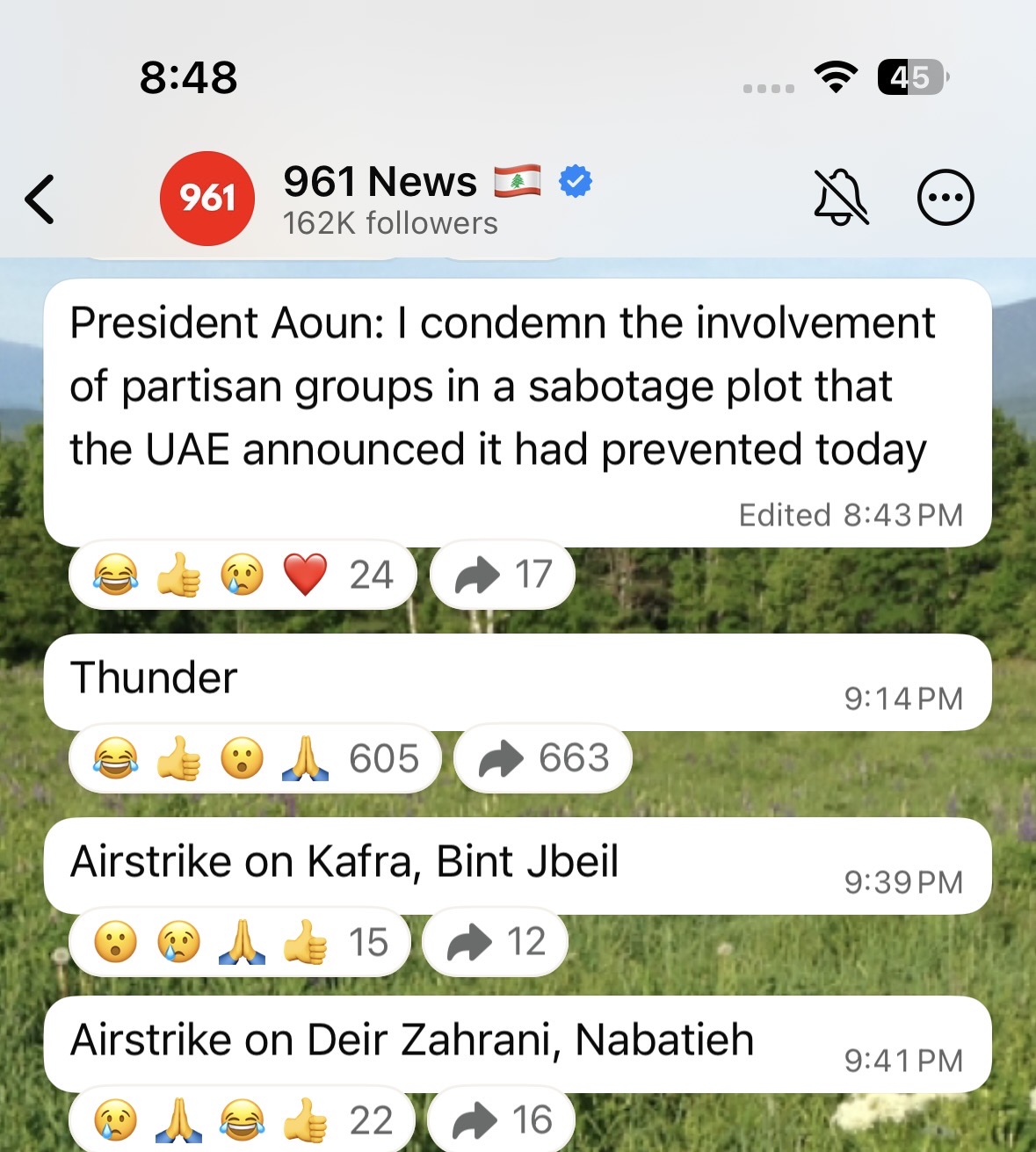
WhatsApp posts distinguishing between strikes and thunder.

Still, we check weather reports before heading out from home. Sometimes it’s hard to know if we’re hearing thunder, bomber planes, sonic booms from Israeli jets, or an explosion. I’ve learned that the sound of a blast doesn’t travel very far if the wind is against it although last night I heard three loud cracks which friends tell me was the sound of a roadside assassination audible for tens of kilometers.  I hear Israeli bombers as they fly low and, of course, the sonic boom of Israeli jets serving to remind us that they own the skies. The bombing of a building would involve multiple sounds – a boom, screams, and falling rubble.  I have yet to hear such a sequence of sounds. Drones, on the other hand, are so ubiquitous that they are background noise now, like diesel generators and traffic.
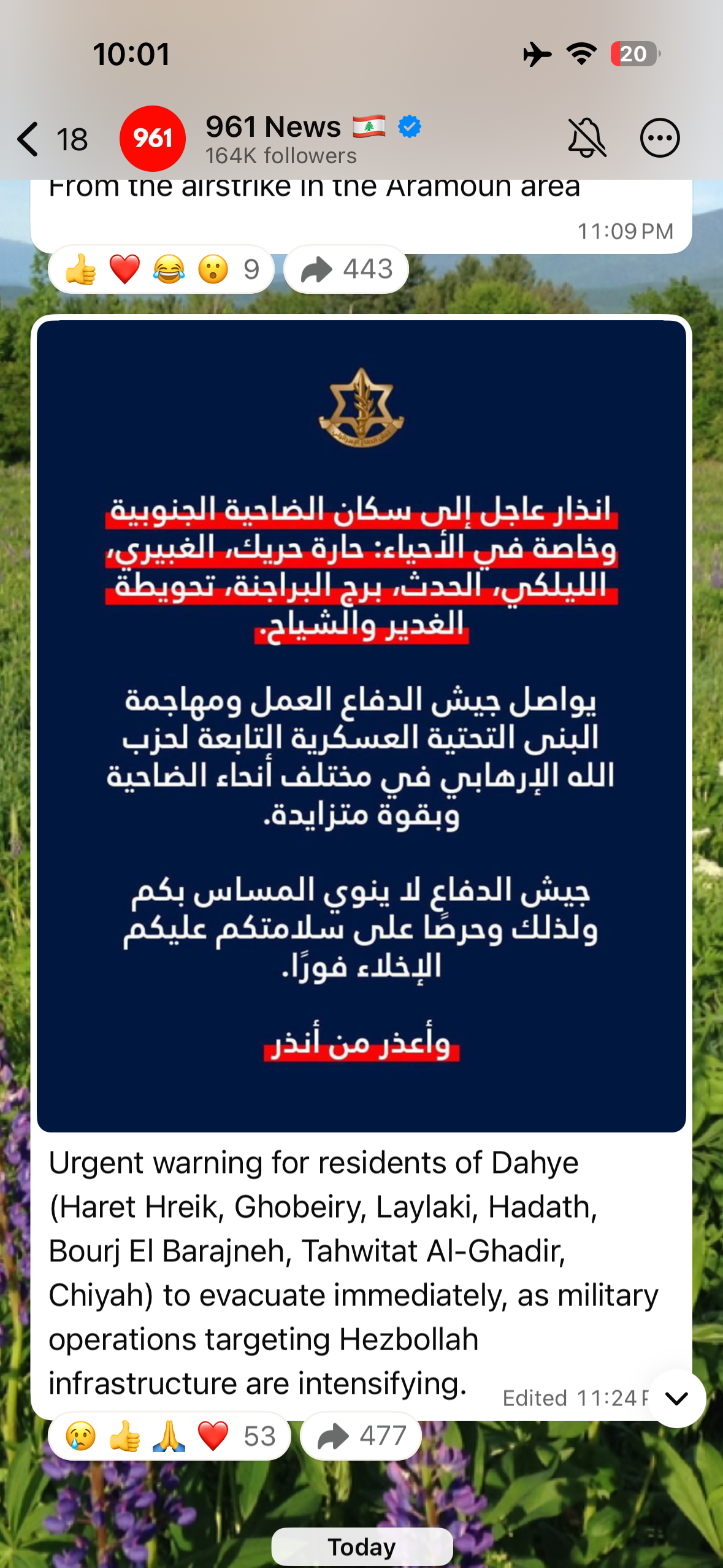
A warning from the Israelis to evacuate prior to an attack.

After the weather report, we check the bombing report. These are amply provided by the media and messaging apps. The Israelis generally give a few minutes of warning before striking buildings.  Supposedly they are destroying Hezbollah infrastructure but not everyone is convinced that their targets really are that at all.  There is no advance warning for assassinations, which could involve all or part of a building if the person is inside.

My decision to stay here has been a matter of political geography.  The Israelis are attacking the Shi’a, the sectarian underclass of Lebanon from which sprang Hezbollah. To a lesser extent they are also attacking their old foe, the Palestinians.  My part of town contains two American universities and an American hospital. It’s predominantly Lebanese Sunni and Christian. The general feeling here is that an Israeli strike is unlikely here because the Saudis are protecting the Sunnis and the Americans are protecting the Christians.  Needless to say, Iran’s protection of the Shi’a doesn’t cut much ice with Israel, Saudi, or the U.S. 
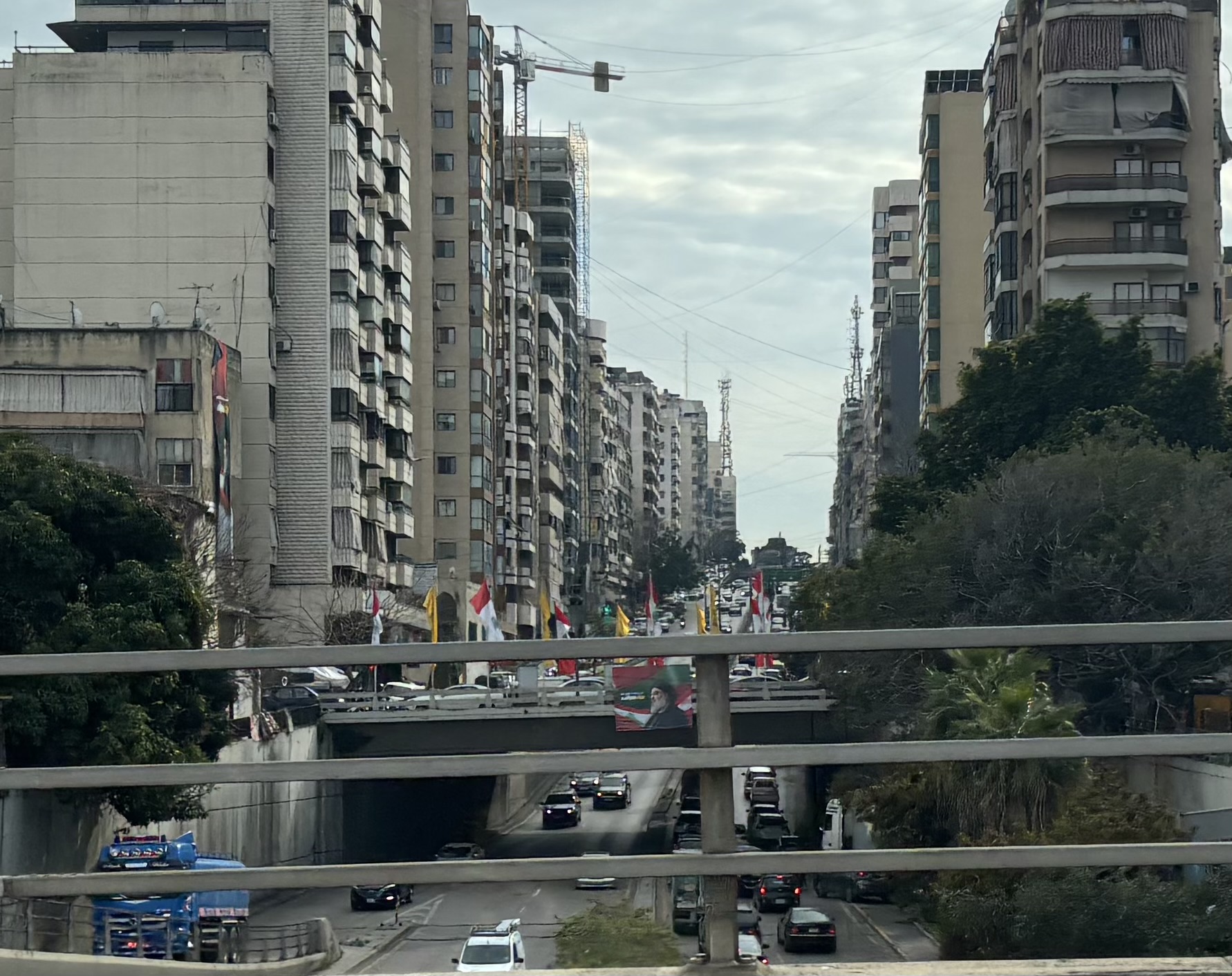
Yellow Hezbollah flags interspersed with Lebanese flags on a bridge in Beirut last year. They are no longer there but I won’t let taxis take me home through this territory.

I do leave the neighborhood every day to the hospital to see my stricken friend, Imad.  That neighborhood is almost entirely Christian. Historically, some of the Maronites who live there have been part of the local Falange which sided with Israel against their common foe, the Palestinians, during the proxy war known as the “Lebanese Civil War”.  I insist that the taxis take a particular route to the hospital so I can avoid the Shi’a neighborhoods that stand between mine and the hospital’s. Those areas have been hit a few times of late.

Up to a few days ago, this political geography served me well.  But now Israel and the U.S. have started striking universities in Iran, including those of Tehran, Isfahan, and Shiraz. The devastating hit on the girls’ school in Minrab is increasingly looking like a deliberate strike, according to the latest reports in the press.  The message here is that the legal prohibition against hitting civilians or civilian infrastructure has been cast aside in favor of barbarity and terror.  In return, Iran has announced it will permit itself to strike American universities in the region.  In my neighborhood, the American University in Beirut and the Lebanese American University have gone to online instruction. Friends here say Iran is unlikely to hit these institutions as they have so many Shi’a as students and staff.

Two nights ago I heard two loud booms. I messaged my landlord and he reassured me that it was thunder.  It motivated me to pack a “go bag” and send it along with Imad’s family so I can stay with them outside the city should need arise.  I have already done so once when Israel announced major strikes and we were concerned about falling glass near the hospital. Nothing happened.

My policy remains: when my Lebanese friends in the neighborhood get nervous, I will get nervous. Right now I am focusing on Imad’s recovery and that’s quite enough. When I do leave, I’ll make sure to fly straight to Europe as I don’t trust anyone not to shoot down a commercial flight in this lawless environment, certainly not when schools and universities are fair game.
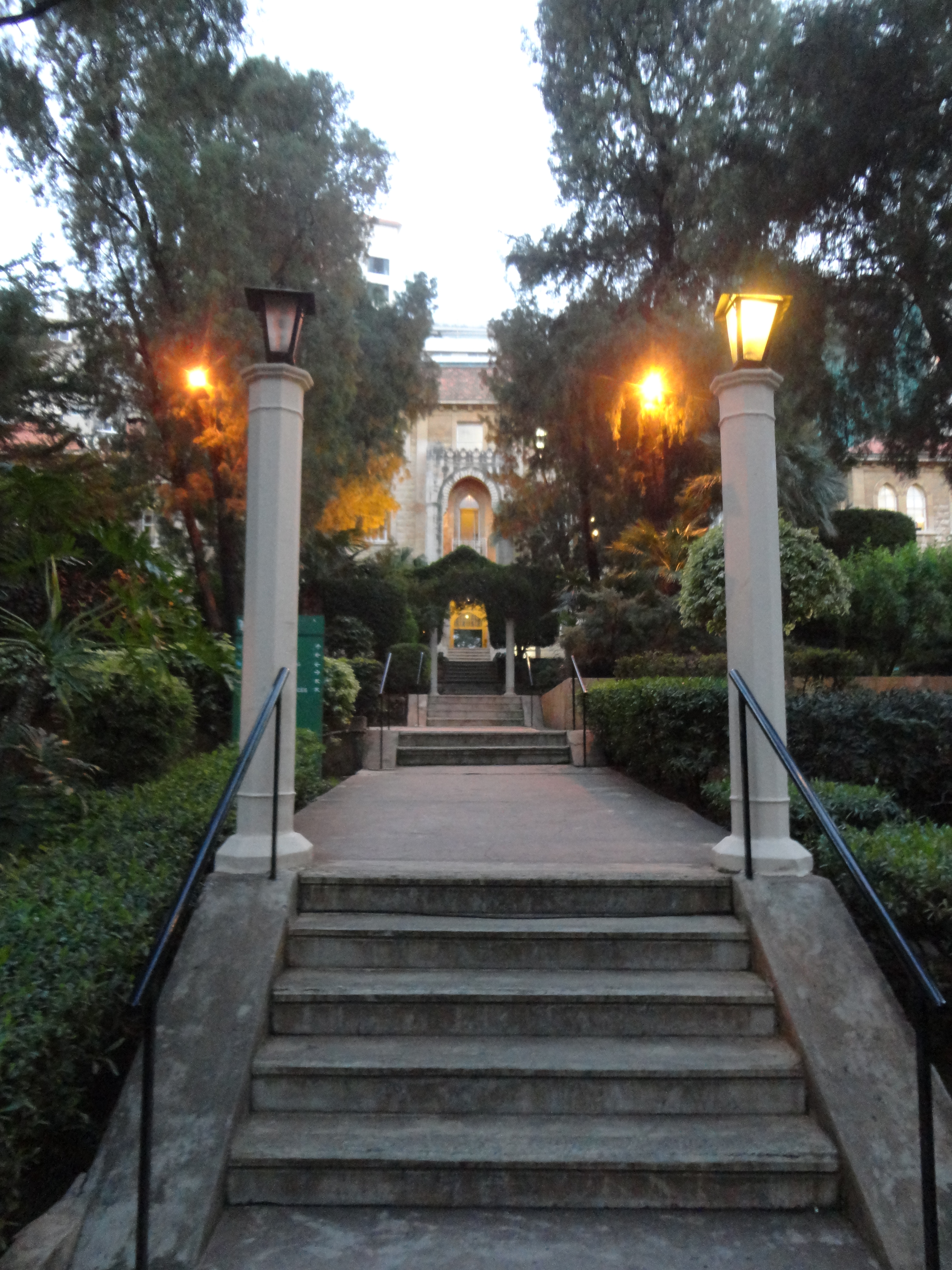
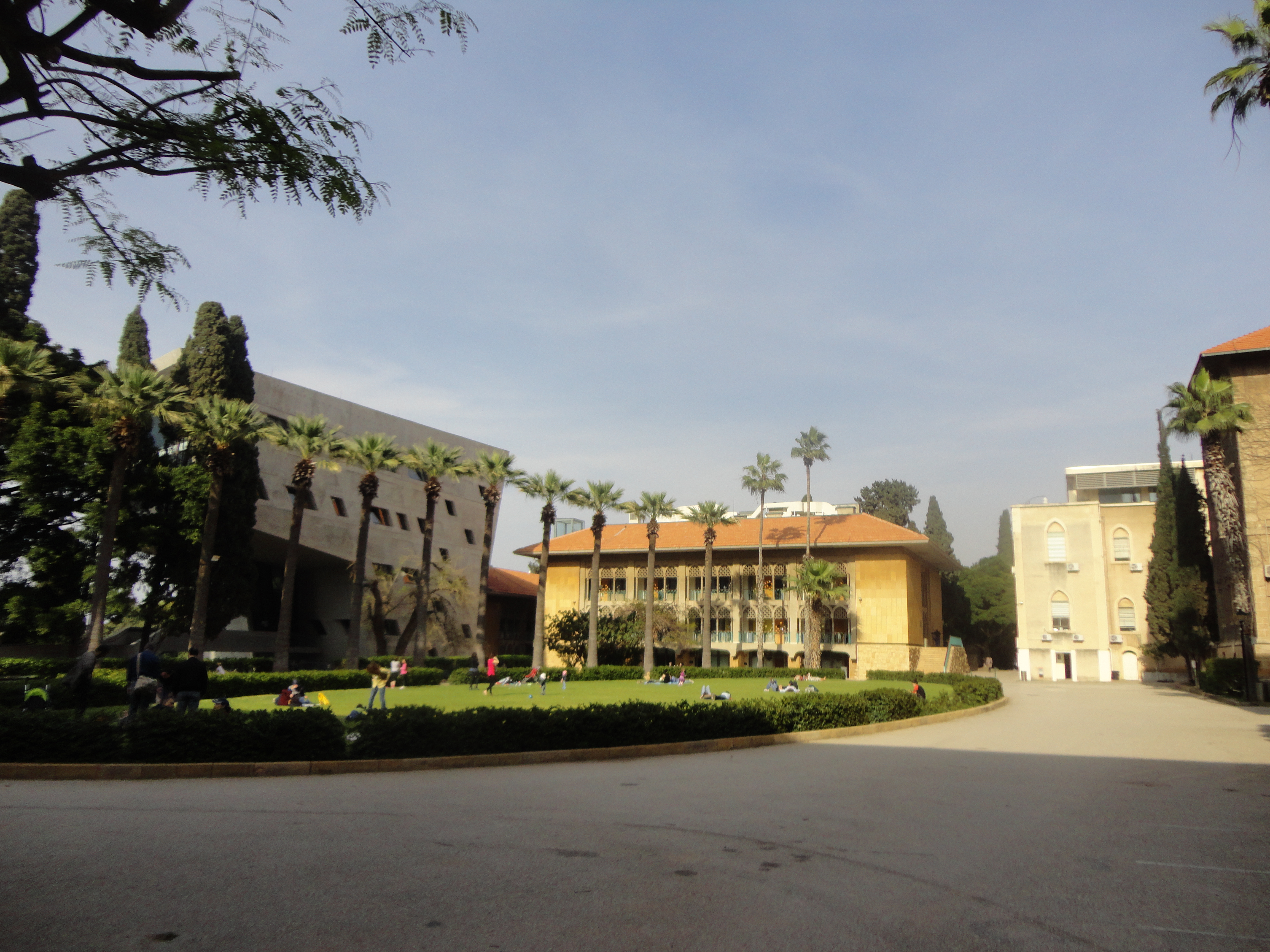
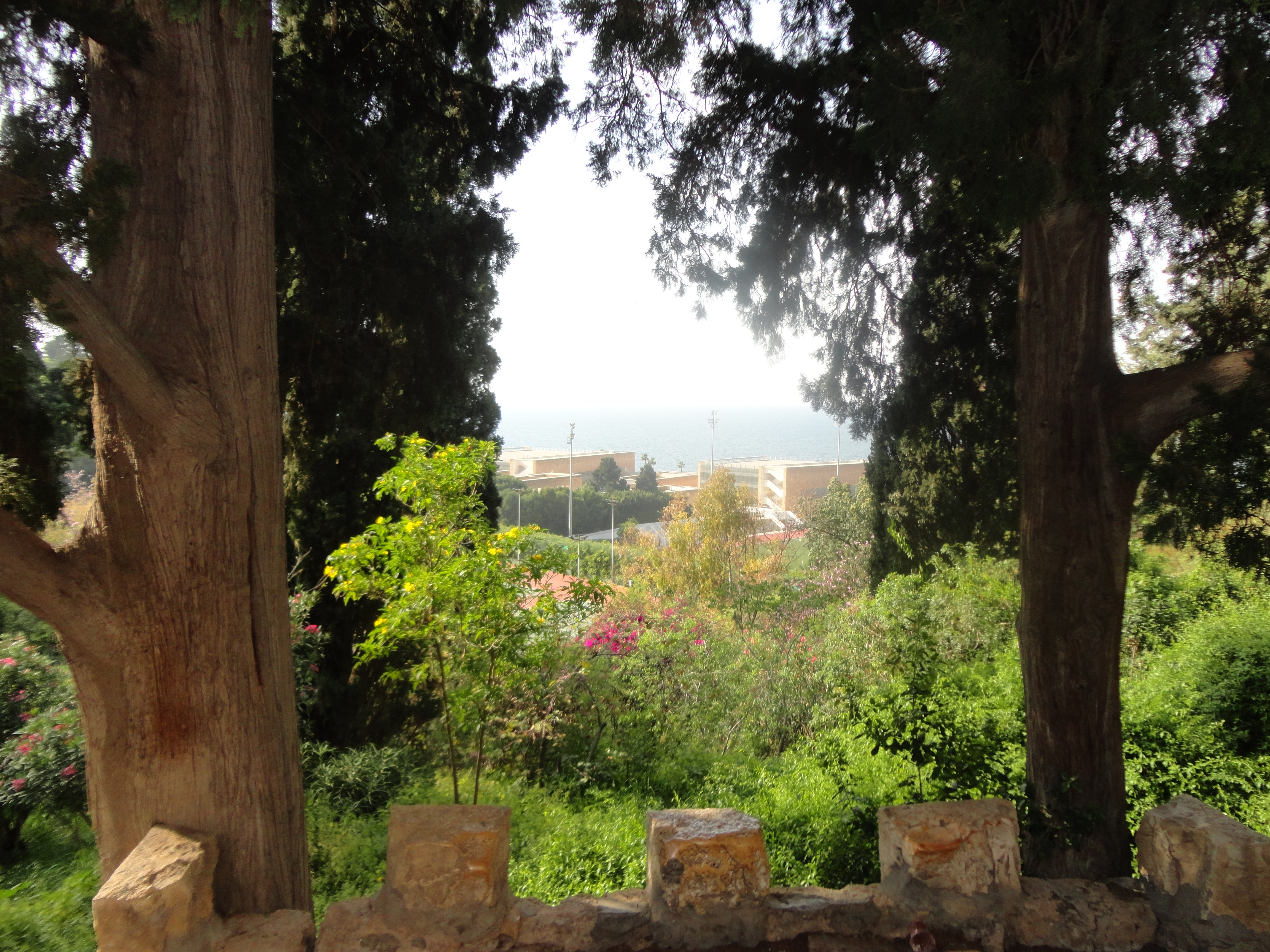
The gracious campuses of the American universities in Beirut. Left: Lebanese American University; right: American University of Beirut. Iran reports that 21 of their universities have been hit in the current conflict.
The Opposite of Diplomacy is Death

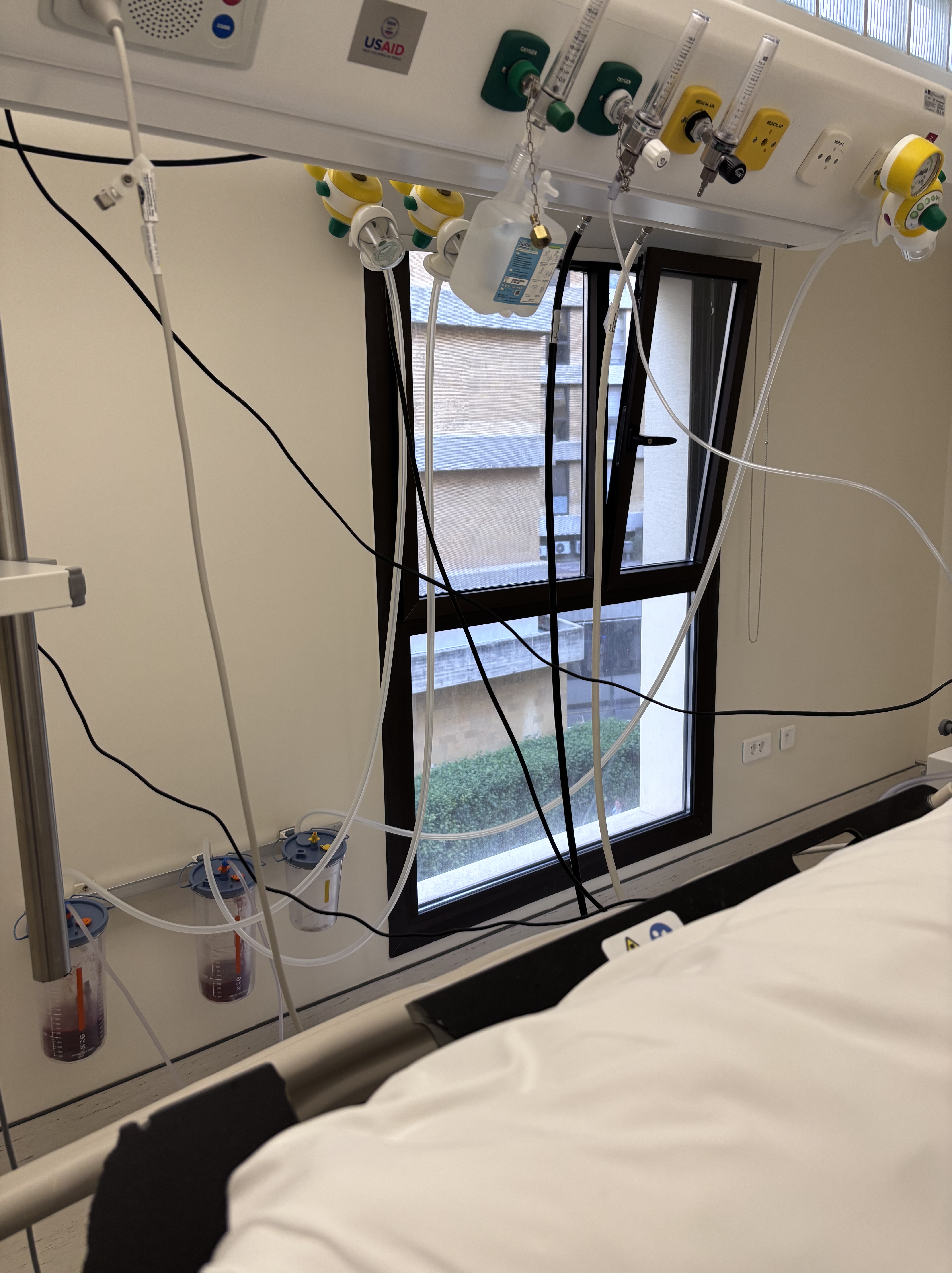
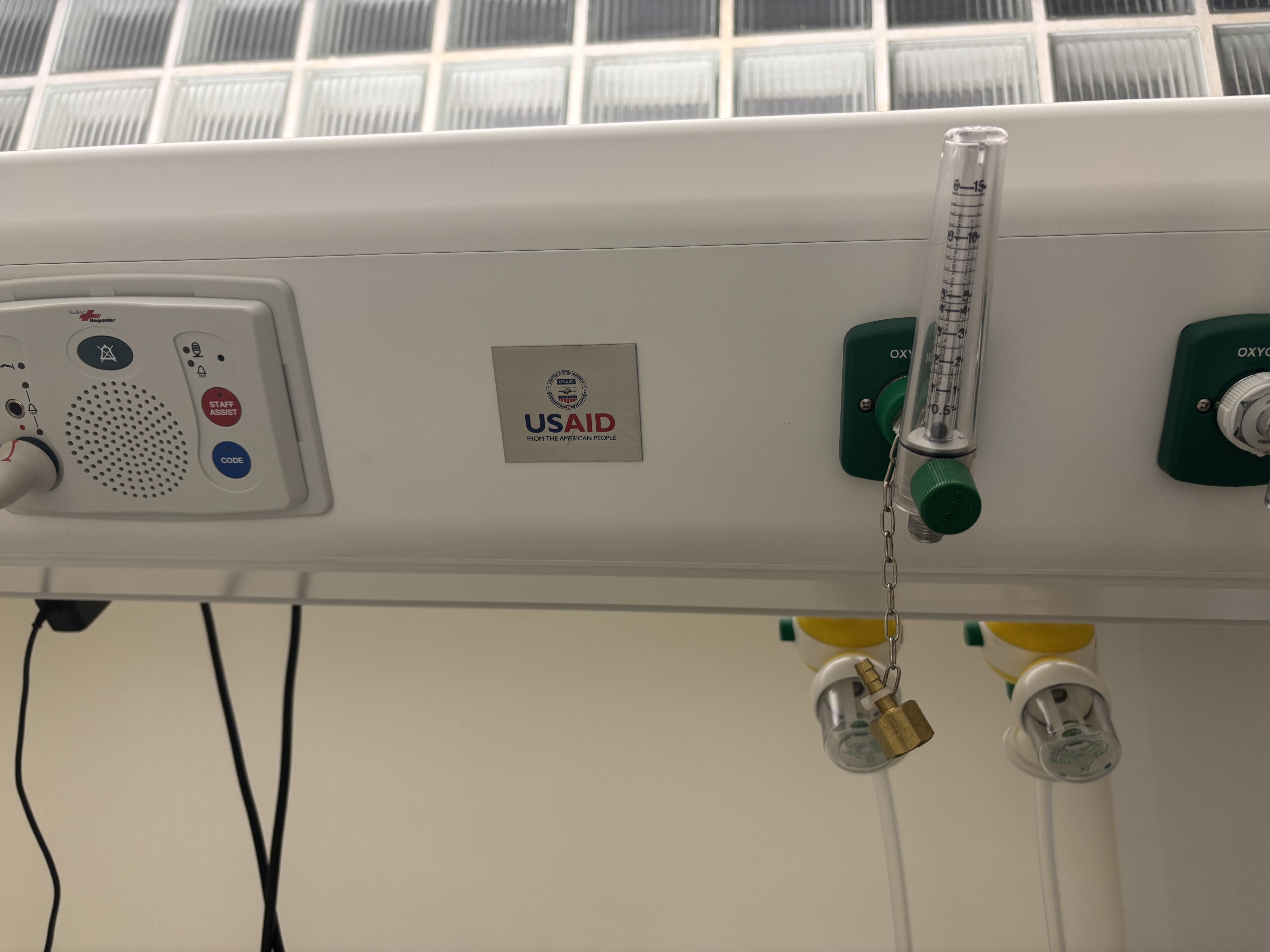
Equipment in the ICU coming from USAID.

Four weeks ago my dear friend Imad suffered a massive stroke. What kept him alive is medical equipment given to the hospital by the American people through USAID.

That program of soft power was abruptly terminated a year ago by the white supremacist Elon Musk acting on behalf of the white supremacist Donald Trump.

Noticing the USAID tag on the medical equipment, Imad’s son remarked: “The US used to be our benevolent overlords. Now they’re just our overlords and future stroke victims will just die.”

It was not just medical equipment that USAID used to grant institutions around the world but also scholarships and educational opportunities, in addition to other means of economic development.  It was a savvy way to court the next generation of leaders and to develop the purchasing power of a trading partner.  In Lebanon, the loss of these educational opportunities has led to a reduction in students and staff at the universities.

High quality education provides Lebanon with its stock in trade: a multi-lingual workforce of skilled professionals, mostly in the medical and engineering spheres.  Many work in the Gulf and in Europe and send home remittances. Some stay in Lebanon, making it a regional medical center with a robust medical tourism trade.  Their salaries make Lebanon a market for the manufactures of the West. 

Soft power like USAID brought the USA world admiration when it instituted the Marshall Plan to rebuild Western Europe, allies and former foes alike, after the destruction of WWII. The lessons from WWI were clear –  humiliating and impoverishing an enemy population would lead to another war. Maybe it sticks in Trump’s craw that General Marshall received the Nobel Prize for Peace.

Other countries are still using their soft power here effectively. Norway restored traffic lights in key intersections here after the bankrupt Lebanese government could no longer afford this basic road safety measure.  European countries still offer scholarships for study. The European Union supports an array of humanitarian and economic development projects here. 

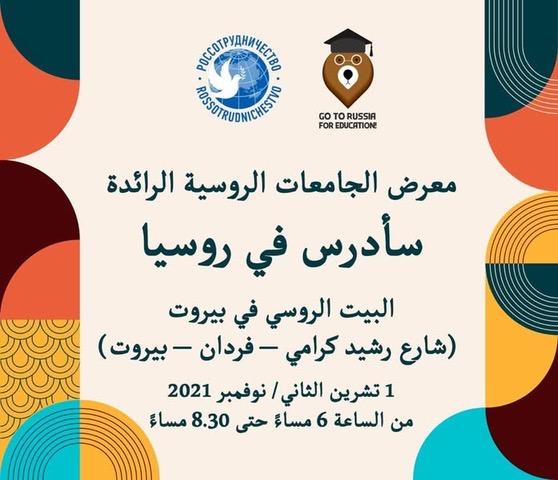
A notice for a presentation on studying in Russia at Russian House in Beirut.

Russia, too, exercises its soft power in Lebanon.  It has long projected itself as the protector of the Orthodox Christians and, by extension, all Christians: Imad’s grandparents kept a picture of the Tsar and Tsarina on their living room wall even after they became Protestants. Russia established schools here, now run by the Greek Orthodox Church. Russia has helped with rebuilding after wars and the port explosion. It donates wheat and fuel to Lebanon. It contributes to cultural life. It offers scholarships to study in Russia. Russia has thousands of Lebanese graduates of its universities to present the Russian viewpoint on events. Imad is one of them.

Now Lebanon is suffering a far more consequential collapse of American soft power than the elimination of USAID: the immoral and incoherent war with Iran.  President Obama’s  diplomatic triumph, the Joint Comprehensive Plan of Action (JCPOA) of 2016, prevented Iran from manufacturing weapons grade nuclear power by a system of verification through the International Atomic Energy Agency.  Verification is done by water testing. It is nearly foolproof.

President Trump tore up the agreement in 2018, to the delight of Israel’s Prime Minister Netanyahu.  This cost Prime Minister Hassan Rouhani, the centrist president of Iran who promoted the nuclear deal, his political future after his term ended . Thereafter, the Ayatollah Ali Khamenei, an authoritarian who sold off state property in the manner of American Republicans and British Tories, ensured that the Iranian political class hewed to his agenda.  His diplomatic efforts were towards Russia and China.  

Was scuttling the JCPOA a set-up or what? 

The hospital window opened against shattering.

We’ve been done this road before.  President Bush and National Security Advisor Condoleeza Rice attacked Iraq citing false information about its nuclear program.  The IAEA found no evidence of a weapons grade nuclear program in Iraq and were proven, belatedly, correct. The IAEA is saying the same thing about Iran now, to no avail.

We’re dealing with the consequences of this diplomatic calamity here in Lebanon and in the wider region.  In response to Khamenei’s assassination by Israel, Hezbollah fired three rockets into Israel.  Just the excuse Netanyahu needed to start bombing Lebanon’s Shi’a again up and down the country again. 

Here in the hospital we feel the attacks when the waiting room window rattles at bomb blast a few miles to the South or the nurses rush in to open the windows of the ICU in case glass shatters. The country is straining to absorb the internally displaced, a pitiful sight.

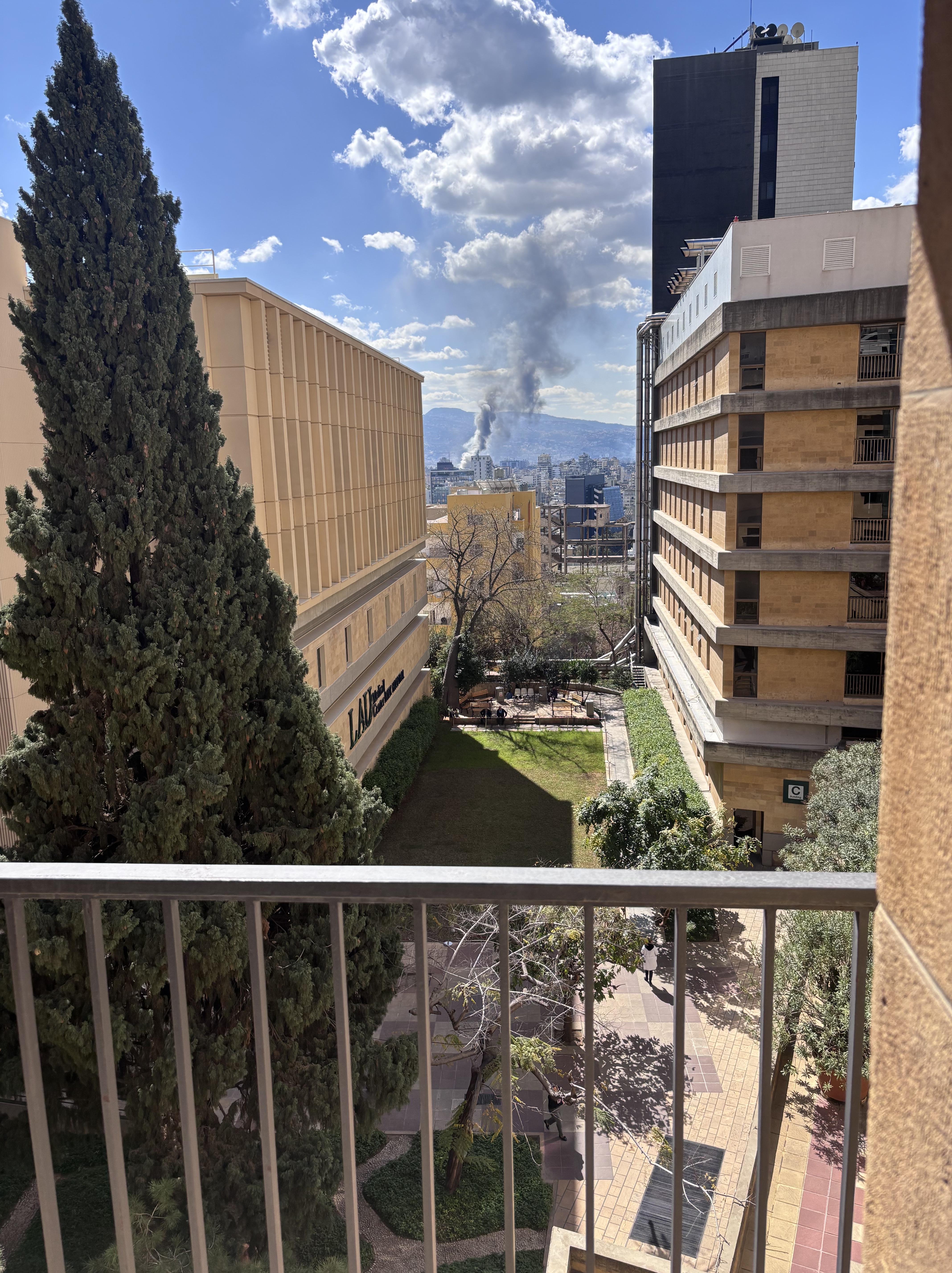
Imad is now out of the ICU, partly thanks to the American people and USAID. His new room gives us a view of smoke rising from Israel’s bombing of Beirut’s Shi’a neighborhoods. Salamtak, Imad, get well soon. Salamtik, America, get well soon.

The view from the hospital window of smoke rising from an Israeli airstrike yesterday.

Hezbollah and Chopin

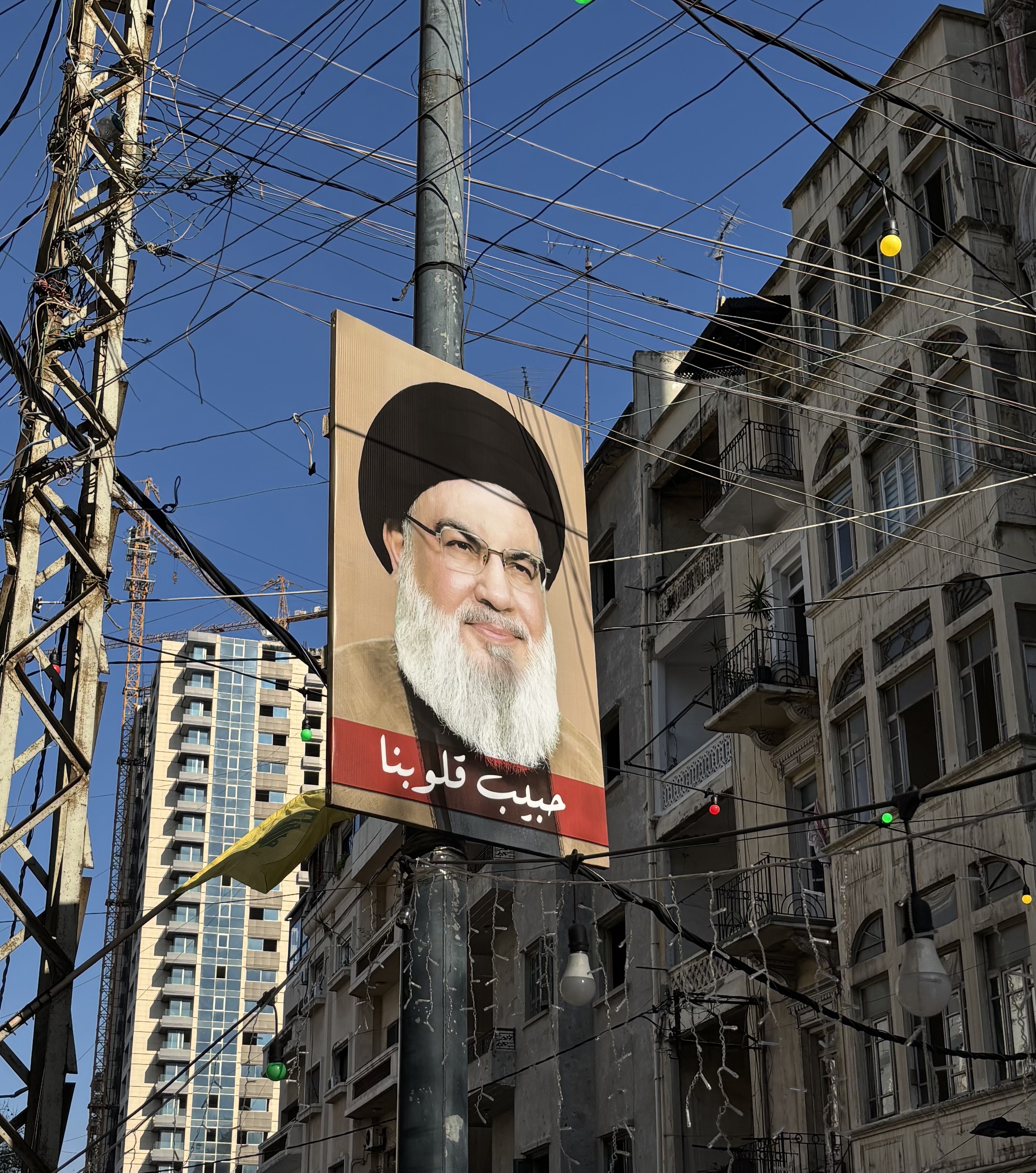
A poster of Hassan Nasrallah, “Our hearts’ beloved”.

The funeral of Hassan Nasrallah and his lieutenant was a somber and stately affair.  The crowd wore black against which the yellow flags of Hezbollah flickered brightly.  There was little evidence of the Lebanese national flag but the Iranian national flag was prominent.  For this there was much criticism, notably including a member of Amal, the rival Shi’a party.  It was a Shi’a family affair. Neither the Lebanese president nor the prime minister attended.

Nasrallah and the party have always been matters of ambivalence and controversy in Lebanese life but even those who opposed Nasrallah begrudgingly admired him.   His command of formal Arabic was much appreciated for its eloquence: this, in a culture where poetry, not painting, is the supreme art form. So too, was his policy of tolerance for other religious cultures.  While Hezbollah regularly disputes territory with its neighbors, especially the Maronites, and their own ways reflect the strictures of Iranian religious authorities, there has generally been a live-and-let-live policy towards others.  I would like to think that this is an expression of their Lebanese origins.

What struck me most forcefully watching the funeral from the hospital was hearing Chopin’s Marche Funèbre played by the Hezbollah orchestra.  Hezbollah and Chopin?  It seemed a perfect example of an observation by Robert Fisk about arriving in Lebanon: that when approached from the East, one thinks one has arrived in the West; when approached from the West, one thinks one has arrived in the East.

But I have to admit, I think my surprise also sprang from the same roots as the jitteriness of the Christians and Sunnis about the possibility of violence on the day of the funeral.  I think I had absorbed their othering of the Shi’as as the underclass.  It is much like the fear white Americans have for their Black compatriots, a projection that fears retribution.  In fact, the city was very quiet that day, a peace only broken by Israeli jets flying low and breaking the sound barrier. They bombed other parts of the country.

During their invasion of southern Lebanon last fall, the Israelis were also reported to have been surprised at the presence of pianos and other evidence of Western high culture in the homes they invaded, looted, and trashed.  It is an area where Shi’a who have made their fortunes abroad come home to retire in well appointed villas.  The realization that the despised other has achieved the same cultural attainments we value has the potential to restore their humanity, at least for an instance. One thinks of William Jennings Bryant as Secretary of State being surprised that the Haitians could speak French.  One appreciates all the more the wisdom of Edward Said and Daniel Barenboim in establishing an orchestra for the youth of Israel, Palestine, and other Arab countries. This West-Eastern Divan Orchestra travels the world bearing witness to the healing and elevating qualities of music across human manufactured divisions.

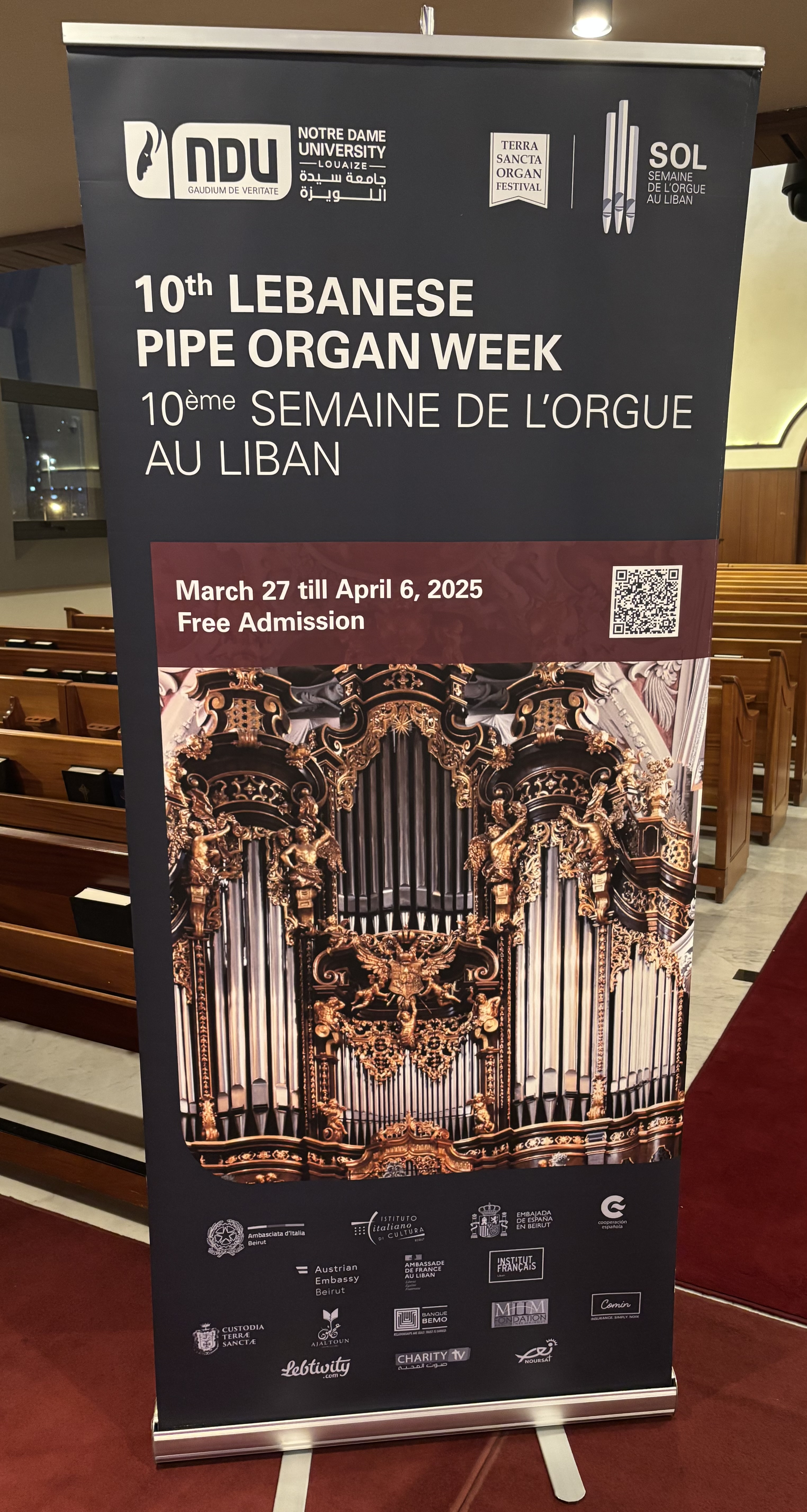
Last night I attended an organ concert, part of a week’s festival of organ music here. This was its tenth year and has been sponsored by various embassies and cultural institutes. Last night we heard a varied program from an organist flown in from Avila, Spain. His last offering was by a Lebanese composer, Naji Hakim, who first encountered the majesty of this instrument as a child in Beirut before the war.

Here is where we Westerners would say the Lebanese are so cosmopolitan, their cultural so liminal between East and West.  But I think in fact that this region dissolves the dichotomy altogether.  The organ has been here all along throughout the centuries.  This is the land of the organ and the oud, the land of polyglots where the educated quote Shakespeare in addition to Abu Nuwas. I am beginning to wonder if what we consider Western Civilization isn’t just a diffuse subset of Middle Eastern, or, as is now expressed, Western Asian Civilization, however much we try to own it and keep it apart.

A fourth century mosaic in Syria showing a woman playing the organ.