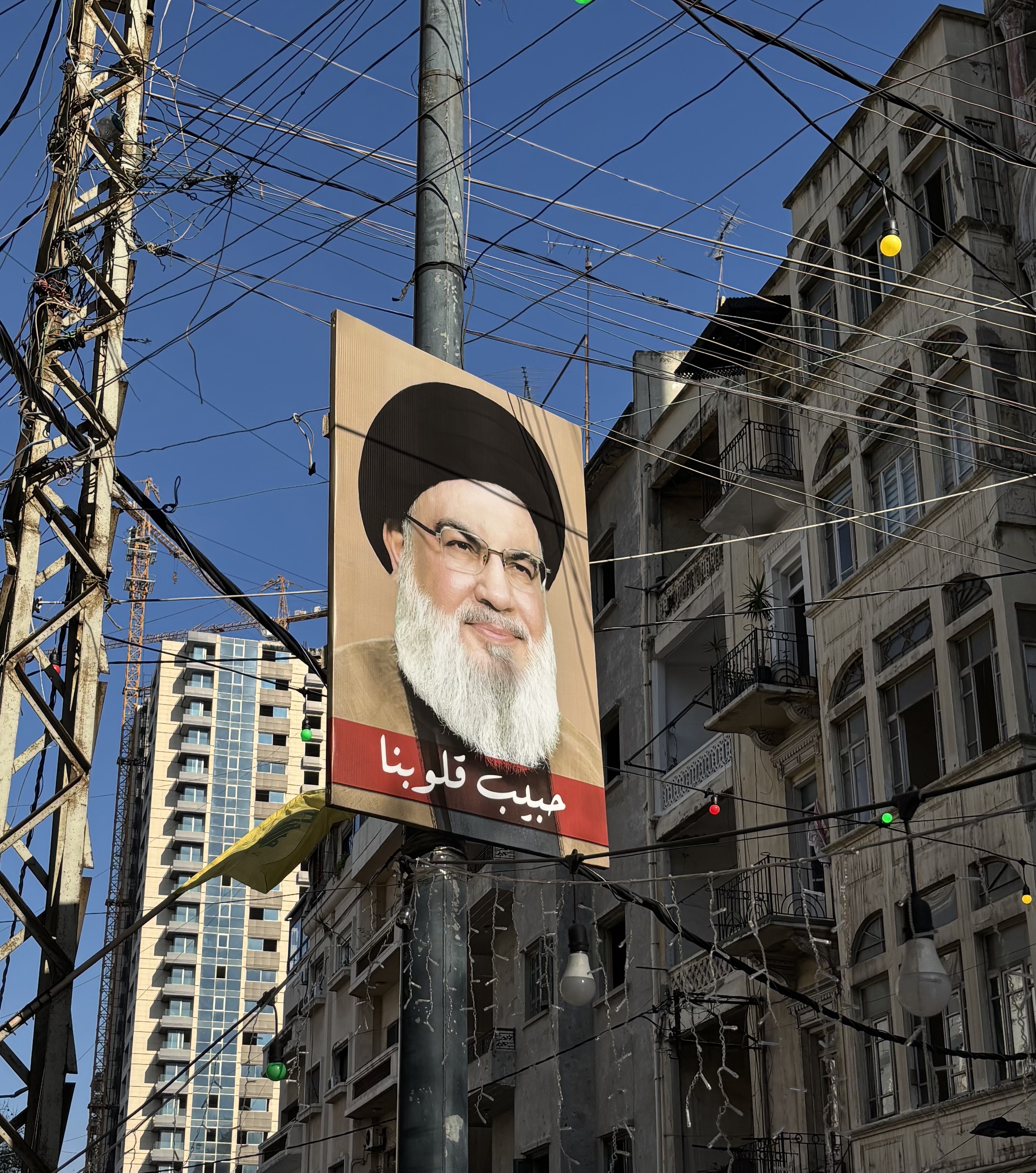
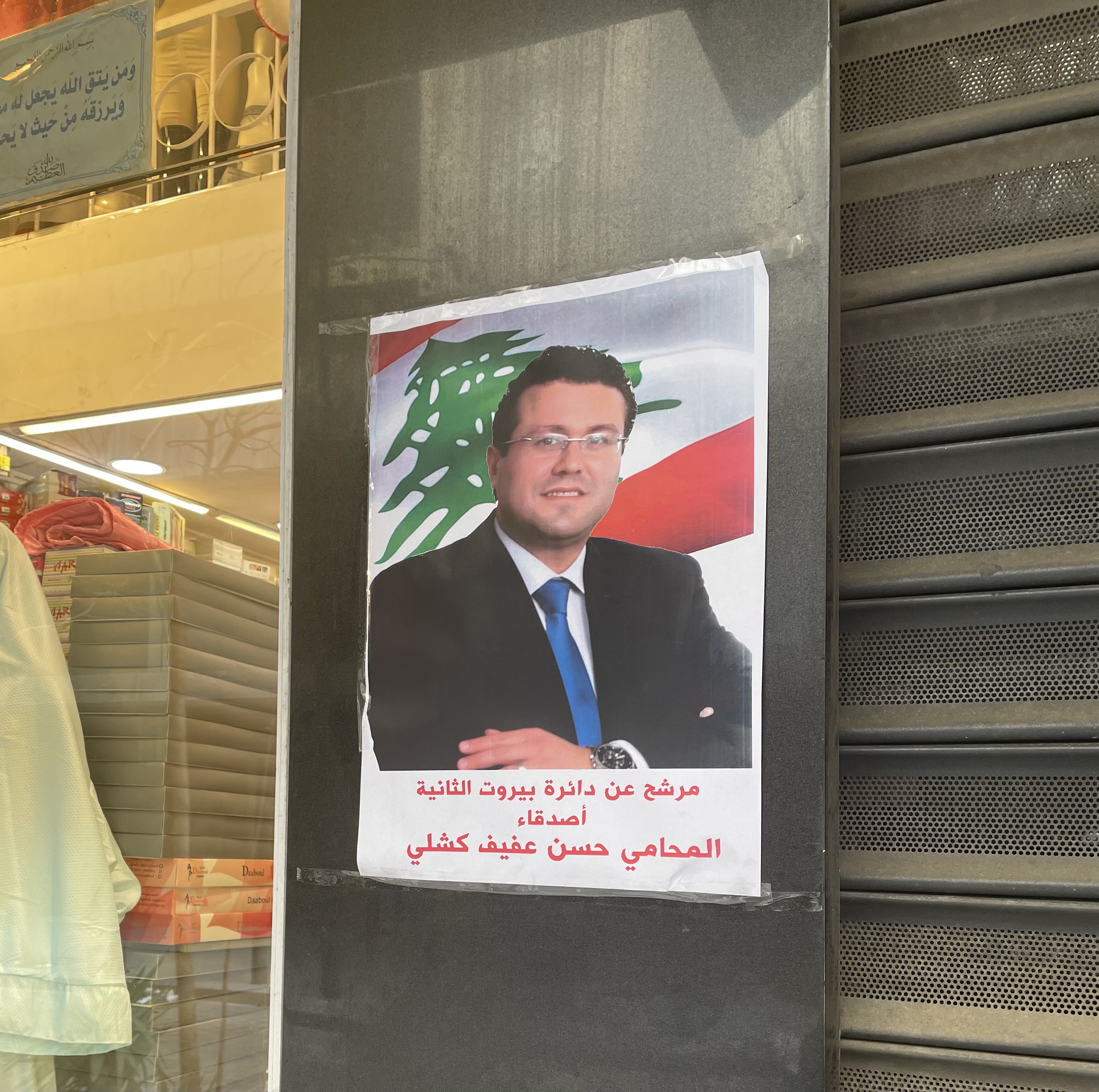
A poster of Hassan Nasrallah, “Our hearts’ beloved”.
The funeral of Hassan Nasrallah and his lieutenant was a somber and stately affair. The crowd wore black against which the yellow flags of Hezbollah flickered brightly. There was little evidence of the Lebanese national flag but the Iranian national flag was prominent. For this there was much criticism, notably including a member of Amal, the rival Shi’a party. It was a Shi’a family affair. Neither the Lebanese president nor the prime minister attended.
Nasrallah and the party have always been matters of ambivalence and controversy in Lebanese life but even those who opposed Nasrallah begrudgingly admired him. His command of formal Arabic was much appreciated for its eloquence: this, in a culture where poetry, not painting, is the supreme art form. So too, was his policy of tolerance for other religious cultures. While Hezbollah regularly disputes territory with its neighbors, especially the Maronites, and their own ways reflect the strictures of Iranian religious authorities, there has generally been a live-and-let-live policy towards others. I would like to think that this is an expression of their Lebanese origins.
What struck me most forcefully watching the funeral from the hospital was hearing Chopin’s Marche Funèbre played by the Hezbollah orchestra. Hezbollah and Chopin? It seemed a perfect example of an observation by Robert Fisk about arriving in Lebanon: that when approached from the East, one thinks one has arrived in the West; when approached from the West, one thinks one has arrived in the East.
But I have to admit, I think my surprise also sprang from the same roots as the jitteriness of the Christians and Sunnis about the possibility of violence on the day of the funeral. I think I had absorbed their othering of the Shi’as as the underclass. It is much like the fear white Americans have for their Black compatriots, a projection that fears retribution. In fact, the city was very quiet that day, a peace only broken by Israeli jets flying low and breaking the sound barrier. They bombed other parts of the country.
During their invasion of southern Lebanon last fall, the Israelis were also reported to have been surprised at the presence of pianos and other evidence of Western high culture in the homes they invaded, looted, and trashed. It is an area where Shi’a who have made their fortunes abroad come home to retire in well appointed villas. The realization that the despised other has achieved the same cultural attainments we value has the potential to restore their humanity, at least for an instance. One thinks of William Jennings Bryant as Secretary of State being surprised that the Haitians could speak French. One appreciates all the more the wisdom of Edward Said and Daniel Barenboim in establishing an orchestra for the youth of Israel, Palestine, and other Arab countries. This West-Eastern Divan Orchestra travels the world bearing witness to the healing and elevating qualities of music across human manufactured divisions.
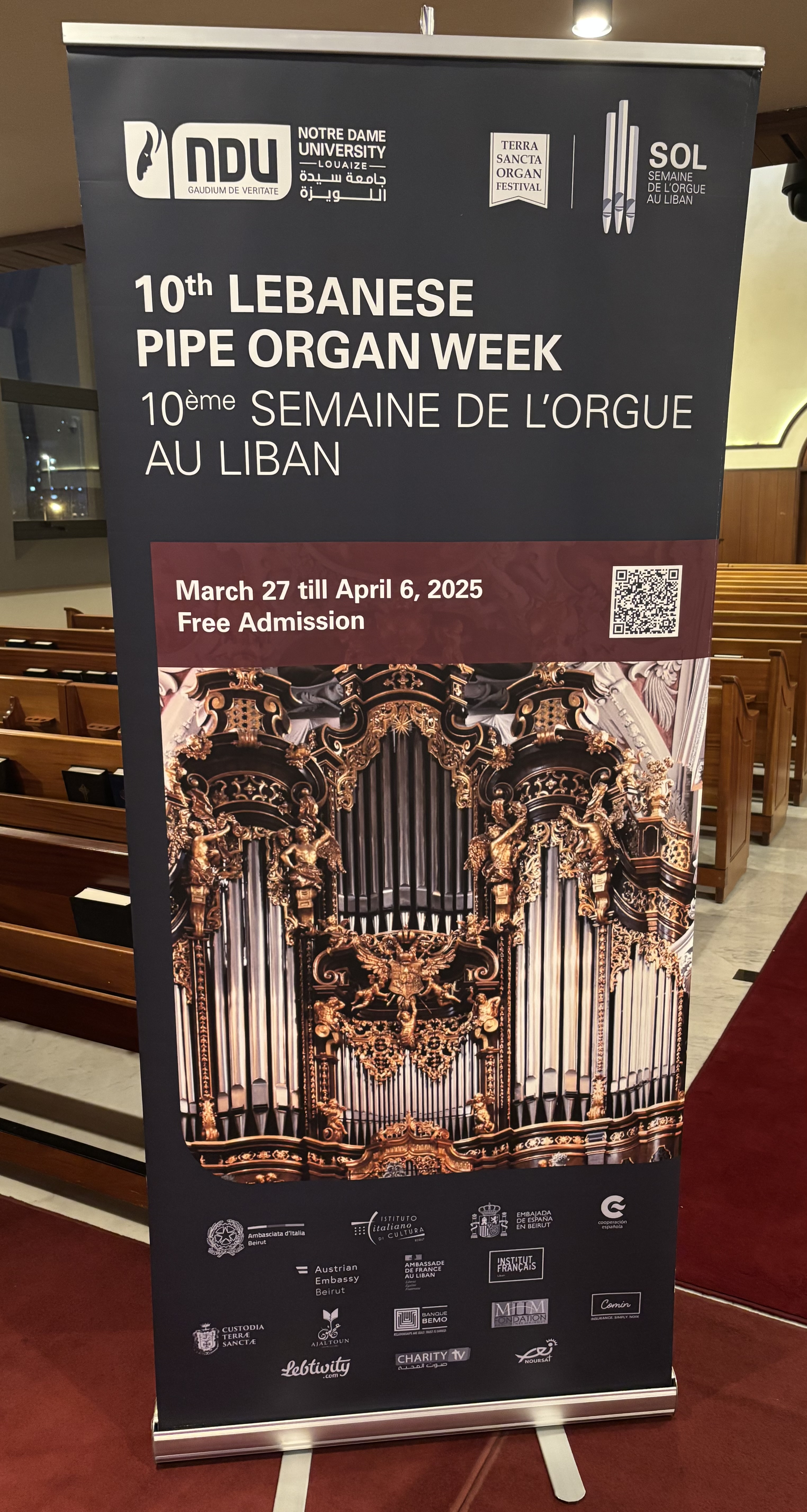
Last night I attended an organ concert, part of a week’s festival of organ music here. This was its tenth year and has been sponsored by various embassies and cultural institutes. Last night we heard a varied program from an organist flown in from Avila, Spain. His last offering was by a Lebanese composer, Naji Hakim, who first encountered the majesty of this instrument as a child in Beirut before the war.
Here is where we Westerners would say the Lebanese are so cosmopolitan, their cultural so liminal between East and West. But I think in fact that this region dissolves the dichotomy altogether. The organ has been here all along throughout the centuries. This is the land of the organ and the oud, the land of polyglots where the educated quote Shakespeare in addition to Abu Nuwas. I am beginning to wonder if what we consider Western Civilization isn’t just a diffuse subset of Middle Eastern, or, as is now expressed, Western Asian Civilization, however much we try to own it and keep it apart.
A fourth century mosaic in Syria showing a woman playing the organ.
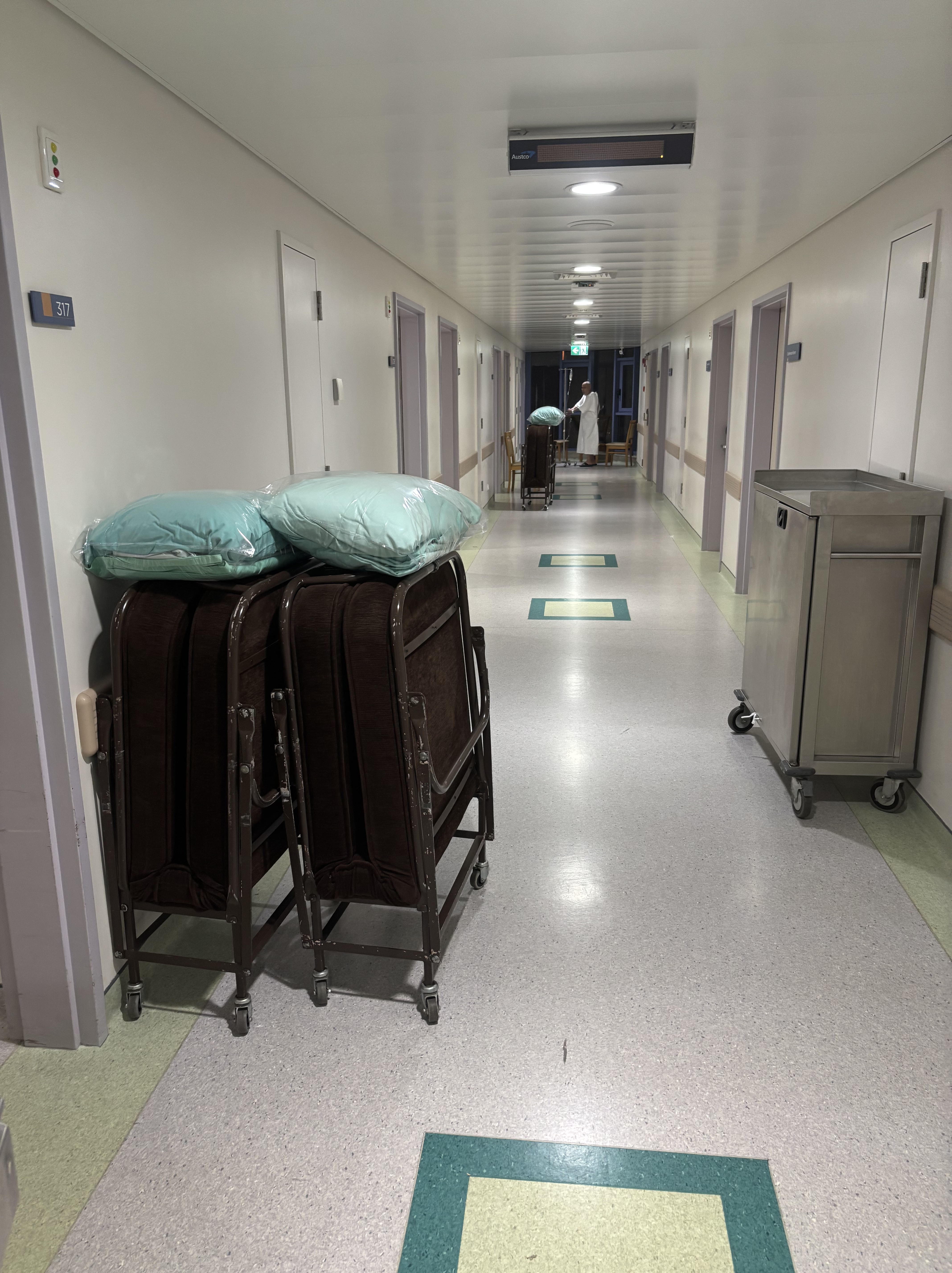
Bedding appears for patients’ families as they arrive.
These past two weeks I’ve been part of a particular encampment, that of family member at the hospital. I am here at the Orthodox Hospital with my elderly friend who has had two major surgeries in a week.
Sickness and childbirth are family occasions here, requiring not just spouses but children, parents, siblings, and cousins to gather at the hospital to wait for results and attend to the patient once back in a regular room.
The custom provides an important segment of the tourism economy. In days when I was staying at an apartment-hotel, it seemed that half of their business came from Iraqi families attending family members at the American hospital.
At night the hospital provides bed and bedding for those staying over in the patients’ rooms. It’s not quite a pajama party but we do wear track suits and other loose clothing as we shuffle wild-haired and bleary-eyed to the nurses’ station to ask for their ministrations at 3 a.m. There are call buttons but this is more polite.
Mostly our job is to comfort, entertain, and encourage the patient. Here is a system that understands the psycho-social dimensions of healing. One sees it in the affectionate way the nursing staff tends my elderly friend, calling her endearments, patting her hand, stroking her cheek, and adjusting her bedding. Every day they bathe her, usually in the shower but sometimes by sponge bath. It’s a far cry from the New York hospital where my aged mother-in-law for weeks slept in a chair by her 92-year old husband while he was in the hospital. Or the strictly business approach of American nurses with their patients. I think of another friend who has had a number of hospitalizations in Philadelphia over the past few years who rarely got bathed and only at the sink and never shampooed. In a supposedly premier nursing facility she was recently left to lie on a urine soaked pad for seven hours. Our hospitals strip us of our humanity.
The nurses here were thrilled when they saw the German last name of my friend. They made sure she got a nurse who spoke German. In fact, my friend doesn’t speak German but speaks the same three languages the rest of them do – Arabic, English, and French. Her German last name reflects a fascinating history of Irish Presbyterians converting German and Syrian Jews in the mid-19th century. Her great-grandfather was one such German and came to Damascus with the Irish mission, married and settled there.
The nurses have also been very curious about me, the American lady. My friend’s family is mostly in North America, with only the son of a second cousin here in Lebanon. He and I are taking care of her during the day and I stay the night. I have told the nurses the truth about my relationship to the patient – we’re friends from church. But my friend felt that my continued presence would never be believed as mere friendship or Christian duty and instead the nurses would consider it a cover story for a lesbian relationship. She told them I was a relative. I hope when I am 94-years old I will think anyone cares what my sexuality is.
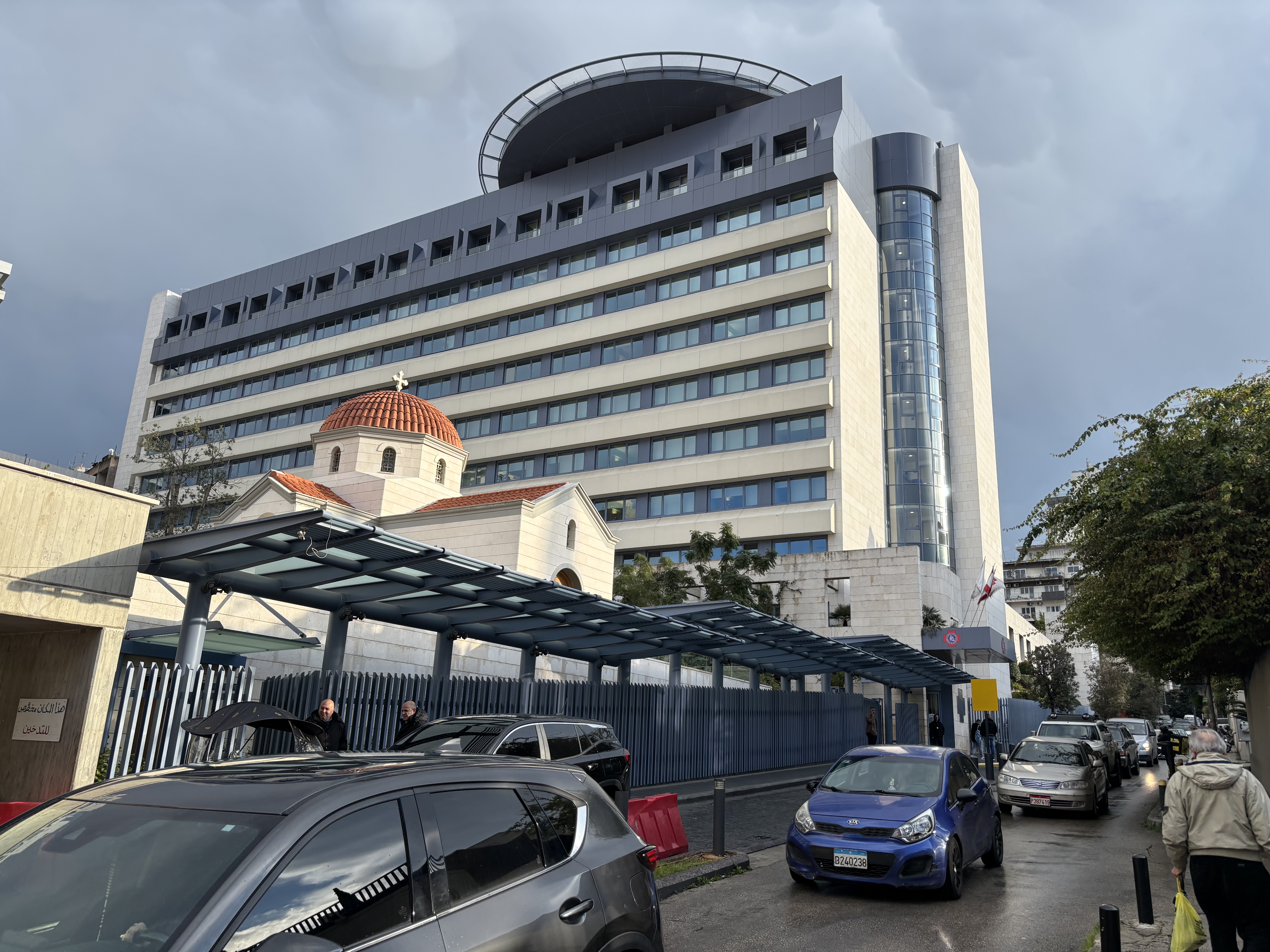
St. George Hospital, known as the “Orthodox Hospital”, with its sturdy gates.
This weekend the hospital is also going to be my bunker. Christian friends have advised me not to go out tomorrow as it is Hassan Nasrallah’s funeral. They fear that overwrought Shi’a might rampage Sunni and Christian areas. There is also concern that Israel won’t be able to resist attacking this gathering of Hezbollah and its supporters. They buzzed the city about a week ago. Two days ago we had another day of them spoofing the navigational systems here. I was only in a taxi, not an airplane (Thank God!) but my driver was going way off course until I figured out what was happening.
My elderly friend complains of my snoring. (Moi???) I have provided her with a wooden spoon so now she bangs the bedrails to wake me up from my barnyard noises. This is how I swim to consciousness these days.
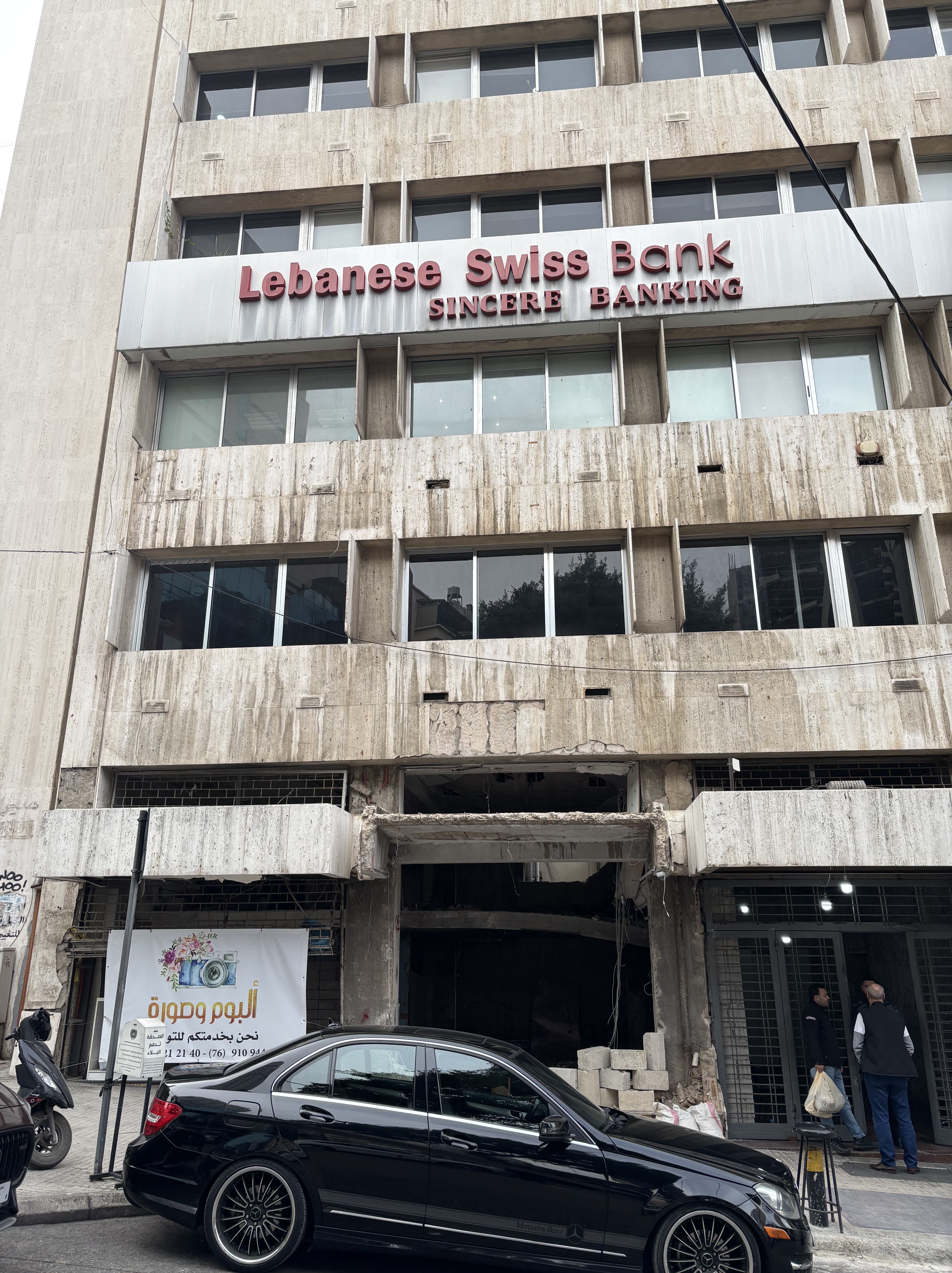
A storefront hit in my neighborhood, understood as lethal political theater for this mostly Sunni neighborhood.
A photograph of my neighborhood in Beirut would show a place little changed by the events of the past few months. True, those begging on the street are mostly Lebanese Shi’a rather than Syrian Sunnis of previous years but the vast wave of Shi’a from the South has returned to their towns and villages if not their actual homes. If anything, the streets seem a little desolate at times as if the city were permanently stuck at 7 a.m.. Drivers are again going the wrong direction on one-way streets as there is often so little traffic.
But step into this photograph and one immediately senses the change. The menacing hum of Israeli drones is a continuing reminder that Lebanon, having no air force, is completely exposed. This is a violation of the ceasefire but what country is going to enforce that? The humming sound alters how one hears airplane flights overhead – are they Middle Eastern Airlines planes coming in to land or are they Israeli bombers reminding us of who controls the skies? So far, my windows haven’t rattled so I think it’s just been MEA.
The Lebanese themselves seem at the breaking point. My pharmacist said that he can’t keep up with the demand for Prozac and other psychopharmaceuticals. He takes them himself. Friends who previously coped by gardening or hiking tell me that they are just drinking. I put one friend in touch with AA and Al-Anon. Unlike in America, where war is a video game called “Shock and Awe”, here war is felt in the gut. A lawyer friend lost his sister when she was mortally wounded while taking dinner to their 95-year old aunt – the missile that killed her was aiming for a man who was running in her direction. The local hospital had been hit and shuttered. By the time the UN had negotiated with the Israelis for permission to transport her to a hospital in Nabatieh, it was too late. A journalist friend lost three colleagues in an Israeli attack that injured four others where they had been housed for weeks as they reported on the war in the south. As Israel has a long history of targeting journalists no one seriously thinks this was anything but another war crime accorded impunity by the West.Relatives of a friend, a Christian family north of Beirut, bravely rented their family house in the village to an extended family of internally displaced Shi’a only to have it pancaked by an Israeli missile. Two survived.
But the war has other, less visible effects, like the children whose education was once again interrupted because of security concerns on the roads or the use of school buildings as shelters. Or take my elderly friend from church, a woman in her nineties in general good health. For months she was unable to find green leafy vegetables at the market as they come from the agricultural areas of the besieged south. Her intestinal issues became so severe that she now has a prolapsed rectum. Today I took her to the hospital for surgery tomorrow — a partial colectomy and an exterior bag. Our church is praying for her survival.
Lebanese society has also taken a gut punch. The million internally displaced fleeing to Beirut and north were mostly Shi’a seeking shelter in Christian and Sunni areas. Many refused to rent to them, fearing an Israeli strike or for reasons of general antipathy. The ghosts of the civil war were roused with a fury when the militias like the one down the street from me began breaking into apartments to make them available to those who faced sleeping in their cars or on the street. This is what it looks like when there is no effective government. The Shi’a have suffered greatly from this war only to have lost power and prestige. They are feared and resented, they are angry and distraught. Rubbing salt into the wounds, here is a link to the messages the Israelis left on two surviving homes in the South: https://today.lorientlejour.com/multimedia/1446252/in-images-provations-stars-of-david-soldiers-names-in-khiam-the-israelis-scrawled-messages-on-walls.html
There is an ominous Schadenfreude among some Lebanese over the recent fate of the Shi’a and Hezbollah. But they have not been spared: Israel hit areas it generally doesn’t strike to the tell the Lebanese that they will suffer a collective punishment if they don’t rid themselves of Hezbollah. That isn’t going to happen.
The so-called ceasefire has been extended although Lebanese trying to return to their homes in the South have been shot at and killed. Like everyone here, I just try to go about my business as there is nothing to be done. Nasrallah’s funeral is Sunday the 23rd in South Beirut. Might be a good day to stay home. We’ll see.
I don’t know where to begin. The assassination of Hassan Nasrallah is just mind-boggling. So I will just tell some simple stories.
A datura, the flower that brought on tears.
This morning a Lebanese friend sent me a photo of a flower blossoming in his weekend home in the mountains, a place he and his wife bought just to rescue their money while the banks were collapsing a few years ago. The photo was accompanied by an uncharacteristically poetic message as he described the white flower as a radiant bride, a testament to love against the hideousness of war. He wrote that tears streamed down his cheeks when he noticed this flower at breakfast. This is a man who returned to Lebanon at the height of its civil war to take care of his elderly parents who had fled the fascist allies of Israel operating in the South. He’s been through so much with wars and currency collapses. He has witnessed terrible things as a man and as a doctor. And now a flower undoes him.
I also received a phone call also from an elderly friend from my Beirut church whose apartment overlooks a main street in Hamra, two neighborhoods away from Dahiyeh where Israel has been wreaking destruction. She said the streets are thronged with the internally displaced, children everywhere, some of whom are sleeping on the streets. She feels guilty for her lovely home with its plant-filled balcony but what can a 91-year old do? Before I left in April I bought her two weeks of canned provisions and yesterday her nephew bought her more just before the bombardment. She expressed apprehension that the supermarkets and shops would close for fear of looting. With the decimation of the top three levels of Hezbollah leadership, no one knows how to access their usually well organized humanitarian aid.
I received a call, too, from a couple who came to the States for two weeks to do some business in the academic world and visit his aging father in Pennsylvania. They are borrowing my car because they can’t rent a car in the States as Lebanese credit cards are worthless. They called to say that they are not going back to Lebanon until there is a cease-fire and even then they plan on relocating permanently. The Lebanese wife is afraid her American husband will be attacked in the aftermath of Nasrallah’s death. Last week he lost a former student, a relief worker living in the Bekka, when Israeli artillery hit her home. Her young son died as well.
And then there are the messages on the WhatsApp of our Beirut church. Scattered between the prayer requests and calls for volunteers for the Sunday service was a spat between a Lebanese and an African member over Christian Zionism. Zionism was initially a Christian idea that Theodore Herzl took over for his Jewish nationalism project. Lord Balfour espoused Christian Zionism as he facilitated the establishment of a Jewish homeland in British Mandate Palestine. President Biden calls himself a Christian Zionist as he channels munitions to Israel. Arab Christians reject Christian Zionism as a false teaching, as do mainstream American denominations, including my own. But it is embraced by many of the evangelical churches of the American South and is spreading worldwide. Hence, the African proponent in a Beirut church challenging her Lebanese sister to bless Israel.
The Lebanese are so tired. They are trying to rebuild their levels after so many catastrophes in the past five years. And now they fear their country is about to become another Gaza. No wonder a flower can bring a doctor to tears.
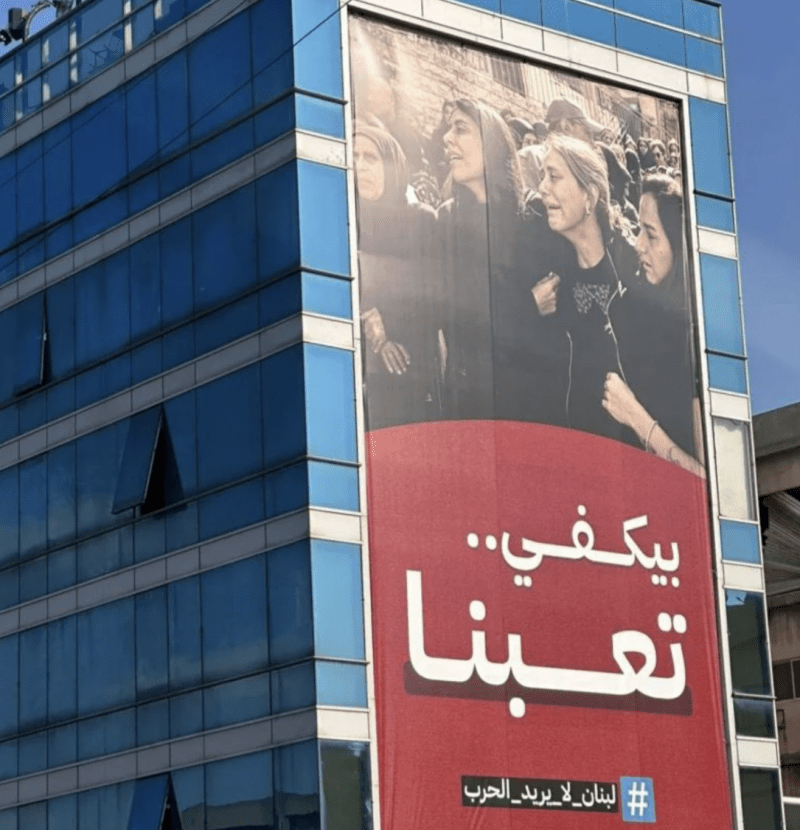
A billboard in Beirut erected this summer: it says “Enough….we are exhausted. Lebanon does not want war.“
For the past several years, each time I leave Beirut in the spring, I worry that the security situation will prevent me from coming back. One year, I was so convinced that it would that I gave my friends little keepsakes with forget-me-nots on them when I left.
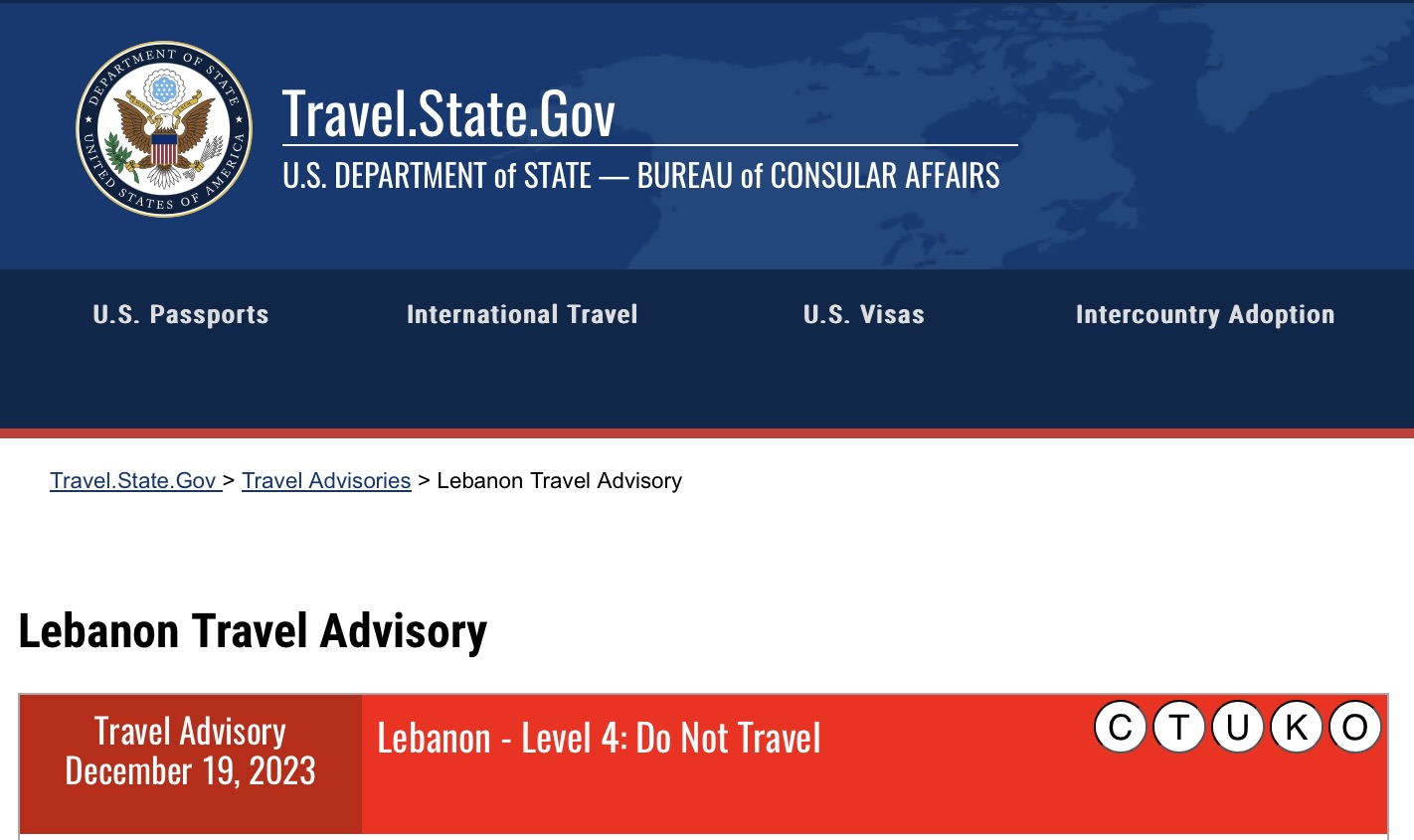
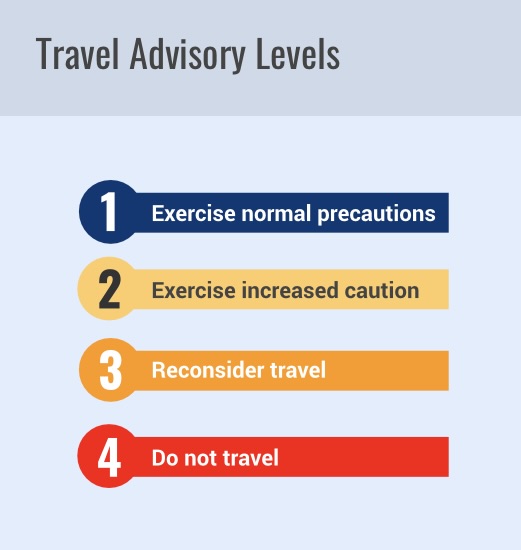
Lebanon is level four (“do not travel”) on the State Department travel advisory list, same as Yemen. But it is not Yemen. True, there is shelling at the southern border, but that is only an intensification of what has been going on, Tweedle Dum and Tweedle Dee style, for years. Yes, there was an assassination of a Hamas official in a Shi’a neighborhood in the south of Beirut, but the technology of assassination has sharpened and only those in a particular apartment were killed. There is the occasional kidnapping but unless I’ve missed something, these are extortion attempts within families. There are clashes between rival militias within the Palestinian camps but I don’t live anywhere near one and have no need to visit one.
In September, when I was visiting the State Department in DC with a Presbyterian group, the Syria Lebanon Partnership Network, I told officials there that their travel advisories for Lebanon did not reflect reality. The hysterics writing these things need to get out of the American compound more.
And where is Israel on the travel advisory list? It’s at level three (“reconsider travel”). The State Department further refines its wisdom by designating Gaza a “do not travel” area but advises that families traveling there should bring baby wipes.
Time to put on one’s own thinking cap.
In terms of Lebanon, there is no question that this place is falling apart. Last week Global Positioning Specialists, a tracking service, published a study saying that Lebanon was the #1 worst place in the world to be a driver based on road deaths and car thefts. The roads are in terrible shape, so drivers weave in and out of lanes to avoid potholes; the economic collapse has resulted in an explosion of motor cycles whose drivers evince powerful death wishes on the highways and murderous instincts on the city streets, even driving along sidewalks; cars lack functioning headlights, taillights, and safety belts; traffic lights have all but disappeared so intersections are a terrifying game of chicken; street and tunnel lights have gone dark so those cars without headlights are driving blind; drainage systems are so clogged with trash that roads and streets become flooded and impassible.
Scenes of flooding between Beirut and surrounding areas
I was relieved to read this study. I was afraid that my terror of the roads here was exaggerated. But this week even men here have told me that the roads terrify them and that they only take less traveled routes or forgo car ownership in favor of car services and the back seat. Women have told me that they have insisted that their families get larger, more crash-resistant cars. Everyone seems to have a theory about the safest times of day and week to travel and all agree that the afternoons of Ramadan are no-go times as the Muslims are fasting and are driving insanely with low blood sugar.
In the end, it all boils down to reasonable risk assessment. I feel safe enough coming here but I avoid particular risks. I take car services but only on weekends during daylight and only in the Beirut environs. I don’t take street taxis because they are not supervised by dispatchers and once I took a cab from the airport only to end up in an unfamiliar neighborhood while the driver passed me on to another, probably unlicensed, driver. I used to visit friends in south Lebanon but hostilities there have made that unwise and I won’t take long trips anyway unless I am in a large vehicle like a bus although I would prefer a Sherman tank. I am more cautious on the street at night as 150,000 displaced persons leaving the south can’t have improved security on the streets here. I know I can’t pass for Lebanese but I also know that I am around the corner from a police pill box guarding an embassy. I reckon the Syrian militia down the street would come to my aid if I screamed if only to relieve the tedium of sitting at their post.
But just in case, I have packed an emergency bag. It contains clothes, money, my passport, and a book. I must remember to get some playing cards. If the balloon goes up, I’ll dash down the street to collect an elderly friend and take her to her nephew’s in the mountains. I’m sure we could find a fourth for bridge.
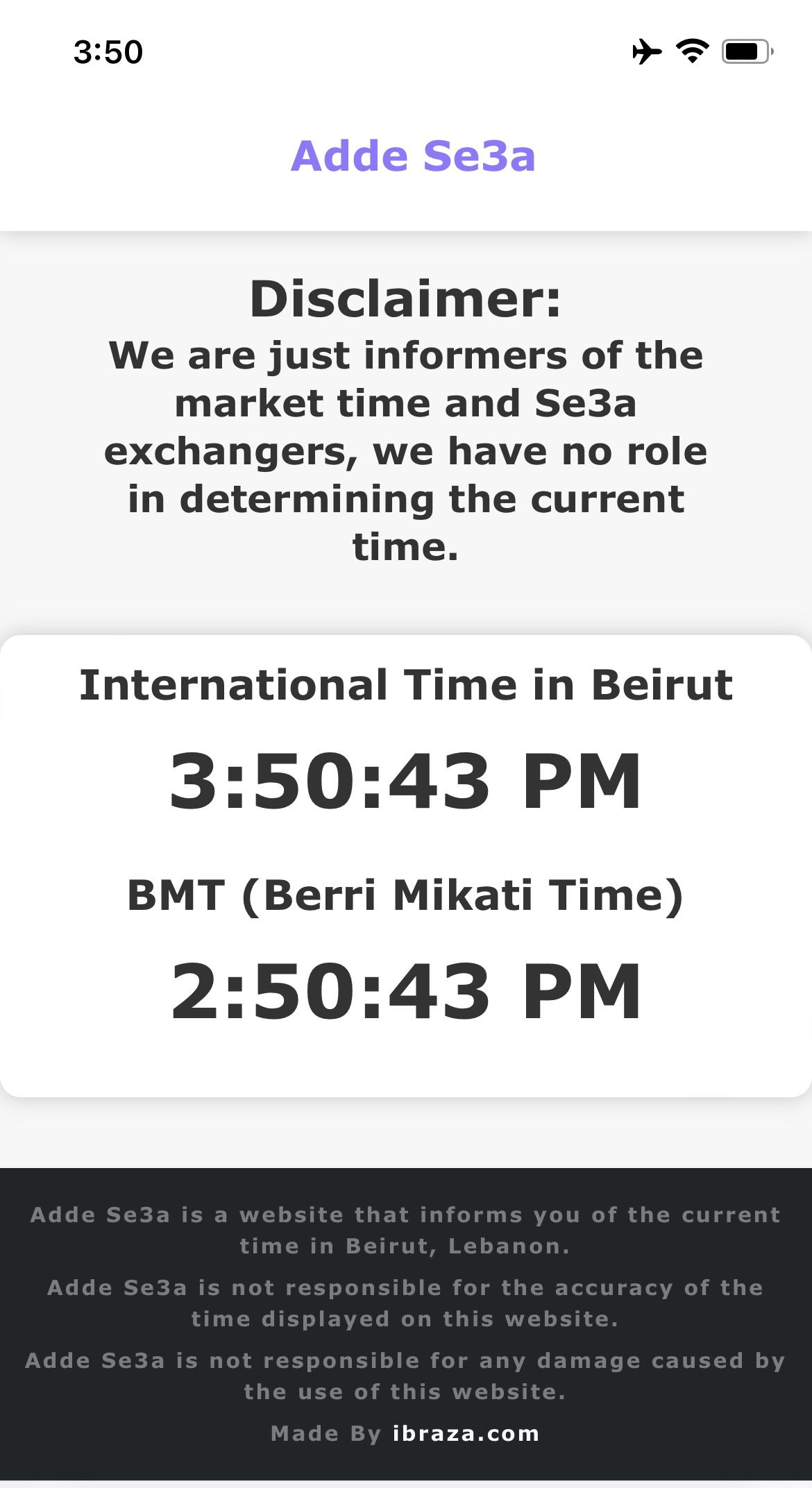
For about ten days asking the time around here was to utter fighting words. That is because the prime minister, Najib Mikati, with the connivance of the speaker, Nabih Berri, decided to postpone daylight savings for a month. The stated reason was so that Muslims could break their Ramadan fast at 6:00 p.m. and not 7:00 p.m.
Mikati, a Sunni who looks like he’s never missed a meal in his life, should know that it is not the clock that establishes the end of the day for those fasting but the setting of the sun. Moreover, Ramadan is a period where Muslims detach from regular business hours and routines. Their fast is broken by long, convivial meals followed by a few hours sleep. An hour or two before dawn they often wake up and eat something to carry them through the daylight hours, and then go back to sleep. In olden days, Muslim neighborhoods would be roused in time for this predawn meal by a man called — guess what! — a mikati. Mornings are very quiet during Ramadan as Muslims often sleep late. The roads are empty and many stores don’t open until noon. There is a feeling of lassitude throughout the day. Of course, getting through until sunset is tough but changing the clocks doesn’t lighten the burden.
A joke that made the rounds
So what was really going on? There are two main theories. The first is that this was a sectarian gesture to show that the government is now solidly in the hands of Muslims. Mikati is viewed with deep suspicion by the Christians as he announced a study showing that Christians are only 19% of the population. No census was taken but presumably some demographer has come up with this figure. I understand that the Shi’a are now referring to the Christians as “the nineteen percent”. Christians account for over a third of the registered voters.
The second theory is that the decision was a diversionary tactic to avert public attention from a contract awarded to renovate and expand the airport. If that was the case, it failed, as there was a hue and cry and the contract was cancelled.
Chaos abounded while the time issue got sorted out. Christians didn’t know when their church services were – at my suggestion, my church sent out an hourly countdown on Sunday morning because we didn’t even know what to call our regular 10 a.m. service. Private schools sent out notices to parents about which time they were adopting, leaving some parents to cope with dropping off children at different times and managing to get to work at whatever time was chosen there. Any appointment had to be confirmed by asking which time had been selected. Hospitals, the airport, and some newspapers chose to proceed with daylight savings time because their computers were updating to that time. It came to be called “international time” in official announcements but it was also called “Christian time”. The other time was called “government time”, “Muslim time”, and “Berri-Mikati time”. We were living in a weird, slightly menacing time warp.
My tablet and phone showed different times
Mikati had to have known that the last minute time announcement delaying daylight savings would throw computers, phones, and the like into chaos as he made his billions in telecommunications. L’Orient Today reported that it could take months to develop the software to re-synchronize everything. Indeed, at one point last week my phone was confusing New York City time with Beirut time. A clock at the airport was shown to have one time on one side and the other time on the other side.
In the end, the delay in daylight savings was cancelled. Ask nearly any Lebanese and you’ll get told that it is time for the political class to go.
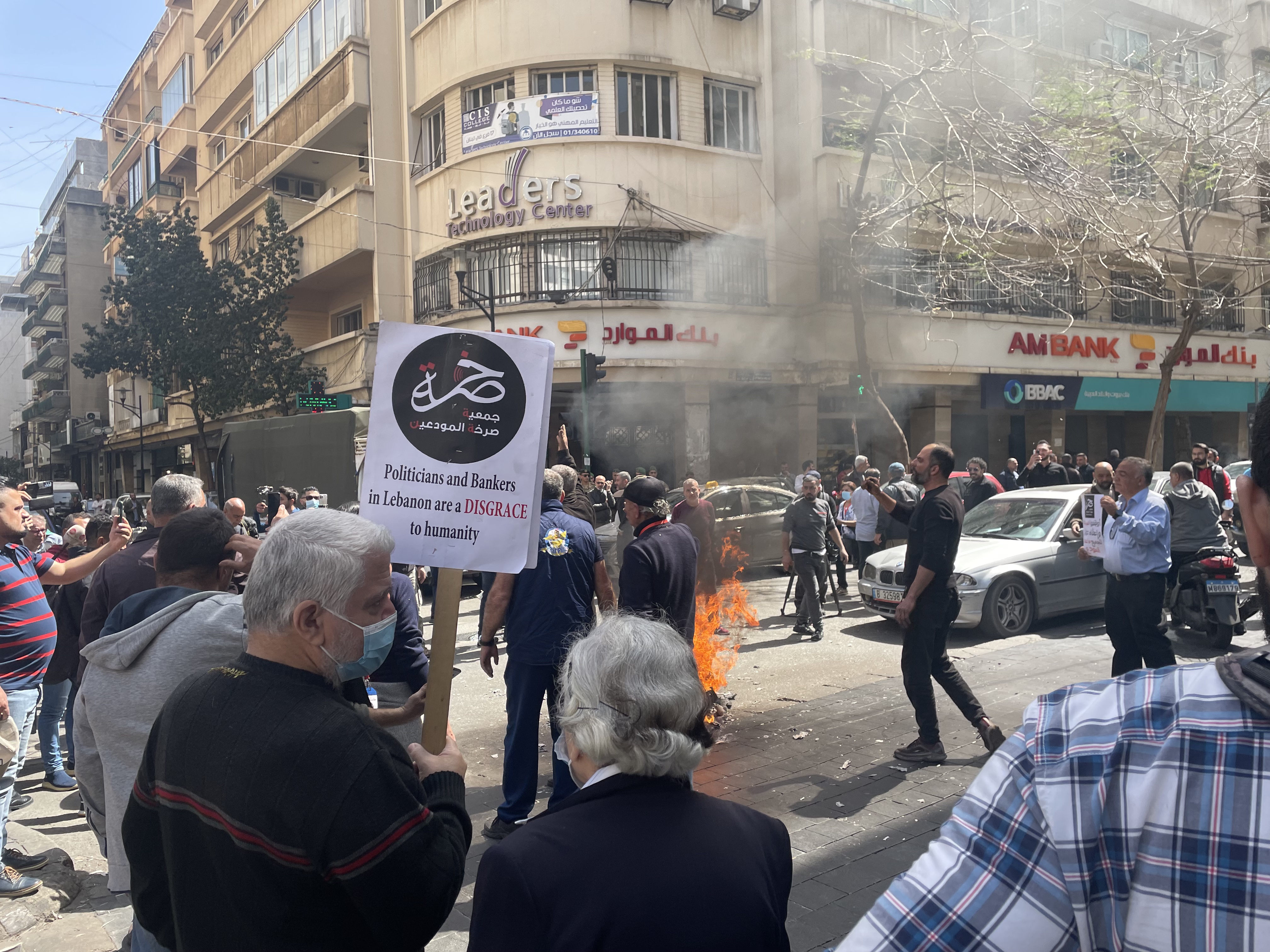
A demonstration in my neighborhood: banging on the doors of the banks with sticks and tire burning.
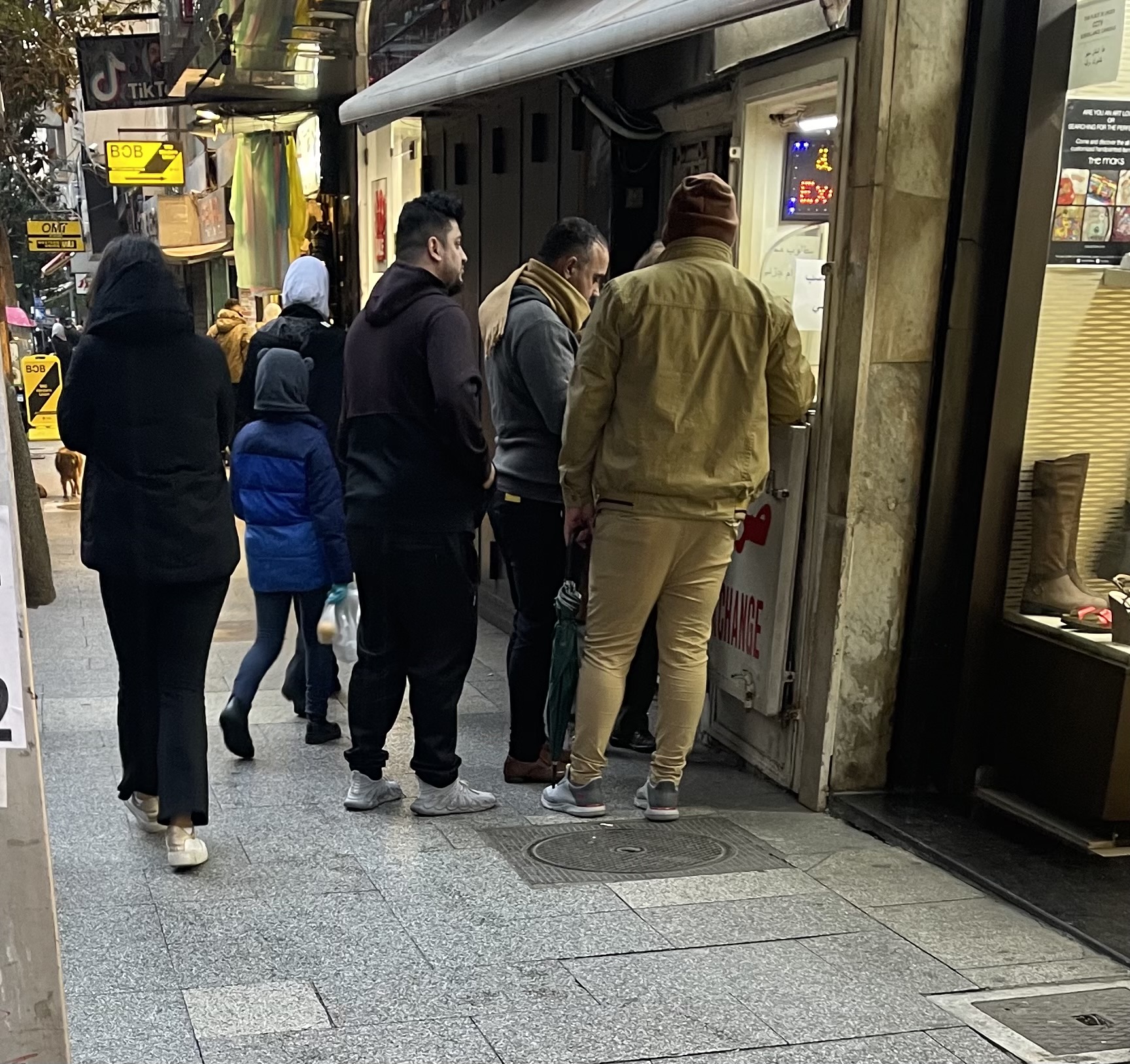
There is constant business outside of currency exchanges as people shed lira for dollars.
I flew back to Beirut with my usual luggage overages fulfilling wish lists from friends. These included a washing machine belt, Crest toothpaste, compression hose, and vitamins, all of which can be difficult to find now. American products are too expensive for most Lebanese now and shelves are now stocked with mostly inferior goods from Turkey, Bangladesh, India, and Ukraine. Replacement parts for appliances are at a premium because so many firms have pulled out of Lebanon.
The lira breached 60,000 LL to the U.S. dollar last week, a precipitous decline from 1,500 LL of four years ago. I asked people what bad news had preceded this latest 20% drop in three weeks and most people mentioned Parliament’s gridlock in selecting a president but some opined that the banks were playing currency games. I discounted this second opinion until I read in L’Orient Le Jour that in December the banks had encouraged deposits of lira by offering a very favorable withdrawal rate of these deposits in dollars. Of course there was a stampede to make deposits and a few weeks later the rules changed and people have to content themselves with getting their now devalued lira back. This is the only country in the world where people hold up banks to get their own money – and have a depositors union helping them.
These days the Lebanese are buying only what they absolutely need if they can afford it at all. Their cars, shoes, cellphones, and appliances are falling apart. A friend who is a doctor told me his shoe had become detached from its sole as he was walking to the hospital and he had to duct tape it to get through the afternoon. He said he can’t afford a new pair of shoes and will be wearing his sneakers to work now. His sister, married to a doctor, can’t afford to replace her defunct cellphone.
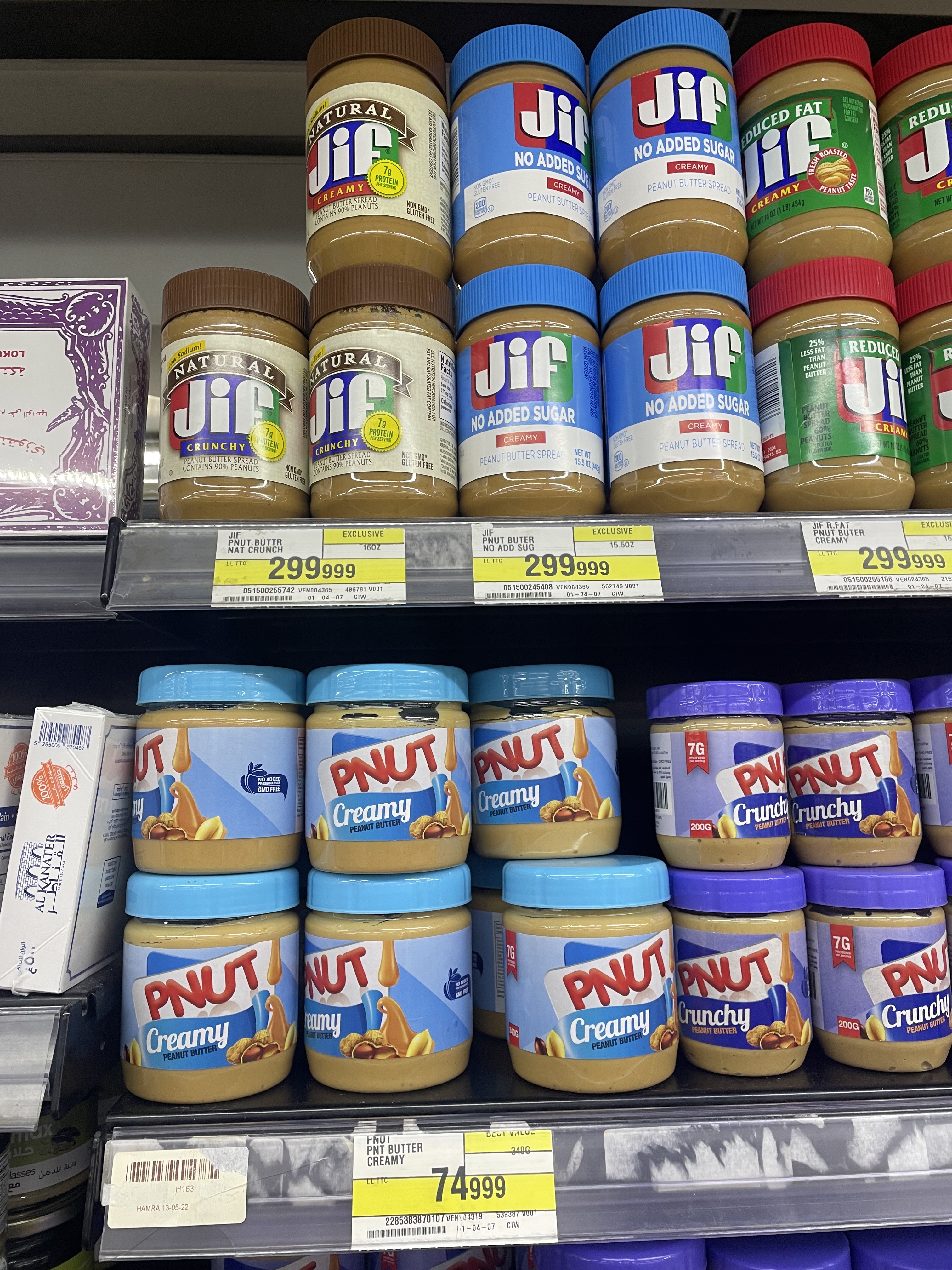
The price differential of American versus Indian peanut butter.Those were last week’sprices. On Friday the prices rose to 403,999LL and 69,999LL (as if there were coin money anymore.)
This family is fortunate as they have skills to barter. The doctor bartered his skills with a colleague to have his sister’s fractured arm set and put into a cast. The sister barters her teaching skills for dinner at the end of the day.
I ask everyone how they and others are managing to survive. The answer I invariably get is “with outside help”. The Lebanese diaspora in the West and the Gulf is sending money home not just to their extended families but also to friends. The U.S. government recognizes the dangers of desperation for recruitment to ISIS and other groups and is sending monthly bonuses to members of the securities services as their monthly salary has fallen to about $80/month. Shi’a friends tell me that Hezbollah is under enormous pressure to focus on helping its constituency rather than fighting as their constituents are the least likely to have relatives sending them money from outside.
People’s greatest fear here is a major health emergency like the heart valve replacement required by a friend’s mother, a retired nurse. She has to go before a government panel to argue her case, as if anyone undergoes this procedure recreationally. The family will have to sell their home if her petition is denied. Civil servants can no longer expect their health insurance plan to cover anything but a fraction of their health care needs.
Everyone is angry at the political class. They are seen not only to have robbed the country of its wealth and sent it abroad but now can’t even function enough to elect a new president so the nation can sign loan agreements. Of course, those loan agreements would contain anti-corruption measures, so one appreciates the impasse.
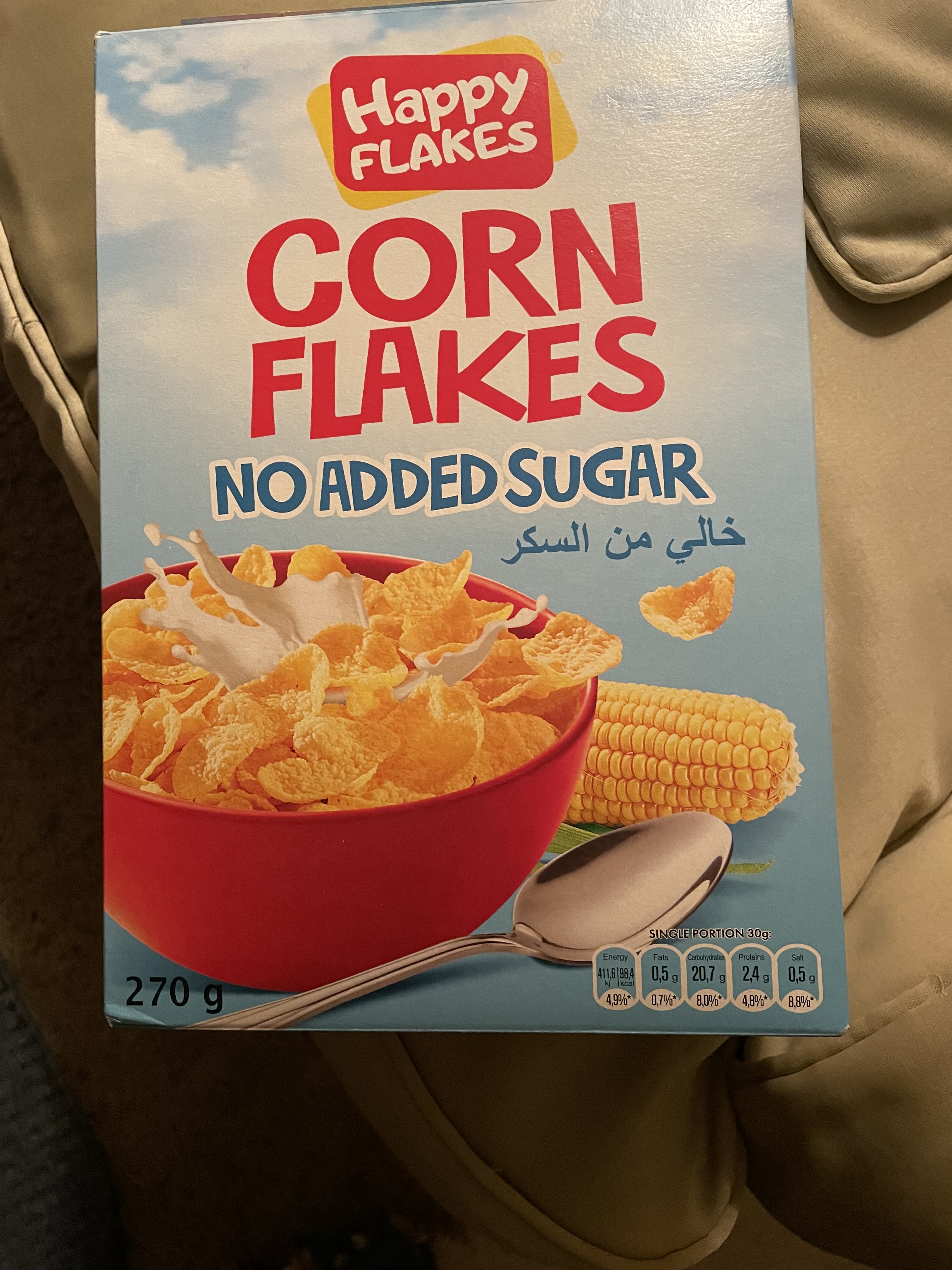
Ukrainian cornflakes strangely taste of wheat, or is it cardboard?
Next Wednesday the country will be shut down by strikes. Many public employees are no longer showing up to their jobs anyway. The public schools are shut, pending labor negotiations. Lebanese University, which didn’t have light or heat last year, this year didn’t even open in the fall as the teachers can’t afford the gas to get to their jobs. The post office is threatening to go on strike and the transport sector, such as it is, is going on strike along with public hospital employees.
It will just be venting. The political class isn’t budging. People speak longingly of army coups, revolution, and even invasion. One friend wants some Western billionaire to buy the country for its debts and set it on the straight path. Another friend, a Christian, says she wishes Hezbollah were in charge of the government because they know how to take care of people. In a normal country, a revolution or a coup would be conceivable but in Lebanon it would just set off another civil war. The fault lines here are so deep that even the families of the 2020 port explosion are divided and the judge and prosecutor are canceling each other out.
But everyone knows that things could be worse. They know what civil war looks like. They have friends and relatives in Syria where the ravages of war and Western economic sanctions have eviscerated the country. People there are not just hungry but becoming malnourished. A Syrian friend told me a high school classmate is losing teeth to malnutrition. A Shi’a family who had lived as refugees for years in Beirut returned to Syria two years ago to take care of aging relatives have told us they now wish to return to Lebanon as there is no work, electricity, medicine, or education for their children where they are in Kurdish controlled Syria. (I know them from a local church where they allow their children to attend Sunday School but that’s another story).
No one can predict the future, good or bad. And so the Lebanese endure. Living day by day. Anxious, angry, and trying to be grateful for getting through another day. Dreaming of dictators.
Tomorrow is when Lebanese in Lebanon go to the polls, or, at least, that’s the theory. I’ve only found one person who is actually going to cast a ballot and it will be a spoiled or “white ballot” at that. He won’t actually vote for any “list” or fixed combination of candidates. He just wants to show that he was there, furious at the system, and take his ballot away from anyone wanting to use an unused ballot for their preferred list.
This man has some shops in Hamra. Today he closed them early so he could go to his ancestral village before the roadblocks and other impediments crop up to make travel to the polls difficult. Decades of residence in Beirut is not enough to qualify to vote in Beirut. Men and single women go to their ancestral village and married women to their husbands’. The system insists on keeping people parochial rather than forming the kind of progressive political force that cities tend to produce. Church-going Christians find it especially onerous to go back to the village on Sundays and several have voiced their view to me that Sunday was especially chosen to dampen Christian voting participation.
I’ve pressed people on why they aren’t bothering to vote and the answer is a firm belief that the elections are corrupt and a foregone conclusion. I certainly remember hearing that the cost of selling one’s ballot in 2018 was about $500. This year, people tell me the price is much cheaper as so many Lebanese are desperate. “They can be bought for a bag of bread”, an elderly woman told me. The dead who vote don’t expect anything at all.
Still, the phones ring constantly urging people to vote for a particular party and its list. Friends tell me it is driving them crazy. There is a lot of money sloshing around political campaigns in Lebanon. No one questions that there is a lot at stake: the banking system, the economy, the Iran versus Saudi alignment, Hezbollah and its continued use of arms, to name a few of the issues.
But the system is set up for stasis. A person votes first for a set list of candidates and then may indicate the preferred candidate. Each candidate’s religious affiliation is listed along with the party. Each electoral district has an assigned number of Muslim and Christian seats. It boils down to a contest between preferred candidates of winning lists getting slotted into these sectarian seats. These people go on to determine who the President will be (Maronite), Prime Minister (Sunni), Speaker (Shi’a). The ministries are similarly horse traded. The system is designed to perpetuate sectarian politics, not transcend it.
It doesn’t help that those wishing to institute real reform in Lebanon have not organized into one party and list for each district. About a third of the candidates running tomorrow are opposition candidates — over twice as many as in the 2018 election. The revolution or “thawra” was always internally divided between the incrementalists and the revolutionaries. In some districts, the opposition groups are running against each other.
The one significant change in the make-up of the lists and candidates is that the party of former prime ministers Hariri, father and son, is not participating in this election. The Future Party consolidated Sunni votes and now these votes are up for grabs. It is expected that Hezbollah will end up the winner here but it is nonetheless an opportunity for the opposition.
For the last several years the Lebanese government has made efforts to get expatriate Lebanese to participate in the elections. In fact, it has encouraged people of Lebanese ancestry through the male line to claim Lebanese citizenship and vote. This was part of an effort to get expats to invest in Lebanon, to be the country’s white knights. A total of 244,442 Lebanese abroad registered to vote this year, over twice the number for the 2018 election. This increase may reflect the estimated 300,000 Lebanese who emigrated in the past two years. Expat voting occurs a week before the Lebanese elections so it is now known that only 60% of those registered expats actually cast a ballot. Here again, the pessimism of the Lebanese about their system comes through: expat ballot boxes come through the airport, Hezbollah territory.
A campaign banner in Beirut
People seem to be holding their breath until the elections are past. There is concern about violence like that which occurred in the south a few weeks ago when a rally for Shi’a candidates running in opposition to Hezbollah was disrupted by gunfire. Some of my now expat friends abroad do not want to return to Lebanon until the election is over and things appear safe. There is concern that entrenched parties may destabilize the country by delaying the formation of the parliament or resorting to violence.
Maybe the gloominess about the election is justified and voting really just ratifies a corrupt and broken system. I don’t know. But I do know that this general distrust of the electoral system is closing off an avenue for change in Lebanon just as surely as the myth of “The Big Steal” is doing so in America. If citizens see their elections as dirty, what is Plan B?
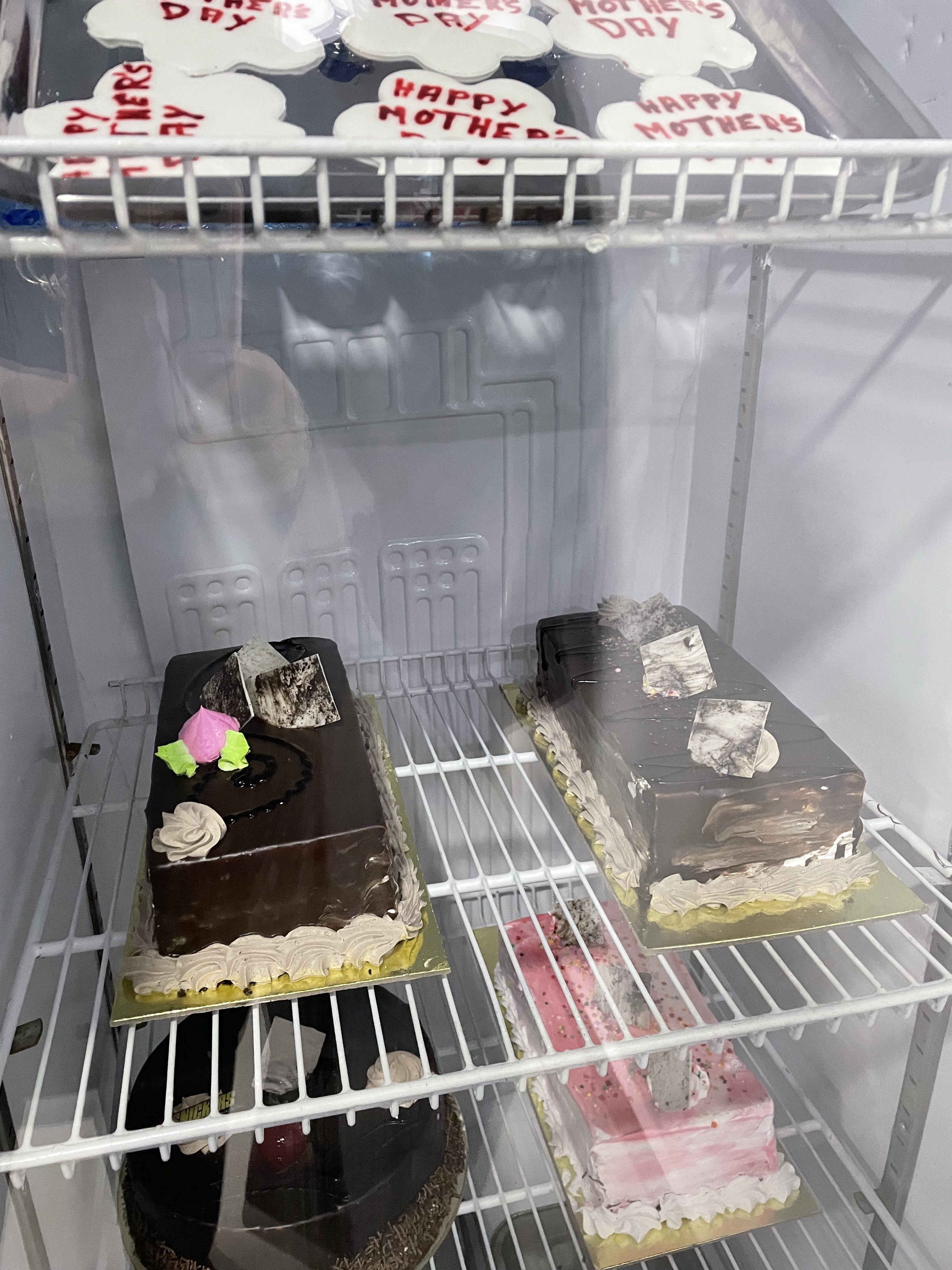
Six weeks weeks ago, on Mothers Day in Lebanon, my friend Imad and I were walking on a side street in Hamra, the neighborhood where I live, when he took a bad fall. We had been heading to the only bakery left in the neighborhood to look at a strawberry cake I had spotted for Imad’s wife. If it suited, Imad would have been spared going to a neighborhood which had been experiencing thick traffic jams that day due to car owners trying to prepay their car registrations before the fees went up.
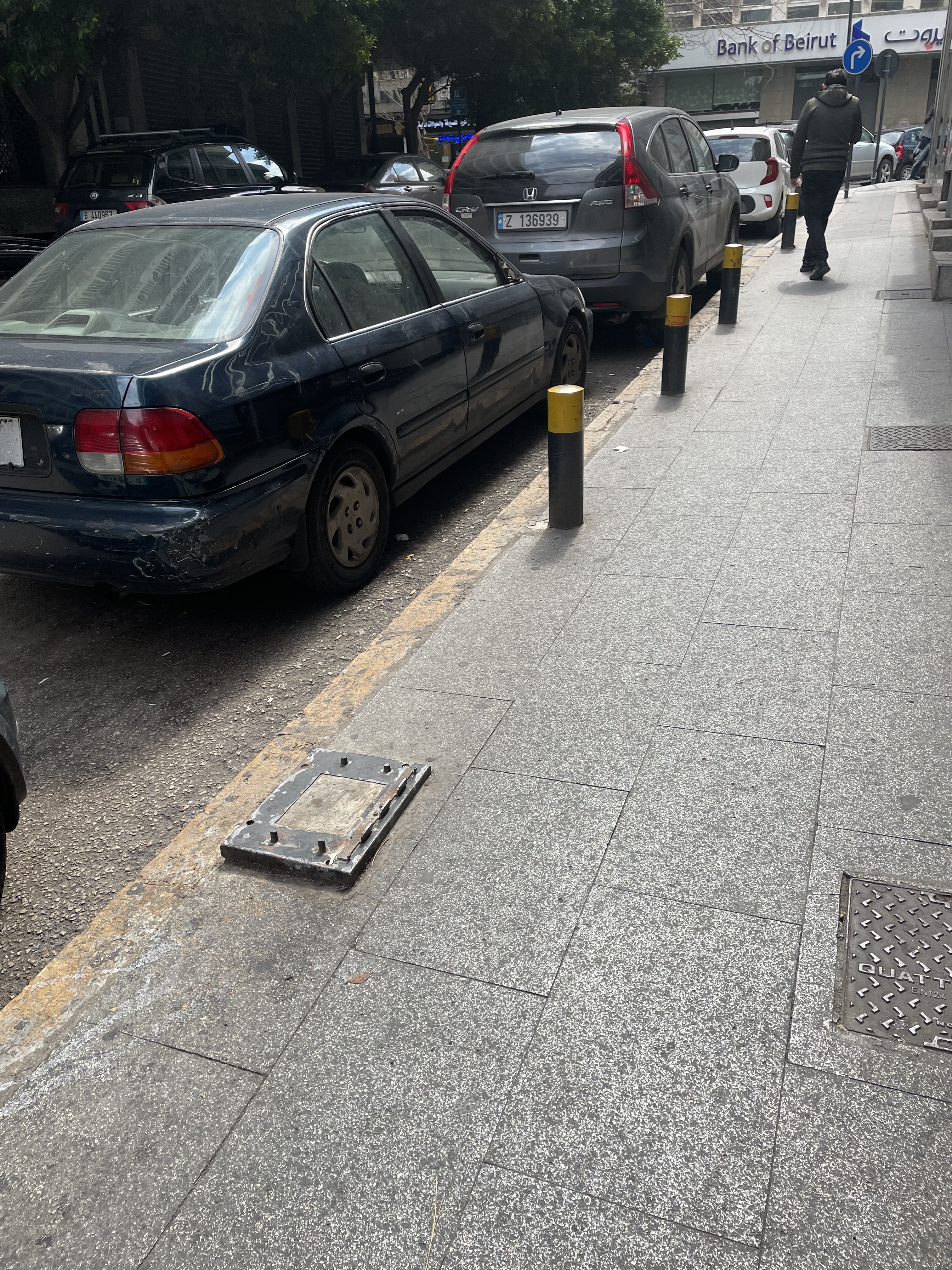
The street was dark, as all streets are dark now in Lebanon. What Imad tripped on was the base of a parking meter which had been stollen, presumably sold for scrap. As a doctor, Imad immediately knew he had broken his femur and feared he had also broken his hip. He was in excruciating pain. We called the Red Cross, trying desperately to tell them where we were, a difficult task as there is no address system in Beirut. We had to mention landmarks like country folk describing their location. By-standers on the street rushed to his aid, one man holding his head up off the sidewalk with the help of his hands and my knitting bag. They were immensely kind.
Parking meter base whose rods caused the accident
The Red Cross came quickly and worked with great professionalism in getting Imad onto a stretcher despite his pain and immobility. He asked to be taken to the American University Hospital. Their question? “Do you have insurance?” Yes, he does. He gets his medical insurance through the doctors’ syndicate here but had recently downgraded his policy to second class because of the costs. When he was mulling this decision a few weeks earlier, he explained to me that the difference between first and second class insurance was that first class patients get priority if the hospital is overcrowded plus they get better rooms. The healthcare is supposed to be the same.
At the hospital, Imad was placed on a stretcher pending the arrival of his wife and daughter with $1,000 cash in spite of the fact that he has health insurance. The insurance arm of the medical syndicate hasn’t been paying the hospital bills promptly so up front cash is demanded. That was two hours of neglect while he was in excruciating pain. Between the wife, daughter, and son the family managed to assemble most of the cash. The hospital also demanded the donation of 2 units of blood. But no one could donate blood, for health reasons, so they called a good friend who came down to donate on their behalf. A nurse told me subsequently that no hospital should take two units of blood from anyone as that represents 20% of the body’s blood and puts the donor at risk.
The next day Imad had an operation that lasted five hours. A stainless steel rod was implanted into Imad’s thigh bone extending all the way down to just above the knee. It is not at all clear that this was the appropriate length of rod as the actual break is near the hip. Imad fears the same thing happened to him as happened to his father whose surgery during the civil war left him with an uneven gait. Supplies were short then as indeed they are now.
Eventually Imad was moved to a bed on a hospital floor to begin his convalescence. As in all hospitals, this is a balancing act between monitoring and caring for a patient while preventing the risk of secondary infection. The family learned that next door was a Covid patient. Usually hospitals have separate floors for separate health issues, partly to prevent the spread of infections to patients recovering from surgery and childbirth. But we learned that AUH has lost so many doctors and nurses to emigration that it has closed floors. And maybe their patient base is shrinking, too: how many families are left in Lebanon who can cough up $1,000 in cash these days now that their savings are frozen?
Padlocked window at the American University Hospital
Sharing an air circulation system with a Covid patient made getting Imad home a matter of urgency. It turns out there isn’t even an option to open the window at the hospital. No one has been able to open a window there for years. They are padlocked. This is reportedly to prevent suicides and smoking.
But to leave, the family needed a 25-day supply of anticoagulants. The chance of a dangerous post-operative blood clot is about 10%. Despite us running around a number of neighborhoods asking pharmacies for the required medication, none could be had. The pharmacists told us they hadn’t any for months.
What to do?
The doctors’ syndicate couldn’t help and Imad didn’t know anyone high up enough in the health ministry. It was time to resort to desperate measures. For the last several months Lebanese have been flying to Istanbul for the day to pick up medications. Or asking friends from the Gulf to bring them in on their next trip home. It is illegal but even the government knows better than to challenge these travelers. Of course, a trip to Istanbul would add $500 to the cost of Imad’s care.
Before implementing this plan, Imad called a fellow doctor whom he had known since medical school in Russia forty-odd years ago. Mohammed is a Shi’a. He took himself to Dahieh, the Shi’a neighborhood to the south of the city often described as a Hezbollah stronghold. There he located the medication at the first pharmacy he entered. Hezbollah makes a point of provisioning its people when the government can’t. So Imad was able to get his medications thanks to Hezbollah.
We have since learned that there is a service at the Beirut airport where one can order pharmaceuticals from Istanbul and pick them up a few hours later. No one at the hospital mentioned this, perhaps because it is illegal or the staff is too overworked to handle discharges properly.
Meanwhile, Imad had sent his Russian-born wife down to medical records for a CD of his leg, pre- and post-operation, and to get a refund for the cash deposit and the PCR and blood test he had had to pay for upon arrival at the emergency room.
She came back empty-handed. So Imad decided to put the frighteners on the AUH administration.
He sent me. “They’re afraid of Americans here”, he told me. I got the job done.
Now to get an ambulance to send Imad home. He needed a stretcher as he can’t put weight on his leg. It was five in the afternoon when Imad began calling the Red Cross, the only free option. Three hours later they still hadn’t arrived. They were having a busy evening. Time was running out as the electricity in the family’s apartment building would be cut at midnight and they would lose the use of the elevator. Staying at the hospital through another night wasn’t an option – the insurance wouldn’t pay for it and another patient needed the room.
So, Imad called the ambulance service that charges a fee. They quoted the equivalent of $75. I thought that sounded reasonable but still the family hesitated. Imad’s disability represents a significant loss of family income. I suggested they set a time at which they would resort to the ambulance company and not look back. They decided that would be 9:00.
A few minutes past the deadline, Imad picked up the phone to call the ambulance company when his wife shouted “No! Don’t call them!”. She was balking at the $75. This is the equivalent of her monthly pension as a part-time doctor at a clinic, such is the collapse of the currency. We talked her around and the company came within 20 minutes to take the family home.
Did we take the elevator directly down to where the ambulance was waiting? No, we did not. AUH has put up barriers to patients leaving for fear, as the ambulance workers told us, that patients would “escape” without paying. So, a nurse had to use his security pass to get us through a labyrinthian route down to the ground floor. This can’t be a good use of a nurse’s time.
The one issue I couldn’t help them navigate was the question of tipping the hospital staff. Imad felt it was his obligation and his wife felt vehemently otherwise. Only later did I learn that it is expected that orderlies get tipped and, increasingly, nurses. No one’s salary is sufficient these days.
Like all Lebanese, this family has seen its savings from decades of work disappear into the maw of the banking system, probably never to return. The wife said a friend of theirs, another doctor, had died of Covid, having been refused admission to the hospital for lack of $1,000 cash in hand.
I asked Imad how the family had even had $1,000 in cash on hand the night of the accident. “In case we need to flee”, he answered. He was thinking of a sudden attack like Israeli’s bombardment of 2006. There is no doubt that there is hostility at the border but more and more now, the Lebanese are forced to confront the devastation wrought by enemy within, its spectacularly corrupt political class whose depredations have caused the collapse of the country’s infrastructure.
A parking meter still intact. We heard that the parking meter company is no longer operating in Lebanon and these meters are just detritus.
So many people have left Lebanon in the past two years that it hardly feels like the same place.
The person I miss most is a widow named Elizabeth. She married a pastor nearly sixty years ago here and they committed themselves to their church even during the war. Both of them had foreign passports and could have gone to the UK on hers or to Australia on his but even the war could not budge them from this place. She has described to me life during the war when her husband posed a kidnapping risk and he had to stay in their apartment full time except on Sundays when a posse of parishioners came to escort him to the church. It was left to Elizabeth to lug the water bottles up three flights of stairs, stand in the bread lines, and take their children to school when it was open and teach and entertain them when it was not. Not to mention functioning in her own job as a teacher. At one point, one of the militias took over some apartments in her building and only later did she learn that the building was also an arms dump for them, successfully concealed when the Israelis came looking. One night a car bomb exploded in the street outside her apartment and she and her husband spent hours picking glass shards off of their children and the bedding. Their car was stollen off the street, twice; the second time it was not returned. The family regularly joined their neighbors in spending nights on end in the building corridors and basement during shelling attacks.
I asked Elizabeth once how she managed to deal with the stress of the war and she said she was just too busy getting through each day to think about it. On top of everything else, she also had parishioners staying in the apartment when traveling back and forth across the Green Line became too dangerous. It was crowded at the church, too, as the church allowed a family of Palestinians to camp out there for the duration. There was very little privacy for this devoted couple.
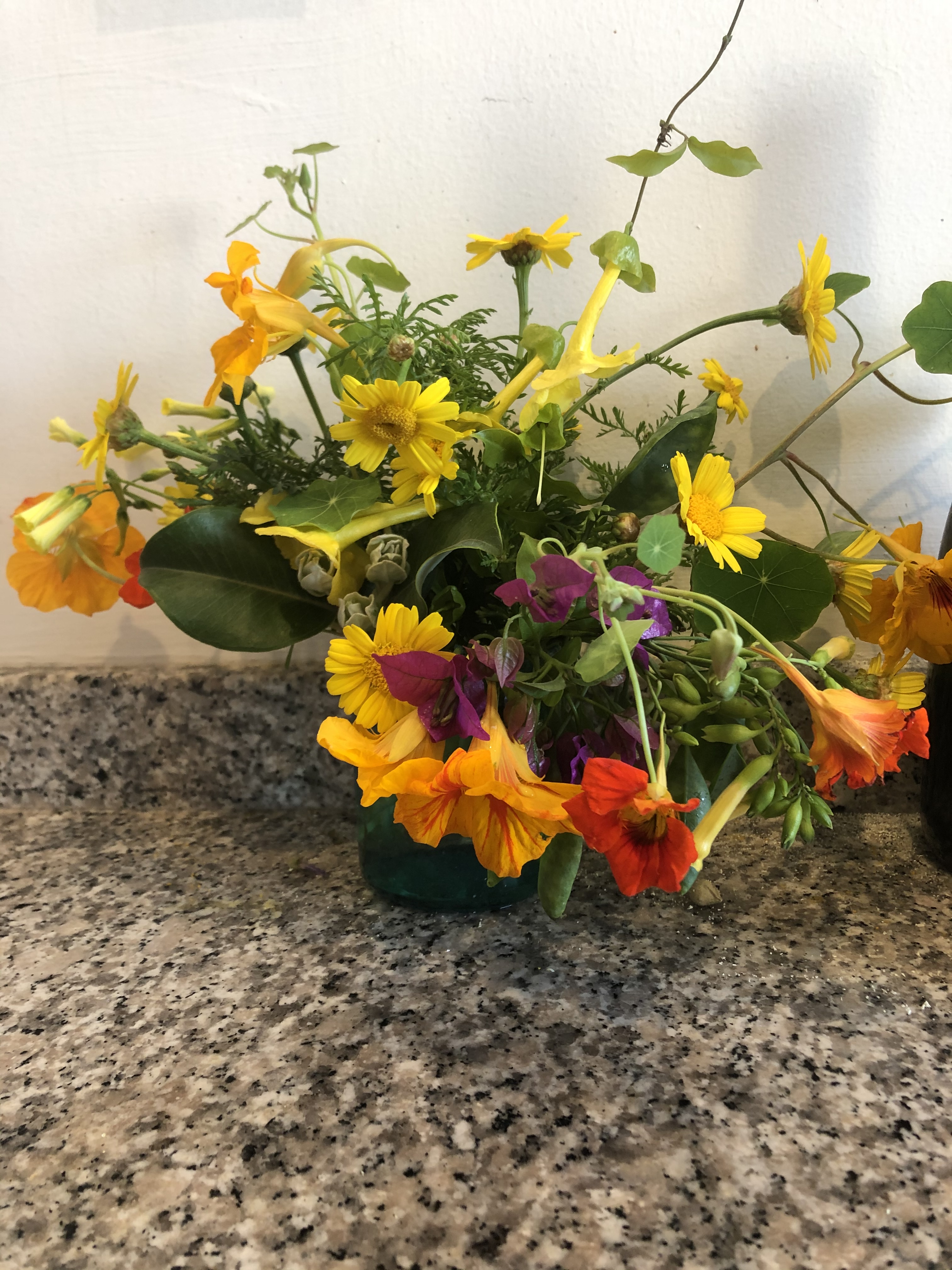
Yet for all the fear and hardships endured during the war, like many Lebanese, Elizabeth remembers the comforts she and her neighbors could extend to one another whether by keeping their children amused together when schools were closed or inviting one another for coffee and a chat. Corona and the economic collapse have put paid to that. Elizabeth has watched her grandchildren live in isolation from their friends when the schools close and she can no longer have coffee with her neighbors for fear of the virus. Once the pandemic started, Elizabeth and I developed a very companionable habit of walking through the neighborhood once a week, picking wildflowers in the various empty lots. She invited me into her family pod and I helped her through knitting projects as we watched t.v. with the grandkids.
Bouquet from a flower walk with Elizabeth last year
Despite blandishments from her children living in the U.S. and Australia, Elizabeth has never had any interest in leaving Lebanon. As with so many of her peers, she has watched her children leave, get married, and raise families abroad, still hoping that someday they would come back. She is more fortunate than many in having a remnant of the family here and she is still indispensably active in her church.
Now this valiant generation who stayed put during the war is leaving. Elizabeth herself is taking steps to claim her late husband’s Australian citizenship. It is the scarcity of medications and the flight of so many doctors and nurses that has finally tipped the balance. Beirut, once a world class medical center, is now bereft of medical supplies and personnel. Last summer, cancer patients demonstrated in the streets against the scarcity of lifesaving medicines. There are workarounds at the individual levels — day trips to Turkey or the Gulf to pick up supplies — but these don’t help clinics and hospitals do their jobs. Unless this changes, Elizabeth will have to leave and Beirut will lose a steadfast community anchor.
It’s not just Elizabeth I’m missing. I’m missing Ramzi, a commercial film maker, who normally comes back to Beirut from London every chance he gets. But now work has dried up here and even if it hadn’t, editing would take a long time due to the scarce and capricious electrical supply. He and I used to like to hang out in a local bar at the end of the afternoon, waiting for friends to finish work before joining them at a restaurant. Ramzi loves to talk to me about his family’s history as his forbearers were early adherents of Presbyterianism and worked alongside American missionaries as they established schools in Lebanon. His father was a noted folklorist whose photograph greets the traveler in a montage of Lebanese cultural icons at the airport. That family also stayed in Lebanon during the war, moving to Beirut once the south was under the control of the horrifically violent South Lebanon Army, a Christian militia backed by Israeli. Ramzi himself was a journalist at the time and spent two days in a foxhole with the corpses of his colleagues before being captured by the Israelis. Fortunately, his capture was filmed by Western media and he was allowed to survive. Ramzi will be coming back for a final visit next month to close down his apartment and settle his affairs.
I miss Fadi, a banker from a well known Shi’a family who converted to Christianity years ago. He’s now in Cyprus with his wife and son. I miss Samira, a Syrian refugee whom Elizabeth took underwing with her six children and taught them English when the schools were closed for Covid. Samira and her husband allowed their children to attend Elizabeth’s Sunday School as a form of cultural enrichment although Samira herself is Shi’a who wears a headscarf and her husband a Communist who didn’t want his children inculcated with Islam. They fled the Syrian government years before the uprising started but are now back, living in a Kurdish controlled area so they can take care of his aging parents. But there is little work for her husband and no nearby school for their children and Samira misses Lebanon. I miss Lily, an NGO administrator whose last job was with the World Food Programme. These personnel mostly cycle through a region so it was inevitable that Lily would leave but I miss discovering parts of Lebanon with her in the days when there were still traffic lights.
And I miss my church here, not that it isn’t still here in the physical sense but its membership has been decimated and its culture is changing to reflect the views of those who remain. We have lost professional class members who have returned home to the West, having lost their jobs or having found life here too difficult. We have lost women migrant domestic workers from the Philippines and Ethiopia whose employers can no longer afford the pittance they had been paying. In these losses we have lost institutional memory since most of the handful of people still attending haven’t been here more than two or three years. It’s mostly the African men who are still here as their mechanical expertise is still keeping buildings and boats running. Now their transactional Christianity faces little resistance. No theodicy issues here — the good prosper, period. I can’t imagine how they deal with the cognitive dissonance of working for the very rich Lebanese. Time for another sermon on The Book of Job and how the good suffer.
In fact, The Book of Job is a good place to find solace, too. For all that the steadfast Job lost, he regained in new form. Even now I find myself spending time with acquaintances who are becoming friends. Chief among them is the 93-year old Hilda, a retired nurse in my neighborhood who told me the other day she considers me a sister. She has no option but to stay although all her family have left. She regales me with stories of her idyllic childhood in Damascus as the daughter of a doctor and nurse who ran a lying-in hospital there. Sometimes, she talks about living through Lebanon’s civil war and the constant fear she had of home invasion by the militias. She asks me about the US political scene and why there is so much racism there. Her multiple medications are supplied by a businessman relative who flies in and out of Beirut. “I manage, I manage”, she tells me in her darkened apartment lit by a lantern. May her patient endurance be an example to those struggling to remain.







 goingfortheguttural