
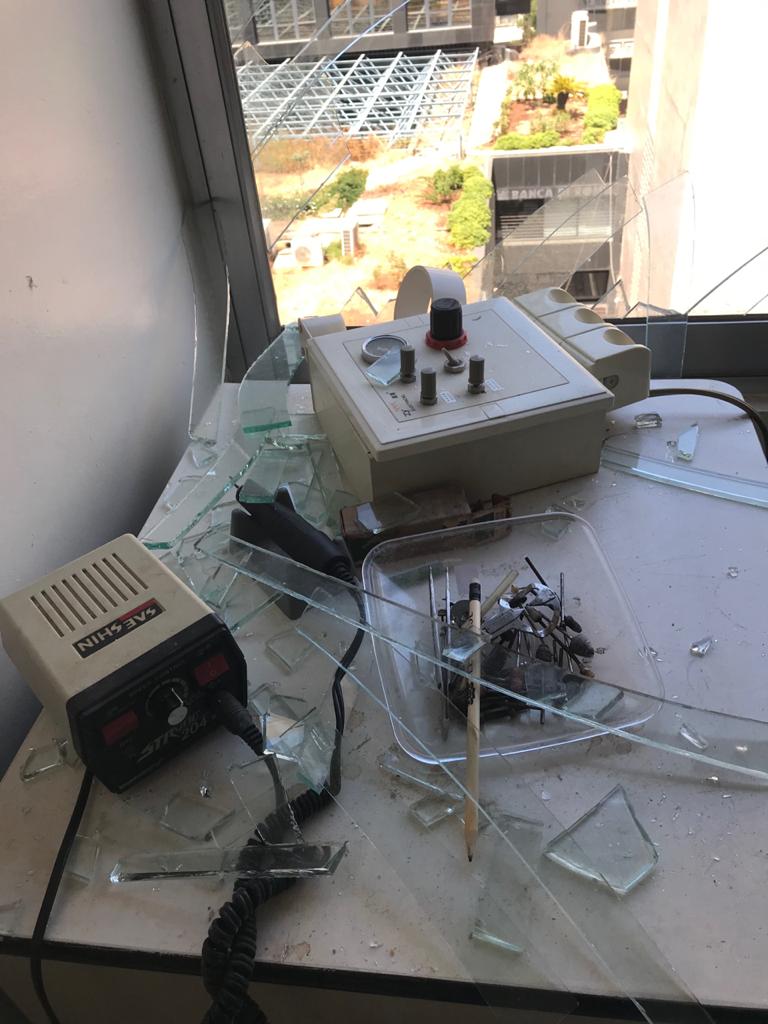
I was in New York City finishing up my quarantine when the cataclysmic blast shook Beirut. It took me a day to track down friends there, all of whom are alive but two are part of the 300,000 who have lost their homes. The Lebanese have just learned that their insurance isn’t going to cover the damage as exclusions include not just war and acts of God but also damage resulting from chemicals. One friend told me his insurance company insists it was an act of war. Insurance companies are the same everywhere.
The Lebanese were already angry at what passes for their government but now it’s white hot fury. What is remarkable to me is that they are not pointing their fingers at Israel with whom they are on low level terms of aggression and technically at war. The negligence of the Lebanese government in permitting ammonium nitrate to sit in their port for six years is the focus of their wrath. The government has arrested port officials and frozen their bank accounts but it is doubtful that scapegoating will do much to appease the anger of the citizens. The opposition’s accusation, via a brother of the former PM Saad Hariri, that Hezbollah controls the port begs the question of why the government of Saad Hariri did not do more when it was in power. In fact, friends tell me that the top management of the port was Christian.
Not that going up against any of these armed political parties is easy. Last night I read an article on the website The961.com about Hezbollah ambulances breaching the security line around the disaster zone suggesting that there was something questionable afoot. Today the website is unavailable. Hezbollah had influence over the port and reportedly used it to receive weapons as well as other goods. About a month ago it was said that they had received a container of cell phones and did not pay duty on them. The phones would have been used as emollients for their supporters or sold to retail outlets for mutual profit.
The port itself has always been notorious for its corruption. A 2012 article from The Daily Star gave details of how it was den of thieves, requiring a small conspiracy of owner, supplier, port security, goods inspectors, and tariff officers to misrepresent the bill of lading or its value in order to evade proper import duties, a practice that costs Lebanon one billion dollars a year.
The courts, too, are also notoriously corrupt and this story involves the lack of response from the court to letters from a senior customs official seeking permission to sell or donate the chemicals. One wonders if requests from the purchaser of these chemicals in Mozambique also went into the black hole. Surely they noticed a million dollars worth of chemicals had not arrived.
While there has been an outpouring of grassroots help for the neighborhoods most afflicted by the blast from street sweeping to food deliveries, the anger at the political class is seething. “Where’s the state?” is the refrain, echoing years of protests. Neither the president nor the prime minister has visited the blast site. Today two members of the cabinet did try to make appearances in the residential areas surrounding ground zero but they were driven away by hostile crowds. Tomorrow, Saturday, there is a demonstration.
At this point, even some politically well-connected are disassociating from the system. The Foreign Minister quit earlier this week, citing the impasse on negotiations with the IMF which is requiring some transparency and accountability before loaning more money to Lebanon. The chief negotiator quit in June. After the blast Lebanon’s ambassador to Jordan quit, citing disgust with the corruption and incompetence: “We must not show any of them mercy and they all must go”, she is quoted as saying. An MP associated with the opposition resigned calling the government “a monster”. A daughter of a prominent Sunni family, Sara El-Yafi, wrote that “justice can only be found in the destruction of this wretched political system”. Her website is also not accessible today. A prominent protestant church official called on the one protestant representative in Parliament to resign so as not to have his name tarnished by association with the government.
Will we ever know exactly what happened? Was it a warehouse accident set off by a welder’s spark? Or was this part of the chain of by sabotage such as has been occurring in Iran of late? Is Trump’s use of the word “attack” based on real intelligence or is it disinformation aimed at discrediting Iran? Many Lebanese and NGOs are calling for an international investigation, a call taken up by Emmanuel Macron on his visit to the people of Lebanon yesterday. But president Michel Aoun, former warlord, has rejected this, claiming that it would obscure the truth.
Here we come upon what is called “the judicialization of international relations” which is supposed to extend the enjoyment of human rights. Unfortunately, in the Middle East it became associated with George W. Bush and Western machinations for regime change. Today was supposed to bring the announcement of the Special Tribunal for Lebanon on what persons they were holding responsible for the bomb blast that killed ex-prime minister Rafiq Hariri along with 21 others in 2005. This crime occurred during Syria’s occupation of Lebanon. There were serious irregularities in the collection of evidence at the scene of the blast and much of what the tribunal has relied on is telecommunications evidence, quite a bit of which came from Israel. The Lebanese had been bracing for the pronouncement of the tribunal’s judgment with every expectation of mass demonstrations and possibly riots. Some believe it was Syria disposing of an opponent of the occupation; others believe it was Israel sewing discord between Lebanese factions while setting up its enemy Syria to take the fall. And there are other theories.
What is clear is the political consequence of the Hariri assassination: mass demonstrations and the withdrawal of Syria from Lebanon in what has become known as the Cedar Revolution. This week’s catastrophe will surely add oxygen to the October 17 Revolution and its call for a new social and political contract. The Lebanese people are tired of being a fiefdom run by political mafias. They want a state: there are warehouses to inspect, the poor to care for, infrastructure to build, and some wealthy criminals to bring to justice.
 goingfortheguttural