Dollars at Western Union

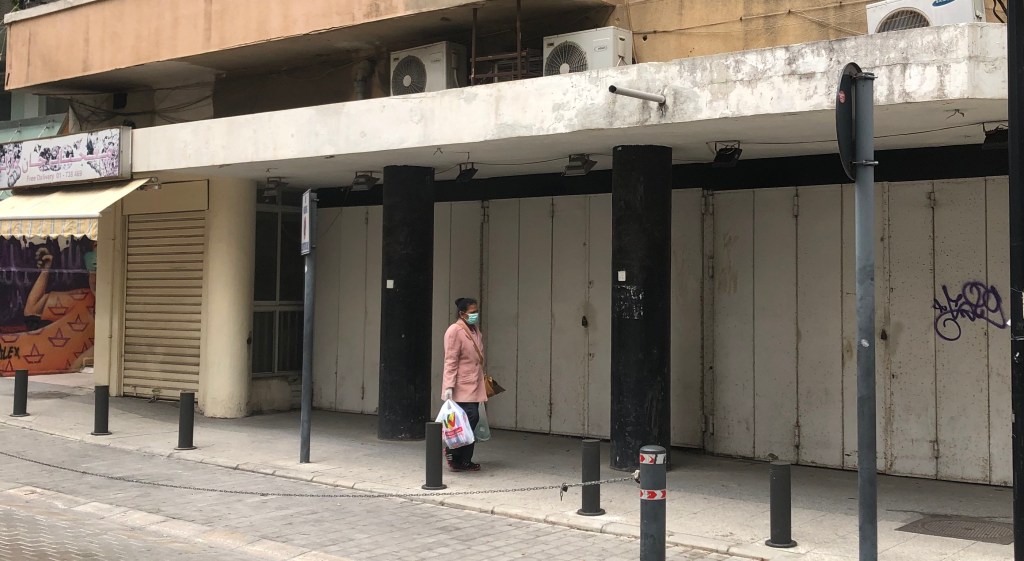
A foreign guest worker on a trip back from the supermarket. She works for an elderly widow whose children live abroad. She is well treated.

Two days ago a major worry went away when Mustafa, the man in my nearest Western Union franchise, called to tell me that he had dollars for me.  I rushed across the street to get there before the store closed at 2:00.  I asked Mustafa if his having dollars meant that the banks were dispensing them again but he said, no, he had dollars because it was the first of the month and the guest workers were wiring money home.

I felt a pang of guilt thinking about how many guest workers would have had to done business with Mustafa that day for him to have the dollars for me to pick up.  Lebanon runs on the labor of guest workers and refugees. Guest workers fill the ranks of domestic service and are a common sight in middle class homes, even lower middleclass homes, where a Bangladeshi can be paid as little as $160/month. There are 300,000 migrant domestic workers (MDWs) here in a population of 4 million Lebanese, and about 2 million refugees.  A 2016 study by the ILO found that only 16.4% of employers paid more than $300 a month.   A number of my teachers and friends have a “Filipina”, a “Sri Lankan” or an “Ethiopian”, as a professional class salary of $2,000-$3,000 a month makes hiring a MDW feasible.  In the hierarchy of prestige, the Filipinos are on top and the Bangladeshi on the bottom with the Africans and other Southeast Asians in between.  

MDWs work outside of Lebanon’s labor laws. Most of them are female. Male guest workers are found in maintenance and sanitation jobs and live in dormitories. There are also female cleaners who work in universities and businesses. They are brought here under the notorious Kefala or sponsorship system, which ties their work permits here to their employment by a particular employer.  The moment they quit, they lose their visa and must either hastily find another employer to sponsor them for a residency visa or melt into the large pool of underground labor. The Lebanese government has essentially abdicated to the recruitment agencies and employers its responsibilities to protect foreign workers. A few years ago it did pass legislation banning the confiscation of passports and specifying no more than ten hours of work a day and one day off per week. Without the backing of an NGO, there is little hope of enforcement beyond employer whim.  Employers routinely confiscate their employees’ passports upon arrival and will refuse to return it until “fees” have been paid – like the $1,000-$3,000 fee to the agency, neither of which is legal and both of which are routine. The Kefala system has been rightly criticized as a contemporary form of slavery and its replacement by actual labor laws was one of the demands of the ‘revolution’. 
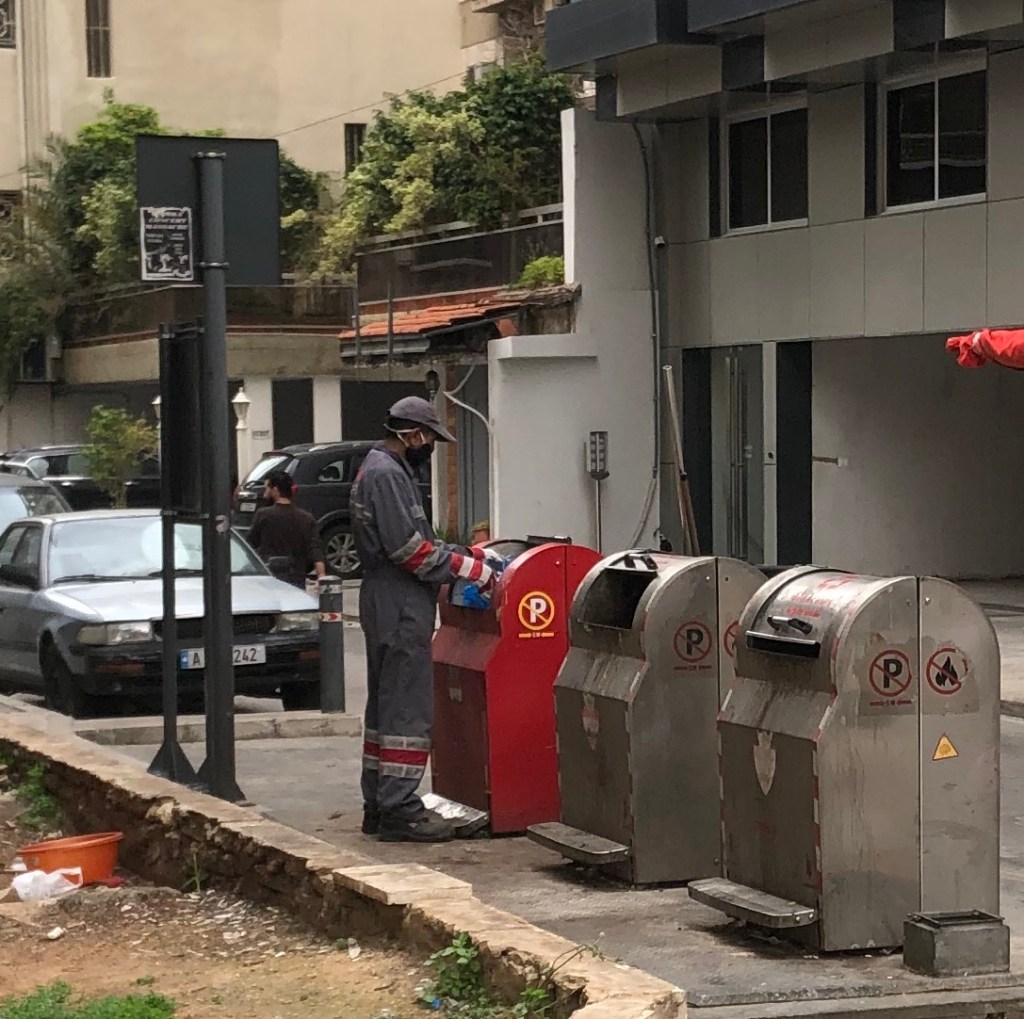
A foreign guest worker attending the neighborhood recycling bins

There are a number of MDW at my church and indeed some of them are members of longest standing as that other category of foreign worker, NGO workers, tend to cycle in and out.  The MDWs of my church are the lucky ones as they are actually given a day off and allowed some freedom of movement and association. The ILO found that about a fifth of MDWs are held as virtual prisoners in their employers’ home. When our congregation was worshipping in the same building an Arab congregation, sometimes “Madam” would deposit her MDW with us and scoop her up on the way out.  Once, a “Madam” even yanked her maid from the middle of a communion service as the Arab church had finished earlier than ours. We hear that the Arab pastor spoke to her about that when we complained about this act of sacrilege.  

Migrant workers are not allowed to marry in Lebanon.  About half of them already are or have been and are sending money home to support their children.  Some marry while holiday at home and don’t tell the Lebanese authorities.  Our church has one such worker whose Muslim employer even made room for the child of this union and permits visits from the husband, himself a guest worker.  We know of another domestic worker who appears to have fled the violence of her homeland and arrived in Lebanon via a smuggling route who is struggling to support a young child through occasional labor.

Lebanon has a sizable population of undocumented workers who can, if lucky, find employment on the black market that is more remunerative and gives them some autonomy.  The 2018 movie Capernaum captures the extreme poverty of one such escaped worker. The movie has been praised for its realistic depictions of the living conditions of undocumented workers here along with its heart wrenching scenes of prison conditions.   A member of my church here has an NGO which tries to support women guest workers and visits women guest workers in the prisons, some of whom are accused of theft. The threat of such an accusation is always hanging over the heads of foreign workers.  Employers can act with near impunity towards their foreign guest workers, including wage theft, sexual assault, and even murder. Every week one or two foreign guest worker dies here either by suicide or murder.  The Lebanese government, often in complicity with the sending government, prefers to classify these deaths as suicide.  One such “suicide” occurred last week, a Ghanaian housemaid whose body was found in the carpark  under the building where she worked. Lebanese authorities deemed her death a fall.  She had been in contact with her family and a human rights activists about her fears for her life. Conditions for guest workers are so bad here that both the Philippines and Ethiopia refuse to allow companies recruiting for Lebanon to recruit their nationals.  Of course, the recruiters end-run this by recruiting these highly desirable MDW in Gulf countries or simply smuggling them in. 

This year has been especially difficult for guest workers. Many of the families employing them have been hard pressed to pay them and when they do get paid, the value of the lira has fallen by 40% with respect to the dollar and dollars are hard to come by. Soon after I arrived this year I was approached by a Bangladeshi cleaner at LAU to convert lira into dollars and of course did so at the old rate.  One can imagine the economic and banking disasters of Lebanon rippling around the globe, wreaking havoc on families and economies across Africa and Asia.  The situation has become so dire here that beginning in January governments began arranging flights to repatriate their workers, the Philippines taking the lead on this. Of course, this was before the Covid-19 lockdown.

I have come to appreciate the two churches here that I am best acquainted with as important supports for the guest workers. A few years ago I realized that Bible study at the English-speaking church was perhaps the one time during the week that the guest workers were treated as intelligent human beings with insights worth listening to.  At the Arab church they participate in the choir alongside Lebanese and are recognized for their musical talents.  Churches are the places where they don’t need to address anyone as “Madam” although sometimes they do out of force of habit.  It turns out that because of the importance of church in their lives, many guest workers prefer to work for Muslim families so that they can celebrate the Christian holidays without having the extra work.  

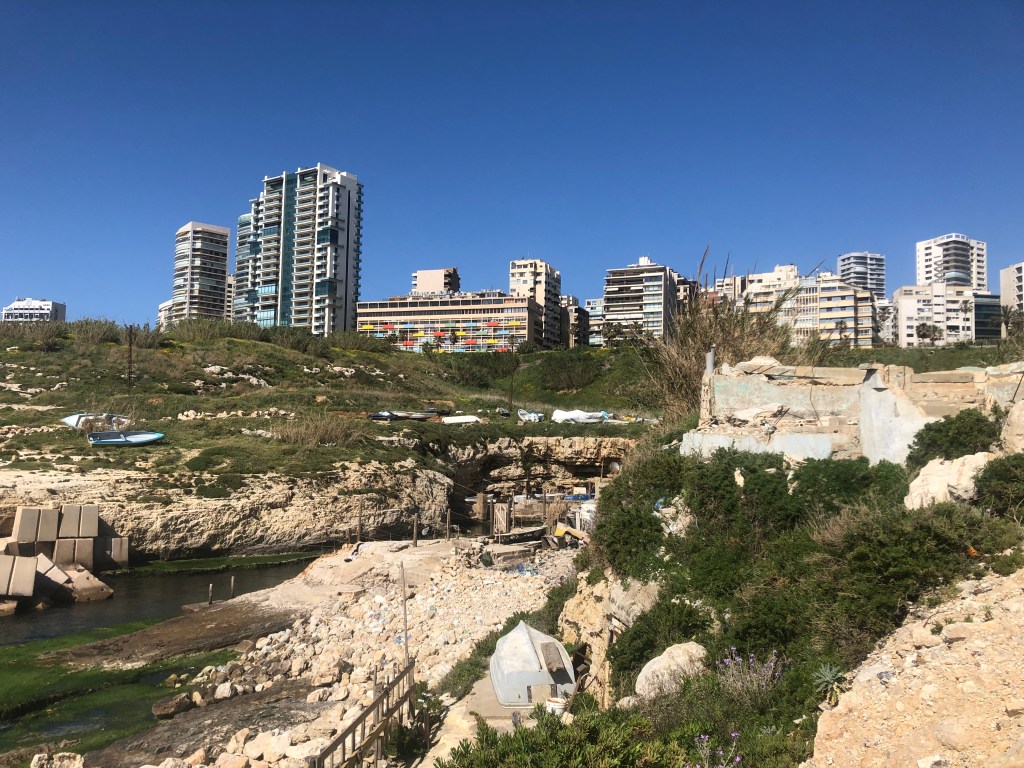
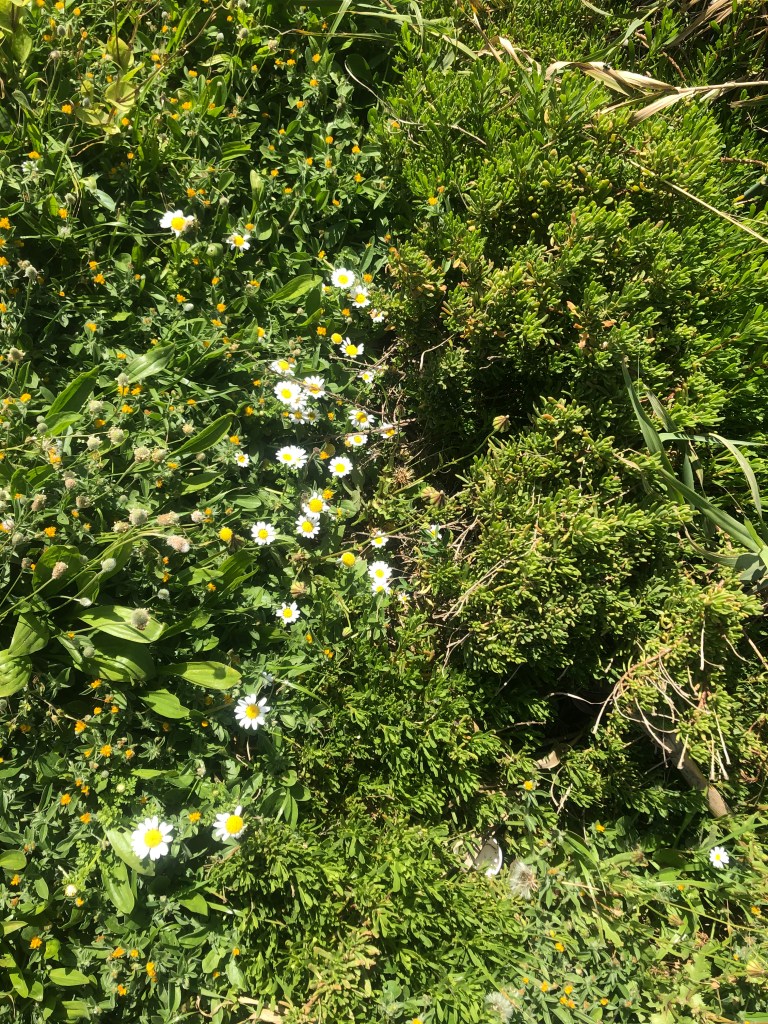
Of course none of us were celebrating Palm Sunday today in the usual way.  After internet church, with internet communion, I went out for a short walk to stretch my legs.  Yesterday I had a big treat when my friend Imad drove me to an area of undeveloped (and politically contested) coastline so I could enjoy the ocean air and pick wildflowers.  We sat on rocks appropriately spaced apart and watched people fish and dive off from rocks right there in Raouche, an area of Beirut known for its hotels and sea-side restaurants.  We saw flocks of birds on their annual migration to their summer nesting places and enjoyed the sound of the waves. There is so much natural beauty here and it is a solace for me and, I hope, the guest workers.
Some Comply, and Some Don’t – and Always There’s a Grey Zone To Be Exploited

A row of half-shuttered businesses, a common sight here now.

We are now in the second week of the General Medical Mobilization here in Lebanon and to my surprise it looks like my neighborhood, West Beirut, is generally complying with the shelter in place order. Police are stopping people in cars – a friend who has a clinic in my neighbor was stopped twice on his fifteen minute drive into town. They are issuing substantial tickets for offending businesses.  Anyone walking in the street is subject to police questioning although it is permitted to be out doing vital business.  I hear from a friend in cat feeding circles that these ladies are making their rounds with excuses at the ready, although in this cat-besotted place I expect the activity is considered vital enough.  We now have a curfew between 7 p.m. and 5 a.m. with stores are closing around 5 p.m. so employees can get home. The mobilization has been extended two more weeks but expectations are that it will go on for another month at least.

Things got off to a shaky start when the schools were closed down a month ago.  Families of the “velvet class” treated the school closings like a holiday and rushed to the ski slopes where press photographs show them in a tight mass jostling for the ski lift.  The daily press updates on the number of cases, currently at 412 (population: 6 million) apparently had a sobering effect. Anyway, places of congregation are now closed.

But yesterday a friend who went to a Shi’a neighborhood to buy fruits and vegetables told me that the streets were as crowded as ever. I asked why they could get away with such non-compliance and the answer was “Hezbollah and Amal are in control: the police don’t dare interfere.”  The weakness of the state, even with a Shi’a health minister and a Hezbollah-leaning government, is a real challenge here.  Likewise, photos are circulating on the internet of the souk in Sunni-dominated Tripoli showing it filled with people going about their business, mostly without masks.

A photo making the rounds on social media showing the souk in Tripoli, crowded as ever.

In explaining the mobilization the prime minister pointed to evidence of non-compliance found on social media where people had been posting photos of their revelries. It wouldn’t surprise me to learn that Lebanon was employing the same methods of the surveillance state that the U.S. employs, like cell phone tracking. All of us need to be vigilant about our freedoms in the midst of this. The media reported today that the government destroyed the tent cities that had been erected during the revolution in October for teach-in purposes, using corona as an excuse for their demolition.  When I mentioned this to a friend he said it wasn’t the government but Amal, the thuggish political party which has opposed the revolution all along. Who knows?  At least the government isn’t talking about being open for business in time for Easter. The prime minister is acknowledging the suffering of the people and asking for patience. But you can’t eat patience.

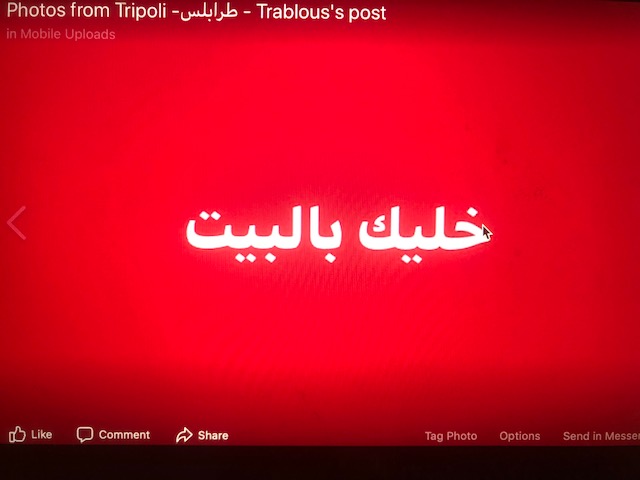
The revolution has not been entirely suppressed.  It cannot be. Desperation drove young men into the streets of Tripoli last Saturday where they shouted: “We’re hungry! We’re hungry!”.  A Facebook page on Tripoli shows messages saying: “Either we die of Corona or we die of hunger!”.  

To my great surprise, on Monday I read that the army delivered food packages to a very poor neighborhood in Tripoli. I told Lebanese friends about this and they assured me that I was mistaken, that the food packages had to have come from an NGO. But I had the article to show them. Could this be a sign of functionality from a political system so incompetent and corrupt that no one expects anything of them at all?

Maybe.  In another sign of functionality, the government paid its back bills to the country’s hospitals, both public and private.  The Rafik Hariri Hospital, the public hospital at the forefront of combatting the disease, had been unable to pay its employees during some periods of late. A shortage of supplies and poor working conditions brought hospital staff to demonstrate at the revolution soon after it started.  The arrears had gone back to 2011 and the total due to private hospitals alone was $1.3 billion, although I doubt it was paid in full given the economic conditions. The government also forwarded to the municipalities their dues from the telecommunications sector as these funds are necessary for monitoring the lockdown.  The army is even manufacturing its own face masks as there is a shortage.

The current Prime Minister, Hassan Diab, is a Sunni who is not from the major Sunni party, the Future Party. That party is headed by Saad Hariri, son of the former Prime Minister. Hariri resigned two weeks after the revolution began, probably because he didn’t want to be carrying the can when the economic system, already tottering, collapsed.  He is now outside of government calling for a state of emergency which would strip his political rival of much of his power.

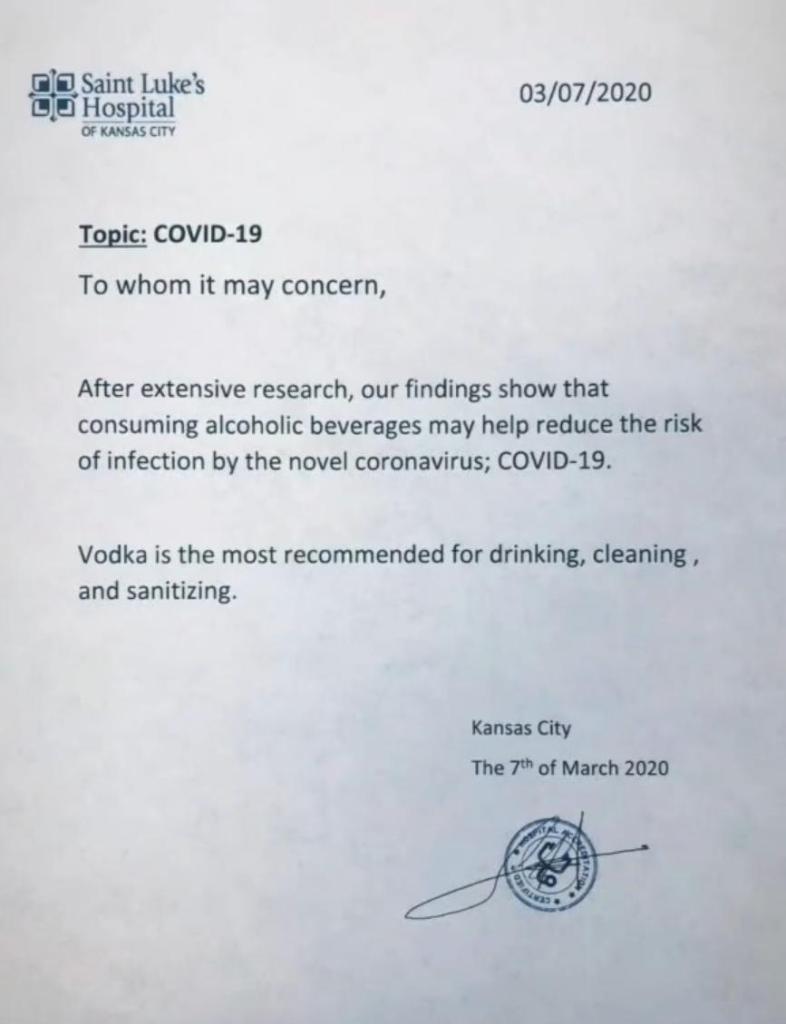
The bitter partisan quality of politics here adds to mixed messages to the public and goes some way in explaining non-compliance.  (Sound familiar, my fellow Americans?) Much of the local media is owned by political parties or political dynasties so the Lebanese tend not to trust any of it.  Instead, they go onto the internet to get their information and here they are as uncritical of what they read as many Americans.  I have been told by a number of people that Arak, the local tipple, is a specific against Corona.  How do they know?  They read it! (Please, dear God, let this not be the case about the Tripoli news story.) Via WhatsApp I got a poorly worded letter about vodka to this effect which purported to be from a St. Louis hospital.  Particularly distressing to me is that these cosmopolitan, multi-lingual Lebanese are watching American purveyors of fake news like Fox TV and are coming away de-incentivized from adopting the necessary precautionary measures. I keep trying to tell people about Snopes and FAIR.

A patently false announcement from an American hospital touting vodka as a prophylactic against Corona making the rounds on WhatsApp. While the Lebanese generally have a functional command of either English or French, it does not mean that they are culturally functional enough in either language to spot fraudulent claims or fake news. I notified the hospital of this hoax.

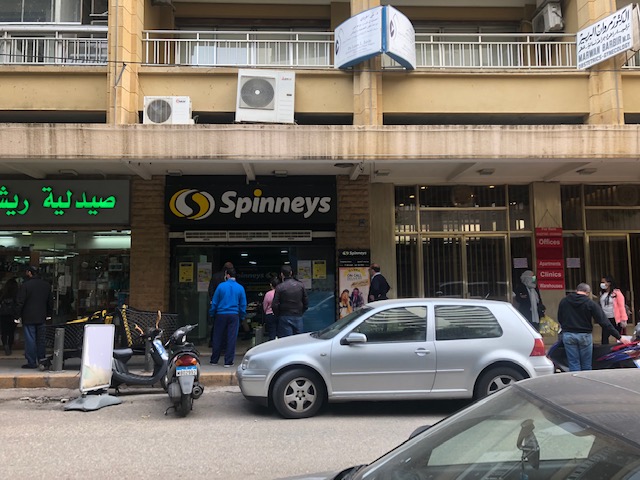
The American University Hospital has been part of the problem for my own understanding of Covid-19.  I go there three times a week for physical therapy. I had to get after them to wipe down the equipment between patients. There are more precautions at the entrance of the near-by Spinney’s supermarket, where they insist on masks, use a temperature gun, and only allow a few in at the time than at the entrance to the most prestigious hospital in the country.  What’s up with that?  

Shoppers waiting their turn to enter Spinney’s. Those without face masks are directed to the pharmacy next door.

Some people are keeping businesses open despite the risks and the ambiguities of the law. My usual photocopy store tried to stay open by only accepting business at the door but it was shut down by the police.  A local coffeeshop owner, who was just hanging around his shuttered business, told me about another photocopy shop that I could use. Its gate was halfway down when I got there to hand over my work – I felt like I was at a speakeasy as I squatted down to call inside.  There are quite a few of these half-gated businesses. I noted wryly that a bodega owner had extended his stock in trade to fresh vegetables as a way of keeping open.  A bookstore is in a Christian neighborhood is using coffee in the same manner although bookstores are allowed to be open for an hour or two in the morning, a nice nod to Lebanon’s history as a publishing and cultural center. The messenger services delivering the books have not always been so fortunate in staying on the right side of law enforcement.   My drycleaner will come to pick-up my laundry for the wash-and-fold. The liquor has posted its phone number for deliveries. These adjustments in business practice might well be legal but they expose owners to the whims of the police and the ever present reality of bribery.  The MacDonald’s on Corniche was fined 24 million LL ($16K by the official rate) even though they were only doing take-out, according to the papers.  We all read that as a warning to other businesses.  I will never forget seeing a health officer a few years ago enter a row of restaurants flanked by police, emerging about a minute later from each one.  Corruption is deeply rooted in Lebanon and now that there is no traffic to stop and drivers to shake down, the police will be looking to shopkeepers.  And they will pay.

I only leave the apartment to go to physical therapy and the grocery store.  Yet, as journalist Robert Fisk says, we are not really social distancing at all these days – we are only separated by physical distance while being very social.  I very much appreciate the increased contact with family and friends these days.   To keep my spirits up I am also cooking more – I even produced a stovetop cornbread that isn’t half bad. Still, I am actually losing weight as I have little appetite.

This morning I tried to place an on-line order for detective novels as well as loftier reading from a local bookstore but, as usual, Chase Bank declined the order and isn’t answering the phone. Their international customer service number isn’t working at all.   Covid-19 is giving them an excuse to be as incompetent as ever.  I wrote their “stranded customer” department as I need the card to be ready for immediate use but they haven’t gotten back to me.  I guess I am really stranded. 

Another bunch of incompetents is the consular section of the American Embassy here.  I always register with them when I come and they as good as say that I am on my own here as I shouldn’t be here at all.  Now I read in the newspaper that all but their emergency section have decamped.  They didn’t even send out an email telling the US citizens here!  

At least there is the church I attend.  We are now meeting online.  I find it surprisingly moving to see everyone’s face looking so cheerful – usually all one sees is the back of their heads at worship.  I phoned a few of the members without internet to see if they were okay – they are.  Everyone seems to be cleaning out their closets these days just as they are in the States.  This virus is showing us our common humanity in so many ways. May we not forget that when it’s over.

Stay home!

Lockdown in Lebanon

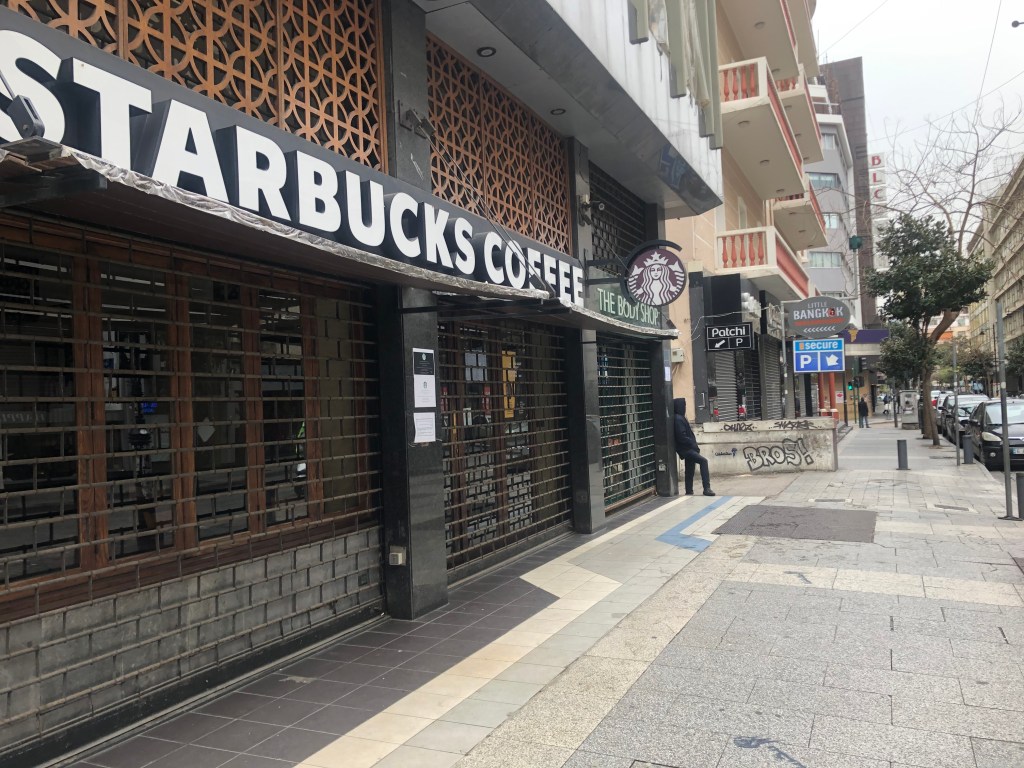
Starbucks and other shuttered stores on Hamra Street, the main commercial street in my neighborhood.

We’re in lockdown here in Lebanon. The borders are closed now (well, sort of — the land border is porous).  Only hospitals, pharmacies, bakeries, and supermarkets are allowed to be open now.  How beauty parlors were allowed to escape this list of essential goods and services I do not know.  Doctors and dentists have been instructed to limit themselves to emergency procedures.  Weddings, condolence gatherings, and funerals are forbidden to host more than ten people. So much for the demonstrations of the “revolution”! Churches and mosques are not holding services. Buses and vans are idled. Last Saturday the police dispersed crowds gathered on the Cornice enjoying the lovely weather and are now issuing tickets with substantial fines for businesses not complying with the closures. ( I expect a little baksheesh would go a long way in making the ticket go away.)  When I went to the supermarket today they took my temperature and gave me disposable gloves.

This is usually a noisy city at all hours of the day and night. Now there is neither noise nor traffic, just the call to prayer and the occasional siren and church bell. Sounds are coming from farther away now that the din has been silenced. Initially I had a hard time adjusting to this quiet because when I heard sirens or church bells I wondered if there had been a catastrophe but now I know these sounds have been there all along, drowned out by the others. On Monday, when the driver I had employed drove down a one-way street the wrong way – as they often do in a display of hypermasculinity – I did not protest.  We both knew it was safe. The nights are darker now as fancy buildings are vacant, the wealthy having packed up children and servants and departed for their “villas” in the countryside. Even Hamra, the main street of my neighborhood, is devoid of people.  The beggars have not found it worth their while to sit there now.

This being Lebanon, where everyone is a conspiracy theorist – a tendency I take to be PTSD from the civil war – there is anxiety over the official case count – currently at 206 with four deaths out of a population of about 6 million, including refugees.  Why, the thinking goes, is there such hysteria over these numbers? We’ve survived war and invasion with greater aplomb. What aren’t they telling us?

I used to laugh at my Lebanese friends for their dark musings about governments and other earthly powers. Now I’ve come to respect their Calvinistic view of human nature, their conviction of the innate depravity of humankind. Fifteen years of civil war will reveal such hideousness to even the densest optimist.  If you have been following the news, it appears that fudging the case count is exactly the problem with the news coming from Iran. The mathematical brainiacs have postulated that the number of cases in Iran is larger by several orders of magnitude than reported officially.  Could this be the case here?  

And of course, there is the usual conspiracy theory that America is behind the epidemic. I think that the Lebanese need to feel there is order to the universe and someone, however malign, is actually in charge. The thought that bad things happen somewhat randomly is just too terrifying.  

We are technically in a state of general medical mobilization, and not the state of emergency that many citizens and media outlets are calling for.  The latter status means the army takes control of the country. The newly formed government, with heavy Hezbollah influence, is still very fragile and understandably does not wish to cede control, especially it would shift power into the hands of Hezbollah’s partners in government, the Maronites who dominate the brass.  

The first case of corona in Lebanon was announced a month ago today, a person returning from Qom, the holy city in Iran. I was amazed at the swift response this initial case produced here and the immediate recourse to alcohol, gloves, and masks.  I asked why this instant frenzy and people said it because they know they are alone in handling crises, that there is no real government and what exists is deeply in debt. Even before corona the hospitals were having trouble obtaining medicines, thanks to that other cluster of crises, the economic one.  There is talk that the slowness of the government to close the borders, or at least refuse flights from Iran where so many of the initial cases came from, reflects Hezbollah’s close ties with that country. Everything is so partisan here.

Today is Mothers Day here as it is in much of the rest of the world. There is much handwringing that the store closures mean that they can’t give mom flowers, treat her to a restaurant, or buy her a gift.  This is a very social society and the idea of people sitting alone is simply abhorrent.  “At least”, as they say, “we used to be able to visit one another for comfort during the war.” Now grandparents can’t even visit their grandchildren.

Still, the Lebanese have managed to summon their wry humor for the occasion.  They express the hope that the corona virus will do the work of the revolution and get rid of the political class, although, they add: “if the virus comes to the politicians it will just get corrupted and not do its job.”  Then there is: “We are bored of corona!  Bring on the meteors!”  A friend told me she saw a large rat near a woman on the street (the street cats here are too well fed to be useful) and the woman’s response was: “Now this?”

My classes went online two weeks ago and because the internet is so poor here we can’t use the video component of Zoom.  I did a little bit of stocking up of foodstuffs with long shelf life. With the borders closed and dollars scarce, I wonder if the pasta aisle will get replenished anytime soon.  Fortunately, Lebanon is a breadbasket.  It also produces paper products.  I have not seen the kind of buying frenzies at the food stores that are being reported from the U.S. – this may reflect a lack of purchasing power here.  One thing I have bought in abundance is water bottles, the tap water being undrinkable.  A friend told me her water delivery man told her he might not be able to bring water next week, suggesting to me that there will be further restrictions of movement here.

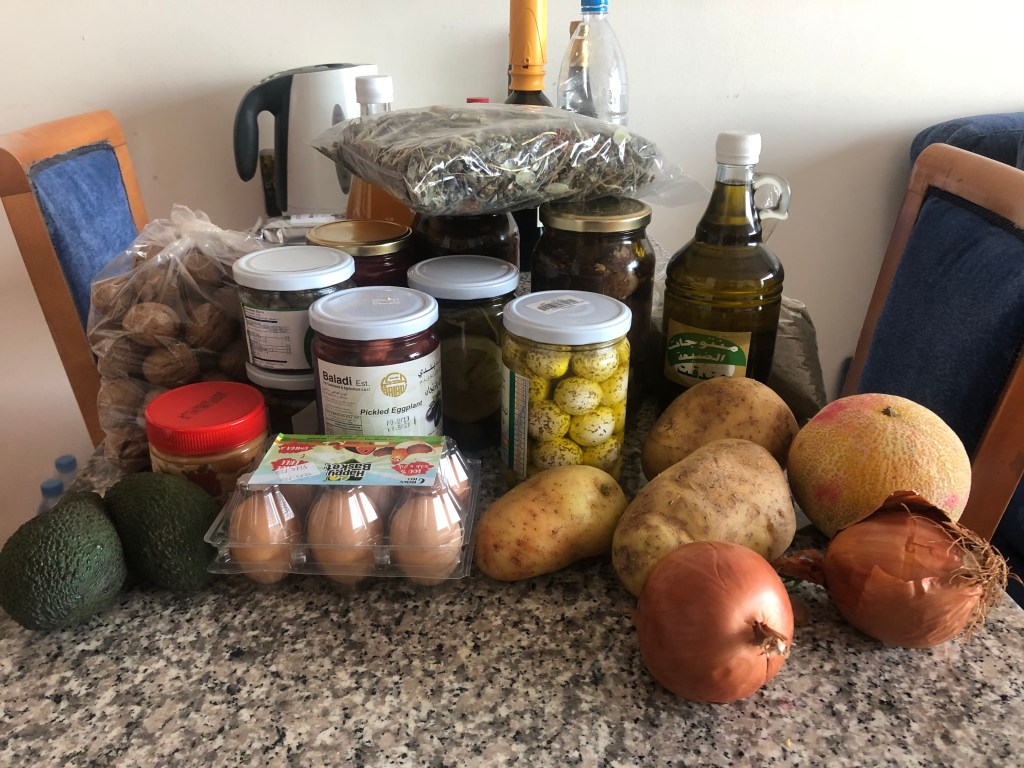
Some of the products I have for the period of isolation.

I am mostly in my apartment now, its lovely view no longer including the graceful and reassuring sight of airplanes coming in to land.  I leave only for my physical therapy sessions at the American University Hospital, food shopping, and the occasional walk with a friend.  How I miss my evenings spent in the bars and restaurants of Makdisi Street with my friends!  My companionable walks on the Corniche with a friend who is also trying to lose weight! 

I am trying to content myself with knitting while watching YouTube videos on historical topics or listening to books on tape.  I study my Arabic.  I read. I correspond.  It’s lonely, really. And I worry about my family in New York.  I wish I knew how long this period is going to last.  I wish I felt confident that it will all be okay here in Lebanon after the virus is gone.  

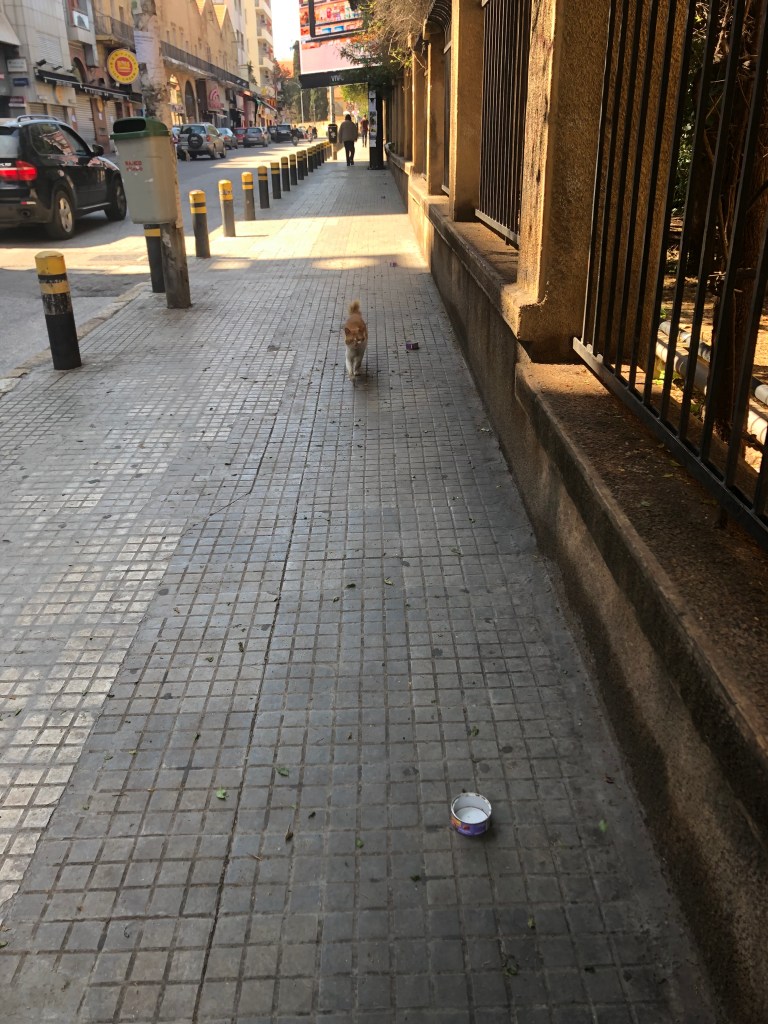
Bliss Street by the now locked American University. The street cats appear to be provided for. Note the uneaten kibble on the base of the gate.

It’s all so different now

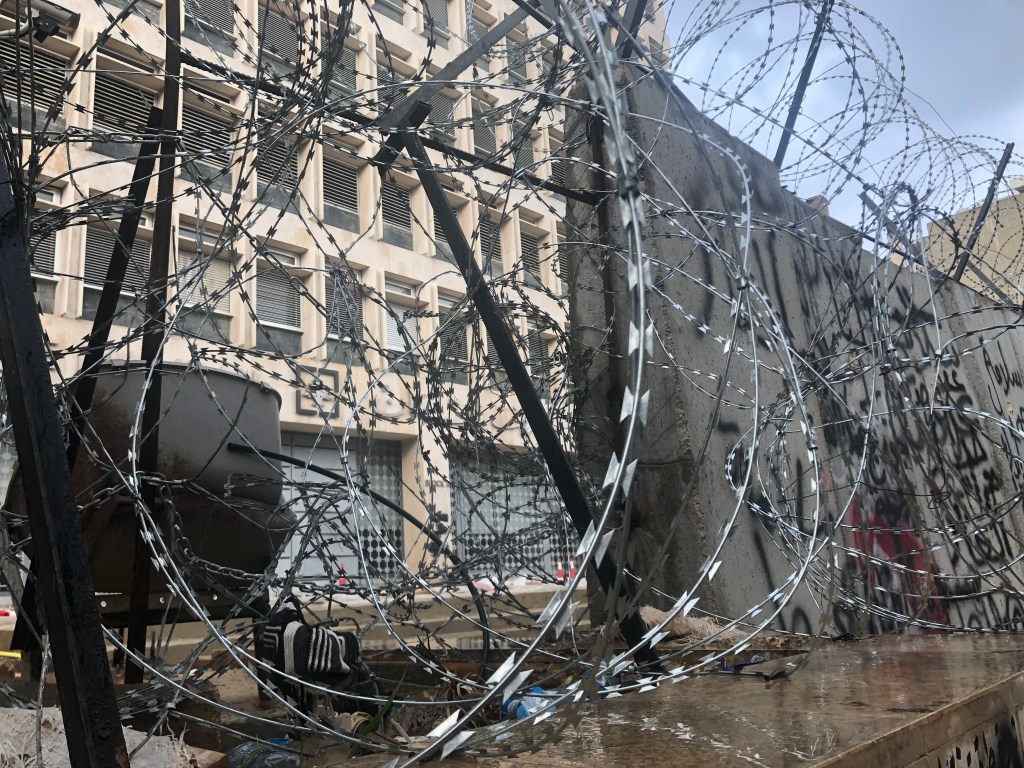
The Central Bank, graffitied by angry citizens, and now guarded by razor wire

This year, my eighth winter in Lebanon, is so different from the previous ones that I feel compelled to resurrect this blog and recount what I am seeing. Lebanon is in crisis and it is difficult to to imagine what outcome even should be prayed for. The Lebanese have lost their usual ebullience and are sick with anguish over “The Situation”. It is the only thing they seem able to talk about, sometimes in despair over the future, other times enraged over the political class that has brought the country to the edge of ruin.

The Situation is a currency crisis, a banking crisis, and an economic crisis all rolled into one. The Lebanese pound is officially pegged to the US dollar at a rate of 1,500LL to $1 but the reality is that the pound has been softening for years. To finance the government’s spiraling debt, the banks have had to attract depositors by promising high interest rates but have been unable to provide ordinary citizens with home loans. Even last spring I found it increasingly difficult to withdraw dollars from the ATMs. Although the dollar is not an official currency it has been widely used in everyday transactions here and many Lebanese have dollar accounts in the banks. By the end of the summer gas stations were having difficulty obtaining dollars to buy gas. Lebanon relies on imports for almost everything but food so the price of the dollar is consequential to everyday transactions. Prices began to rise with the scarcity of dollars. Depositors began to move their money out of the banks and this turned into a full blown run after the protests began and the government collapsed with then Prime Minister Saad Hariri’s resignation. The economy, which has been in the doldrums for years, contracted further.

Right now unemployment and underemployment are probably combined at 50%. Many employers have put their employees on half-pay, including the building where I stay. At the same time, prices have risen 40% since August. The lira has been trading at around 2,500LL to $1 over the past few weeks. The banks have frozen the dollar accounts and are allowing depositors to withdraw only $50 a week in cash dollars. These measures feel ominous to the Lebanese. There are no depositor protections here so when banks fail, depositors are wiped out. They have seen it before. In 1966 Lebanon’s largest bank failed. The pound then traded at three to the dollar. During the mid-1980’s Lebanon experienced hyperinflation so that by 1992 the pound was trading at 2,500LL to a dollar. The generation now reaching the end of their working lives was wiped out early into their careers and now, at the end of it, is facing another wipe out.

Yesterday the government announced it would default on its Eurobond payment. It had little choice in the face of popular unrest over the corruption and mismanagement that the sectarian political system has engendered. There was real fear that paying the Eurobond debt would mean the banks confiscating personal deposits as happened in near-by Cyprus in 2013. It would be hard to overstate the anger people have for the government. They frequently refer to the political parties comprising the government as “gangs”, a conspiracy of thieves arguing over the spoils of the state — and running up its debt — while public institutions and infrastructure crumble into dust.

Lebanon’s debt is now 170% of its gross domestic crisis, one of the highest in the world. To the extent that these billions of dollars went to public expenditures at all it was spent on current expenses like increased teacher salaries rather than upgrading its infrastructure to the level expected in a reasonably developed country. By last year, half of the government’s expenditure was servicing its debt. Lebanon has not had 24/7 electricity since the beginning of its civil war 45 years ago and this has spawned a back-up generator sector that is politically entrenched. So much of the economy is connected to the dysfunction of the government and amounts to an enormous indirect tax on the people. It is no surprise that the proposal to tax the mercifully free internet phone and messaging service, WhatsApp, was the spark that ignited the current unrest. To add insult to injury, Lebanon has one of the slowest and least reliable internet services in the world. In January the state-run telecommunications business announced that Lebanon would be facing an internet black-out in March if it did not pay its foreign suppliers – in dollars, of course.

Could it get any worse?

Since February 21 there came a sudden distraction from all this economic gloom. The government confirmed that the corona virus had arrived via a passenger flying in from Iran. There are now 32 confirmed cases. That is, if you believe the government.

Going Native

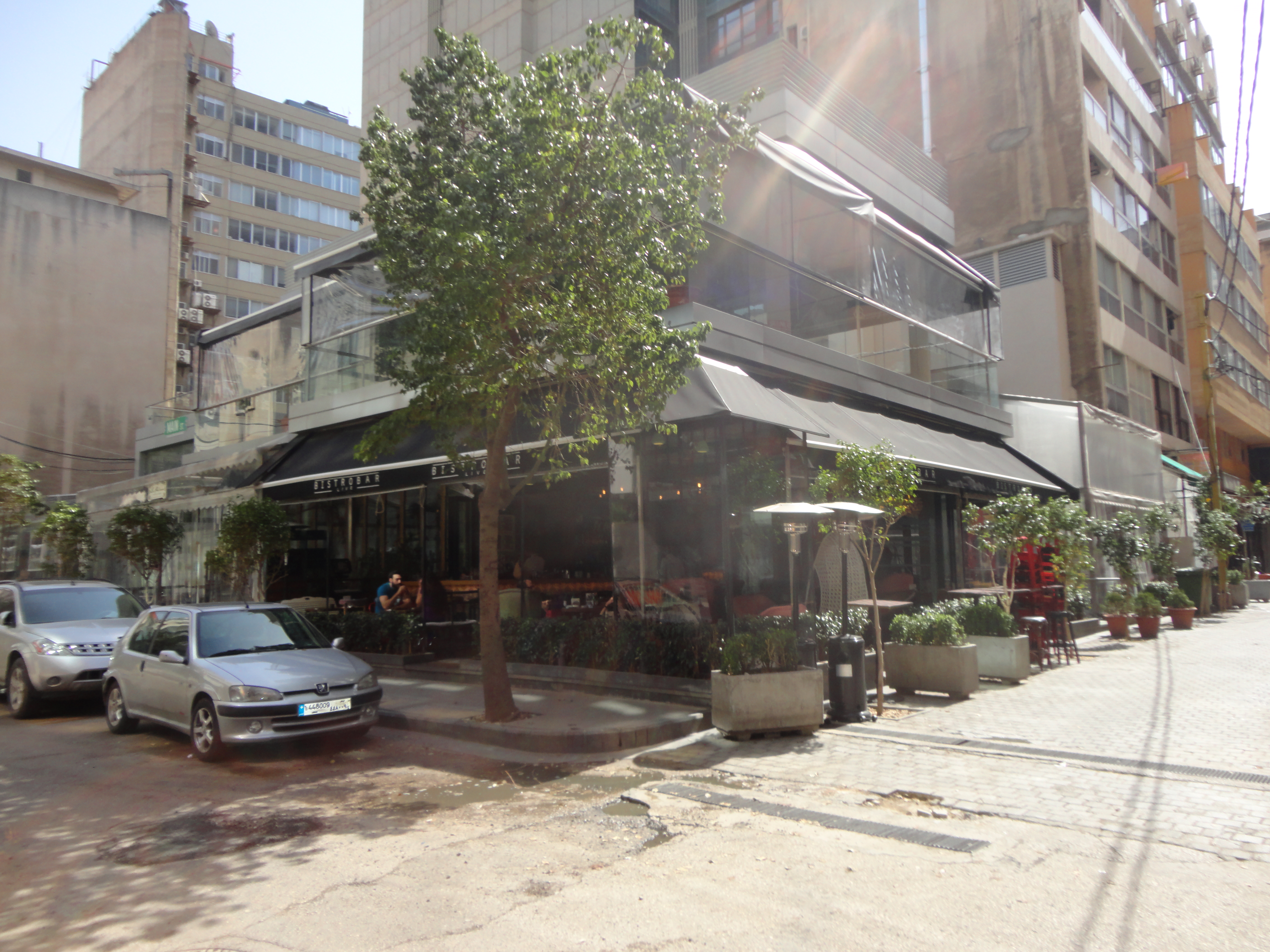
A complex of bars and bistros near my apartment

The Hakawati spinning his tale....
The Hakawati spinning his tale….

One of the hundreds of new buildings going up in Beirut

Some of you have asked why I haven’t been writing this blog as frequently as I did last year. The answer is simple: I’ve gone native. I am spending my evenings in restaurants and bars, walking on the corniche, and more recently, going to the theater. Now that I have a track record of returning here I am being invited into people’s lives. This is the benefit of depth over breadth in travel.

The Beirutis are such a late night crowd that I’m embarrassed by my hometown’s boast that IT is the “city that never sleeps”. New Yorkers are infants in need of a nap compared to Beirutis. With my daughter coming to visit in a few days I started looking at musical events to take her to – performances routinely start at 10pm!

One of the performances I want to take my daughter to is an Egyptian burlesque show that is very popular here – it harkens back to the 1950s when camp cross-dressing was considered harmless fun. This week I listened to a Hakawati, a traditional storyteller, describe a beautiful woman to his mainly Syrian audience and when he got to her breasts, he said: “About that, there is censorship”. “No! No!” cried out his audience, “There is no censorship in Lebanon!” (True enough – it’s why the press often has its Middle Eastern bureaus here.) So, the Hakawati smiled slyly and said that a man would have to jump to get from one breast to another.

Apparently, ISIS thinks we’re having too much fun here. Recently there have been reports that ISIS is going to declare Lebanon an Islamic emirate. The Lebanese are responding the same way the Italians have since ISIS told them they were coming to Rome: “Good luck with the traffic!”, “Plan around the strikes!”, “We’ll have wine waiting for you!”.

I think the very chic Lebanese women would simply pound ISIS to death with their high heeled shoes.

ISIS is in the mountains of the far north of Lebanon and has been targeting Hezbollah towns. On the whole, though, the Beirutis don’t seem too worried about ISIS. Construction is going on all over the city. There’s a steep mountain range and an exposed valley between where ISIS is and Beirut. I think ISIS would have to develop a navy to get here.

To be on the safe side, though, I am encouraging a shift from bar to bistro for our drinking. If ISIS decides to declare Lebanon an emirate they are going to have to do something to show they’re serious and a bomb is as good a calling card as any.

In the meantime, though, the clear and present danger in Lebanon is food safety. With the health ministry ramping up inspections it has become a scandal how filthy the slaughterhouses are and how the spotty refrigeration is for foodstuffs. Even staying away from meat and fish is not enough — the supermarket I use was shutdown for a day last month for spoiled cheese. Never mind the expiration dates on packaged products.

I mean, what will we eat at Happy Hour?

The Power of Memory

DSC00962
A constant memorial to the civil war are destroyed and abandoned buildings such as this one whose beautiful lines harken back to the golden age of this city.

I’ve been back in Beirut two weeks now and have settled in comfortably. Before my return I had been apprehensive about the street life here as the war in Syria drags on and the refugees get increasingly desperate. To my surprise, Beirut seems almost absent of beggars and shoeshine boys this year As a friend in church said, the city has been “pacified”. The schizophrenic woman who sat on the streets and sang beautifully is gone. My scary peasant lady is no longer down the street selling her vegetables and I must resort to a green grocer. There seem to be police and soldiers everywhere but their focus – like that of their brethren elsewhere – appears to be their iPhones.

This past week we experienced a frisson of war when an Israeli drone killed six Hezbollah fighters in Syria. Hezbollah responded by firing anti-tank missiles into an area the Israelis continue to occupy (despite the claim they withdrew from South Lebanon) and killed two Israeli soldiers. Even before this happened, a member of my English-speaking church decided to leave Lebanon out of fear of an Israeli invasion. Israel last invaded Lebanon in 2006 and was squarely defeated by Hezbollah which became enormously popular here as a consequence. An opinion piece here in The Daily Star said that since Hezbollah is a social movement as well as a militia (and a political party) Israel dares not escalate this conflict. For its part, Hezbollah is fighting in Syria and really can’t afford another war either. Such is the ritualized dance in this balance of terror.

Can this beautiful country ever free itself from the shadow of war? On Saturday I went to a conference at AUB about lifting the veil of silence around the civil war here, a cataclysm that lasted fifteen years and resulted in 150,000 deaths, 200,000 injuries and mass emigration of about 250,000 –all from a population of about 4 million — but that number isn’t solid as Lebanon hasn’t had a census since 1932 out of fear of what the demographics it would reveal. The civil war is a painful topic and its end resolved nothing. There is no national narrative about the events of the war and their meaning – how could there be? It merely ended in an armistice in which the warlords, war criminals all, were given impunity in exchange for peace. Some of them are still in the highest echelons of government. There are NGOs taking down oral histories of the war (closely watched by the sectarian political parties) and another trying to locate the bodies of the 17,000 disappeared. Part of me agrees that there is a “right to truth” about the war but I wonder if the analogy of a nation with the individual psyche isn’t dangerously stretched. A similar attempt with the Irish “Troubles” backfired, although in that case impunity hadn’t been granted to combatants and the oral histories became evidence for the courts.

My classes are going well. I alternate between hope and despair about acquiring this language. Probably the most productive part of my week is sitting around the table at the Baptist church listening to members chit chat as I sit and knit. Sometimes I understand things and sometimes I don’t – it feels like receiving a squeaky transmission from a distant planet that occasionally comes in loud and clear and then the crackle starts up again. In the end, learning a language is a feat of memory. Around here one learns to take the long view, that is where hope lies.

With Easter, Life Goes On

DSC00920DSC01073 DSC01069DSC01071

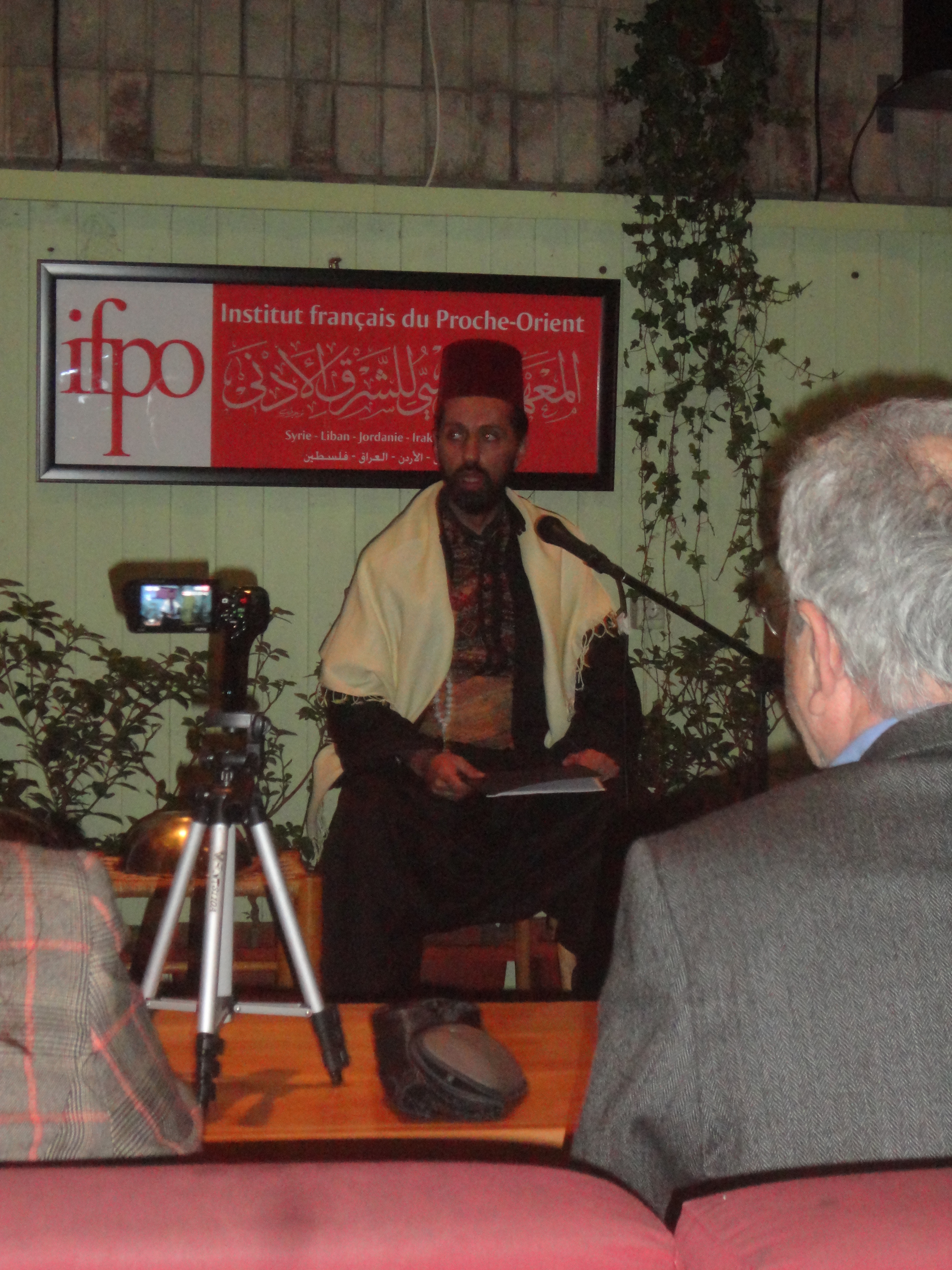
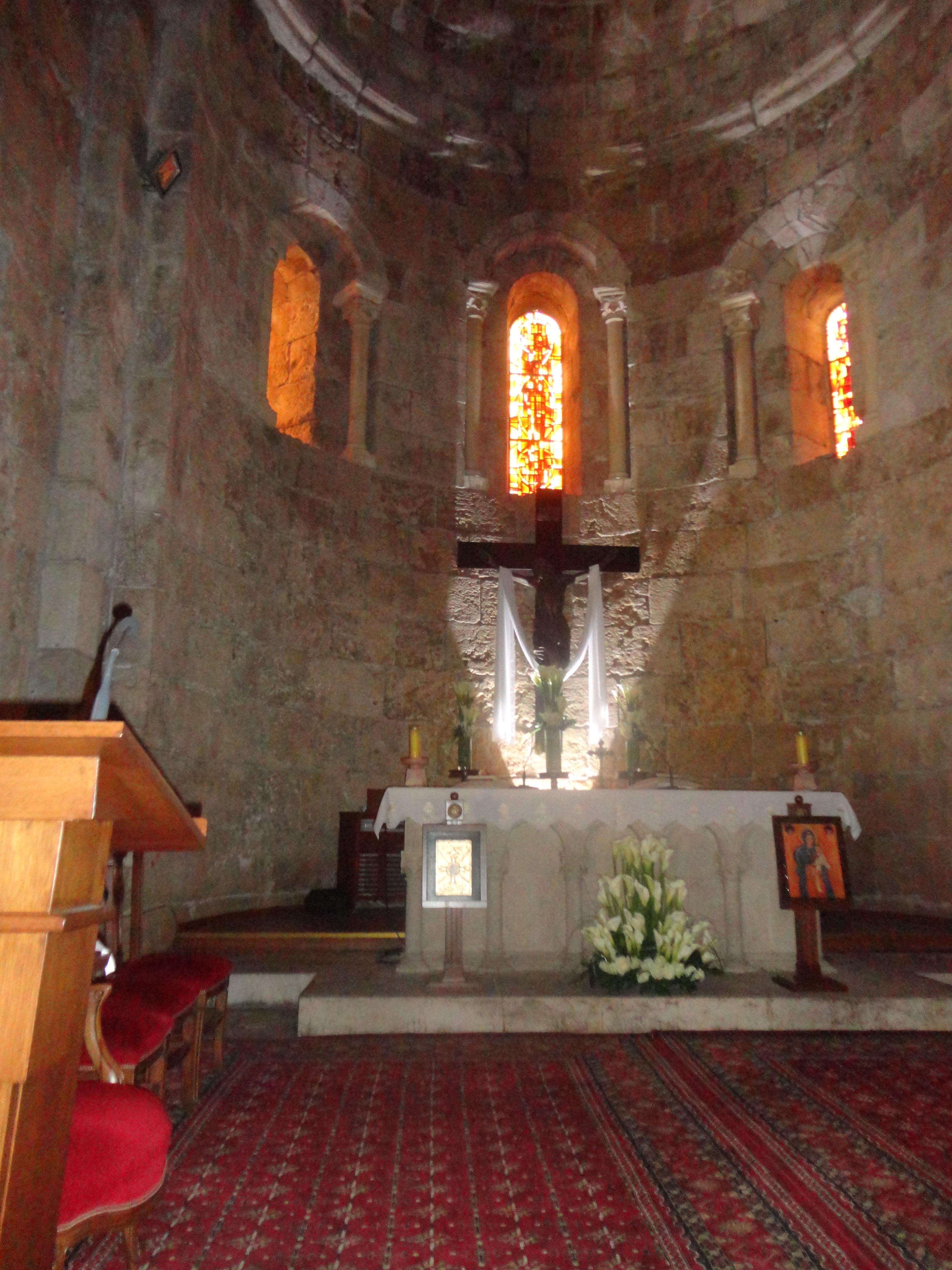
(Urbayn and the wine ready for communion; a Maronite church draped in readiness for Easter – note the icon; the crusader castle at Byblos with Roman columns in its walls; the remnants of a Phoenician battlement outside the castle.)

Today is Easter Monday, a day to reflect that life triumphs over death. One experiences the presence of both life and death in the communion service of Arab churches. They use a special bread that is also given out at memorial services held 40 days after a person’s death. This bread, called urbayn, has a distinctive rosewater taste and fragrance. For anyone who has experienced the death of a loved one, urbayn adds such poignance to the communion service.

Yesterday I went to the apartment of a woman who had raised her four children in Beirut during the civil war. She said the hardest thing was not allowing her children to play outside – it was enough that they were covered in glass shards from street bombs while they slept. So that the children wouldn’t feel the lack of the outdoors so much she packed their schedules with piano, dance, and art lessons. The children grew up to be accomplished and cultivated professionals. I’d say she pulled life out of death.

I experienced some cultural dissonance on Saturday with Imad, Diana’s brother, who took me on a drive north of the city to see Byblos, a city with traces of civilizations going back to the Iron Age, and then some Maronite churches in the region. The churches are filled with icons and relics. Imad, a dentist, observed that these objects act as placebos, summoning something from within a believer to help effect cures. We watched while supplicants kissed or tenderly placed their hands on these objects after prayer. When I said “we watched”, Imad was more on the participatory end while I was more on the observational. He crosses himself entering or even passing a church while I just keep moving forward. Finally, at a monastery to 19th-century Saint Charbel, Imad got cross with me for not dipping my finger into the holy water as he had done. You’d have thought I had lit up a cigarette in church or popped my bubble gum. So, I said in my defense, why would I want to bother with a placebo? Because, said he, the power of placebos comes from the energy of objects kissed and touched by thousands and thousands of believers and the people who take the sugar pill have also kissed the icons. I must ask a Druze lady in my yoga class if she agrees with him – and kisses icons — she and her daughter went to St. Charbel last month to pray over a health problem.

Meanwhile, the East-West divide was playing out over the weather. On Good Friday it did not rain but there was a slight sprinkling on Saturday. This was taken as proof that the Eastern Church had scored a victory as it maintains that rain always comes between Good Friday and Easter in imitation of the weather at the Crucifixion. I could only say as theologians they make great meteorologists. We settled our disputes over beer in a restaurant that Imad said was run by members of Hezbollah. In case you are wondering how this could be, let me repeat a story I was told by a Greek Orthodox woman: in the summer of 2006 Israel was bombing the south of Lebanon and the Shi’a inhabitants were fleeing north to live in non-Shi’a areas. The Shi’a have a reputation for conservativeness regarding women and the rest of the population was concerned about harassment of women wearing shorts and spaghetti straps. The Hezbollah leader, Hassan Nasrallah, told his followers not to bother any woman, no matter how skimpily dressed, as that would violate the laws of hospitality.  As a political party they are courting the Lebanese population at large.  It makes me think Hezbollah is more Sinn Fein than IRA these days. Diana tells me that Hezbollah is one of two political parties supporting the teachers in a pay raise.

I am leaving next Sunday morning so I said “good-bye” to my churches and promised to be back next year absent tanks firing in the streets. One must draw the line somewhere. Strangely enough, though, I am reassured that Lebanon is going to be okay.  One takes the long view in a place like this.  No empire is forever. Life goes on.

Make That A Zataar Croissant

DSC00847DSC01032DSC01031
DSC01033

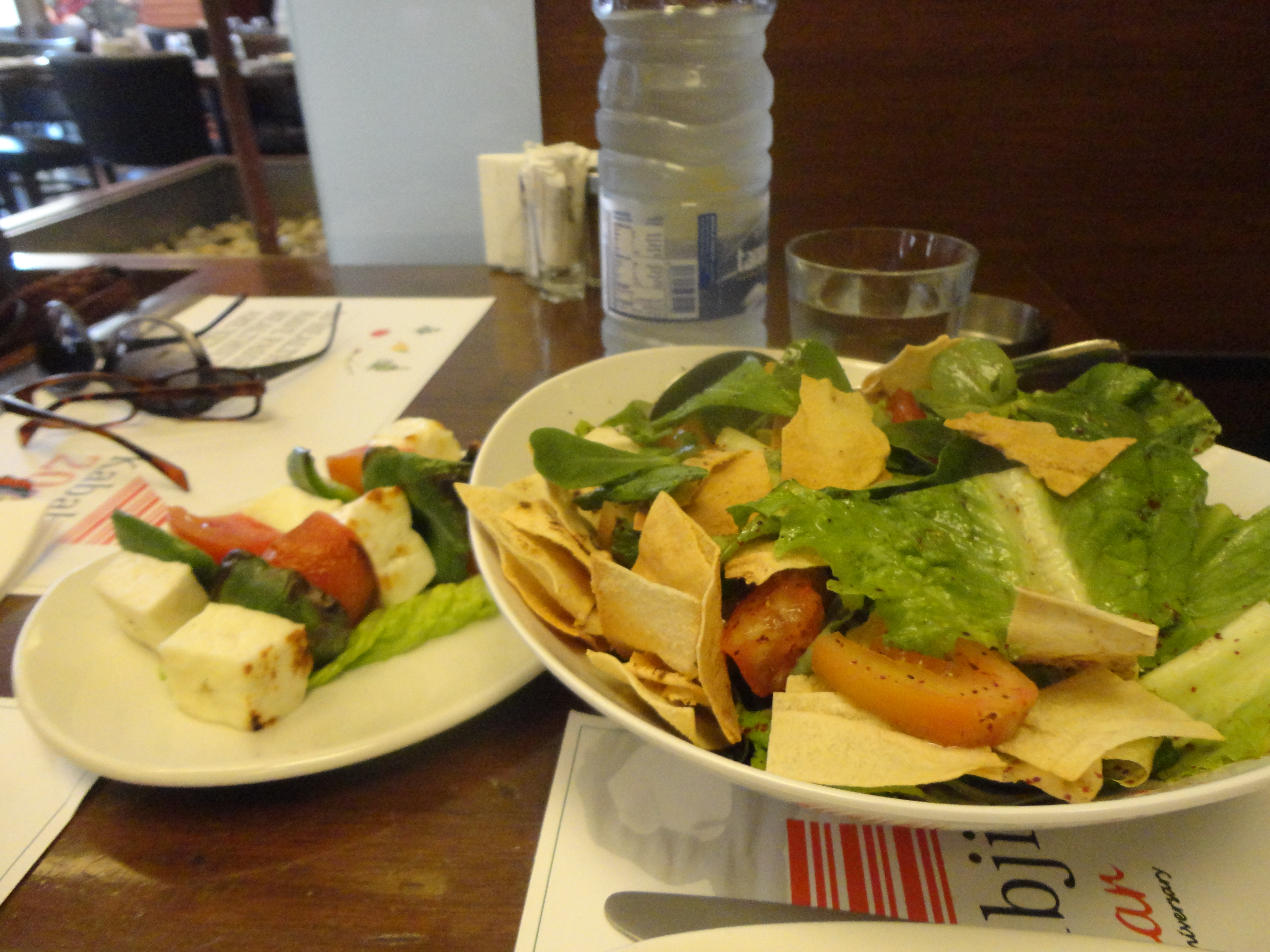
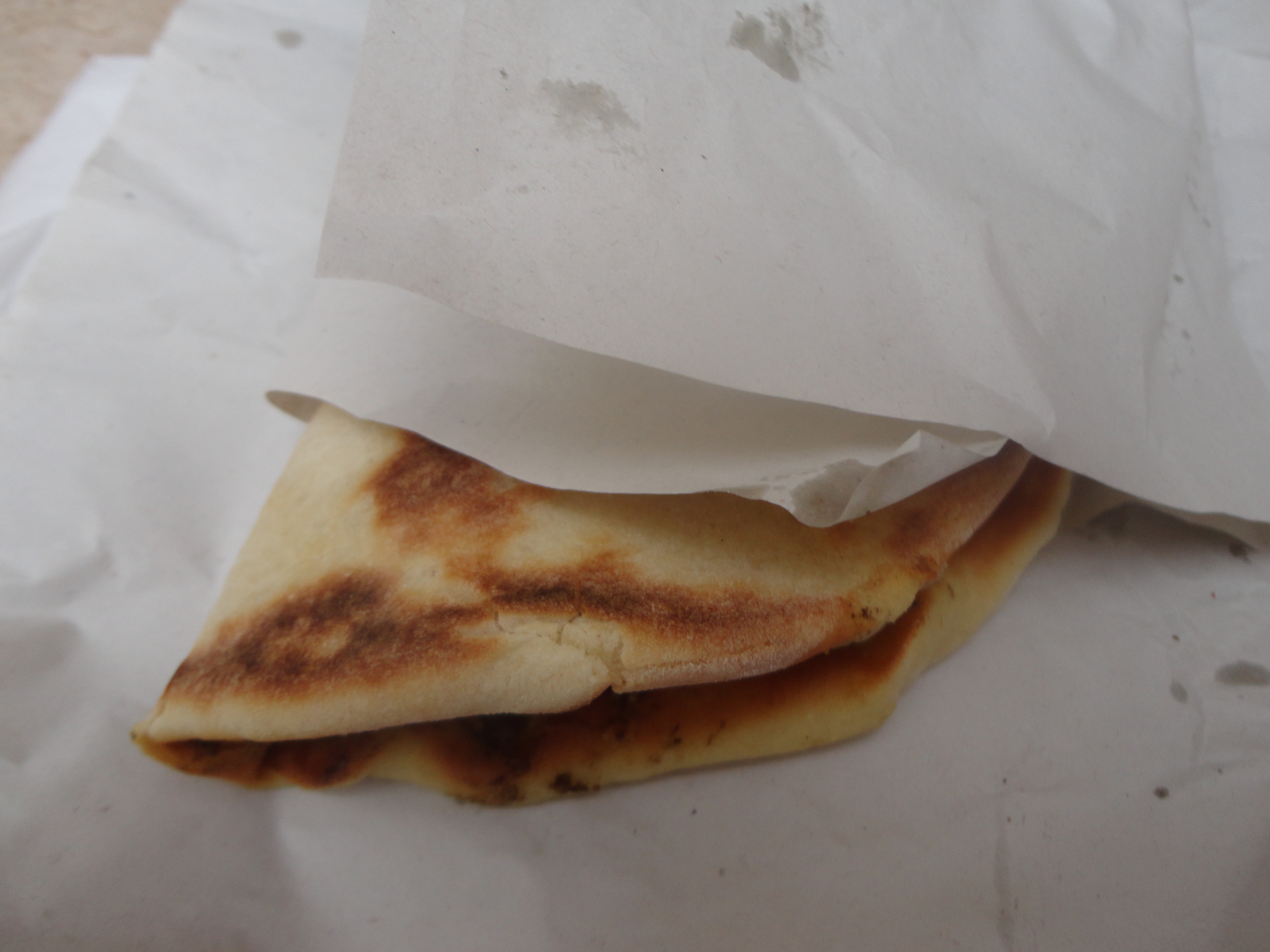
(Olive branches mingle with palms for Palm Sunday; grilled haloum cheese with fattoush salad at Kebabji; a manouche; motorcycle delivery men (in red) outside of Kebabji.)

Today was Palm Sunday so the soldiers were out in force protecting the churches. While palms decorate the gates and buildings, we wave olive branches over here to herald the Prince of Peace.

There was a street fair near my house so Diana and I went to it to forage our lunch from the vendors. It’s easy to be a vegetarian here. As with so much else in life, the Lebanese accommodate a broad range of tastes, from their version of steak tartar to the best salads ever. They have even created a croissant with zataar if you fancy a thyme mixture with your morning coffee.

The most important thing about Lebanese food is that its ingredients are absolutely fresh. I didn’t know romaine lettuce even had a taste until I was here last year and experienced its nutty sweetness. The farms are only a few hours away and produce is sold by green grocers, supermarkets, and peasant ladies on the street. The fruit is also beautiful and fresh and grown locally. Fruit is sold the same way as vegetables except that their street vendors are men wheeling large carts.

Restaurants and take-out food abound here. Many restaurants have a motorcyclist or two to deliver food. I am sorry to say that McDonald’s is among them. But so, too, one of my favorite places, a local chain called “Kebabji” that has great salads and grilled foods, including grilled haloum cheese which I always order. The local equivalent of pizza in terms of being ordinary street food is the manoushe, a flat bread that comes straight out of a large flaming oven folded over with cheese or zataar or both inside.

I’ve been to a few homes and had home cooked meals but it seems Beirut is like New York in that people socialize in restaurants and cafes.

Never one to miss a fashion trend, Beirut now has a number of new cupcake shops, a phenomenon I do not understand anywhere, especially in a city where good baklava is so easy to find.

A healthier indication of Lebanon’s participation in word culture could be found in a concert I attended earlier this week featuring Sami Hawat, a leftist musician and songwriter. One of his songs was a call to the ninety-nine percent, the language of the Occupy Wall Street movement.

The concert was timely. Parliament passed a law this week decontrolling rent laws over the next six years. Desirable and heterogeneous neighborhoods like this one are going to go upscale. More cupcake shops, fewer ovens firing up for manoushe.

The Neighborhood Scars

DSC01017DSC01028DSC01029DSC01030

(A memorial to slain AUB president Malcolm Kerr; bombed out buildings a block from me, including one with laundry hung out by Syrian refugees.)

War has been very much on my mind this week. I’ve been reading a book that spans the years from the civil war here up to 1990 and even without the Israeli invasion of 2006 I am reeling from what the Lebanese have been through in the last two generations.

Now as I walk through this neighborhood, I see more acutely the imprint of these wars and invasions. Nearly every street has a bombed out or derelict apartment building, many of which are now home to Syrian refugees. I see one right from my balcony. When I go to the AUB campus, one block away, I see the memorial to its president, Malcolm Kerr, assassinated in 1984. Kerr’s predecessor had been kidnapped, later released. There are plaques thanking donors who helped rebuild the campus after it had received 30 direct hits in 1989.

In 1982 this neighborhood was under siege from the Israelis who turned off the electricity and water hoping to isolate the Palestinians. They failed – the inhabitants themselves refused to leave. Did I mention the Israelis were also bombing the neighborhood? A member of my morning church, a nurse, told me people’s gums were bleeding and hair falling out from malnutrition. Bread lines lasted hours at a time and one left one’s apartment in fear that armed men would commandeer the place or its contents for their own use. War is a field day for sociopaths – what government exists to stop them?

My yoga teacher said she permanently injured her back carrying water from a well that the Israelis didn’t know about. A woman from my morning church told me a missile punctured her building and came into her dining room. A woman in the afternoon church told me she would watch from her balcony as her children went half a block to their classes at AUB and then would spend the morning on her knees praying that they would survive and come home. I hope you are noting that these people are Christians, because outsiders like to say that this neighborhood is Sunni Muslim. The formal political structure of this country may be divided along confessional lines, thanks to a dysfunctional constitution gifted to them by the French (and duplicated by the Americans for Iraq and Afghanistan) but the social patterns of this city are far more fluid.

It’s not just sociological accuracy that requires us to stop using the expression of this neighborhood as “Muslim West Beirut”. It’s also because to call it that is to confirm the perspective of the Christian Phalange and the Israeli government who were busying assaulting it together. In their view, largely picked up in the American press, the recent wars and invasions here have been Israelis and Christians fighting Muslims. In fact, it was only members of this sect who had joined the movement explicitly inspired by the Nazis, not other Maronites or Christians, with whom the Israelis made common cause.

This week the United Nations counted the one millionth Syrian refugee to register in Lebanon. Only the most desperate would bother as there is little the UN can do for them here apart from food, water, and tents. The Lebanese government refuses to let the UN build camps. Syrians with relatives here or with sufficient money haven’t bothered with the UN’s services. On Saturday I counted five beggars on my three block walk to class. A few weeks ago I asked my morning church to have a clothes and household utensil drive for the Syrian refugees and today congregation responded generously. A Finnish nurse for Save the Children is taking the stuff back with her to Kubayat, a town near the border whose normal size is 12,000 souls but which is now dealing with 30,000 Syrian refugee families.

But what of the Palestinians here? They are the ones living in the camps, the ones whose homeland is even further out of reach than that of the Syrians. The director of an NGO helping Palestinian women told me today that funding for programs such as hers is being diverted to the Syrian crisis. Funders like the next big thing.

This week it struck me how much praying is going on here. If I go into my classroom early after lunch, there are Muslims bowing towards Mecca. (I promised I wouldn’t tell the administration – there is no chapel at the university, so what can they do?) My morning church has added a prayer meeting between Bible study and morning worship and it’s well attended, with much prayer for Lebanon and Syria. My afternoon church has a weekly prayer meeting that lasts an hour and a half on Friday evenings. I caught the last of it when I went to pick up my friend Diana. I was moved by how tenderly the Arab women were praying for the world. It occurs to me that maybe it’s prayer, not just partying, that is key to Lebanese resilience.

Annunciation Day

DSC01009 DSC00986DSC00995

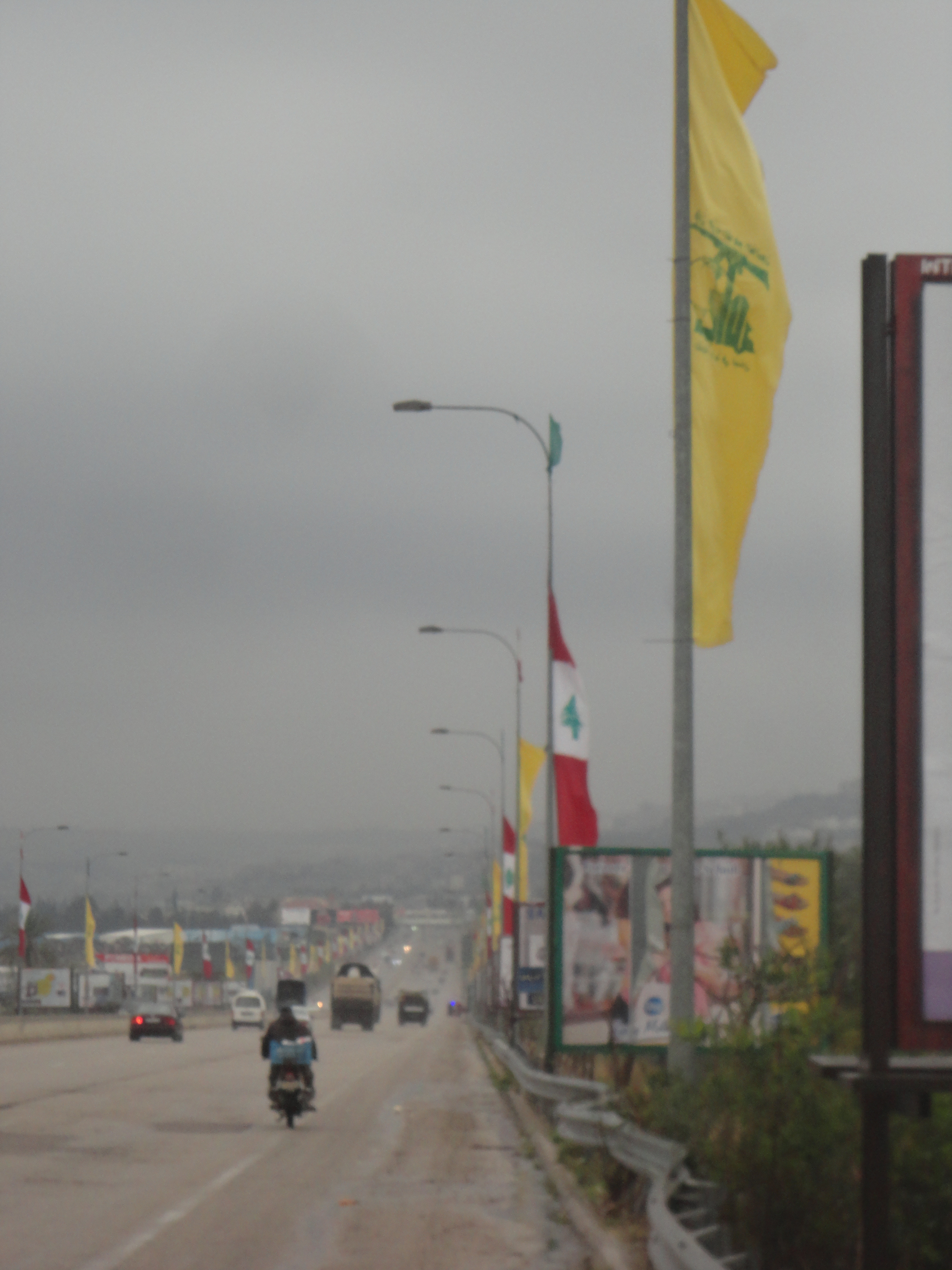
The flags in Hezbollah territory reflect political reality, alternating between the flag of Lebanon and the flag of Hezbollah; a tunnel dug by Hezbollah during its resistance to the Israeli invasion; the plaza of the Hezbollah Museum.

This past week we had a welcome national holiday – Annunciation Day.  What? You didn’t celebrate it? The Christians here claim that it is the one holiday they have in common with the Muslims.  The Muslims are kind enough not to challenge this. I’ll believe it’s a joint Christian-Muslim holiday when any other Arab or Muslim country celebrates it. The Qu’ran does mention the Annunciation. Here is one example:

Behold! the angels said:

“O Mary! God giveth thee

Glad tidings of a Word

From Him: his name

Will be Christ Jesus,

The son of Mary, held in honour

In this world and the Hereafter

And of (the company of) those

Nearest to God;

I celebrated Annunciation Day by taking a trip with my friend Diana to what is known as the Hezbollah Museum, although its real name is Mleeta Resistance Tourist Landmark.  It’s about an hour southeast of Beirut way up in the mountains and I hired a driver to take us there.  Here is its website:  www.mleeta.com  It’s worth taking a look.

I wanted to go to the Hezbollah Museum so I could hear what this group had to say for itself, unfiltered by the US government which treats it as the spawn of Satan.   I think it a stroke of genius that Hezbollah created the Resistance Museum as it gives them the opportunity to engage the public and control the message.   It seems to be popular place for school groups and courting couples.

We were met by a tour guide dressed in khakis who first showed us around an outdoor area where weaponry, tanks, and Israeli helmets are artfully arranged to memorialize Hezbollah’s historic victory over the Israeli forces of occupation.  Then the tour guide showed us around the encampment where tunnels had been dug, bunkers built, and rockets fired, telling us of the Hezbollah philosophy of commanders sharing the risks of war alongside their men. He stressed the element of self-sacrifice, something you will note if you look at their website. At one point he said, “It’s like when Jesus Christ said ‘take up your cross and follow me.’”  The analogy to Christianity is not unfounded: the cult of martyrdom was so strong in the early church that bishops tried to stamp it out.  For some, the veil between this world and the next can seem very thin.

The Lebanese I’ve spoken with seem to have a begrudging respect for Hezbollah.  They managed to bring order to an area that was being torn apart by the Palestinians and the Israelis and have assimilated into the Lebanese political structure. Two Christian missionaries from Tyre I spoke with said that they enjoyed good relations with the local Hezbollah.

The sticking point is that Hezbollah will not disarm. One of my teachers lamented, “We are a country with two governments.”   Certainly Lebanon defies the classic definition of a nation state in that the formal government does not have a monopoly on violence. Hezbollah’s position is that the threat from Israel is real and that they are needed to defend the southern border of Lebanon.  What has people exercised here is that they are using these arms to fight in Syria on behalf of Assad’s government and so are extending Lebanon into the Syrian civil war.   The bombings in the Shi’a neighborhood south of Beirut are considered extensions of the Syrian civil war, facilitated by Hezbollah losing focus on its core constituency.

In church on Sunday we said prayers for residents of the Syrian town of Kessab, a town with a large Armenian population where many Lebanese Armenians have relatives and summer homes.  This town, we heard, is being destroyed by the al-Qaeda-affiliated rebels and the homes ransacked of their goods for resale in Turkey. I met a French journalist today who has just come back from there. Kim Kardashian has joined the call to save Kessab. But nothing in the New York Times on the fighting there – I don’t think they maintain a bureau here anymore except in Jerusalem.

Some of you have noted that my blog is late this week. I confess my energy level is beginning to flag.  I have an ambitious schedule that offers little wiggle room.  A few more holidays like Annunciation Day would be very welcome around now.  Holy Week is coming up but this year the Western and Orthodox churches observe Easter the same day so we don’t get double holidays. I am hoping that reminding myself that I will be leaving in less than four weeks will give me the burst of energy I need to push on through.