
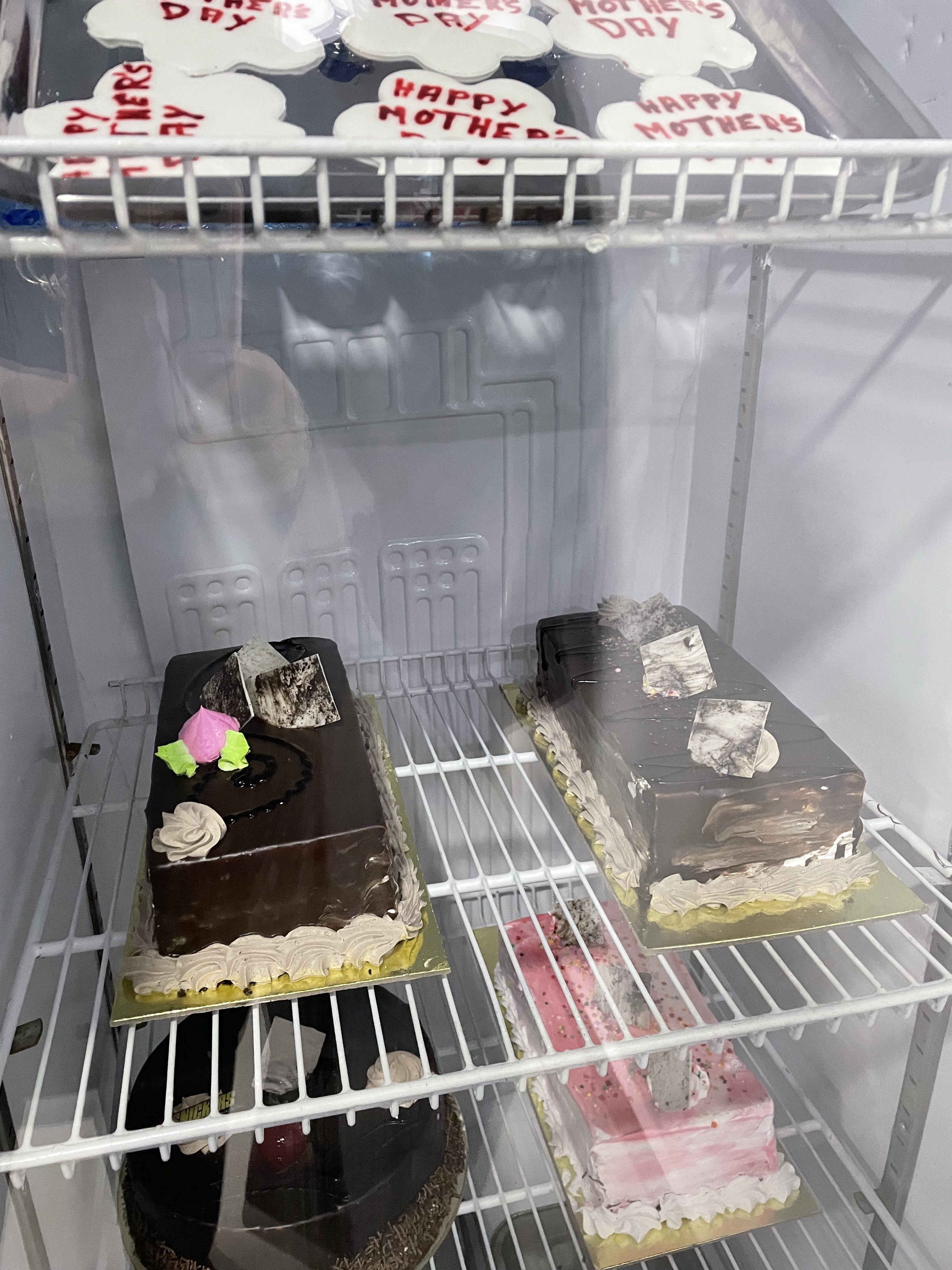
Six weeks weeks ago, on Mothers Day in Lebanon, my friend Imad and I were walking on a side street in Hamra, the neighborhood where I live, when he took a bad fall. We had been heading to the only bakery left in the neighborhood to look at a strawberry cake I had spotted for Imad’s wife. If it suited, Imad would have been spared going to a neighborhood which had been experiencing thick traffic jams that day due to car owners trying to prepay their car registrations before the fees went up.
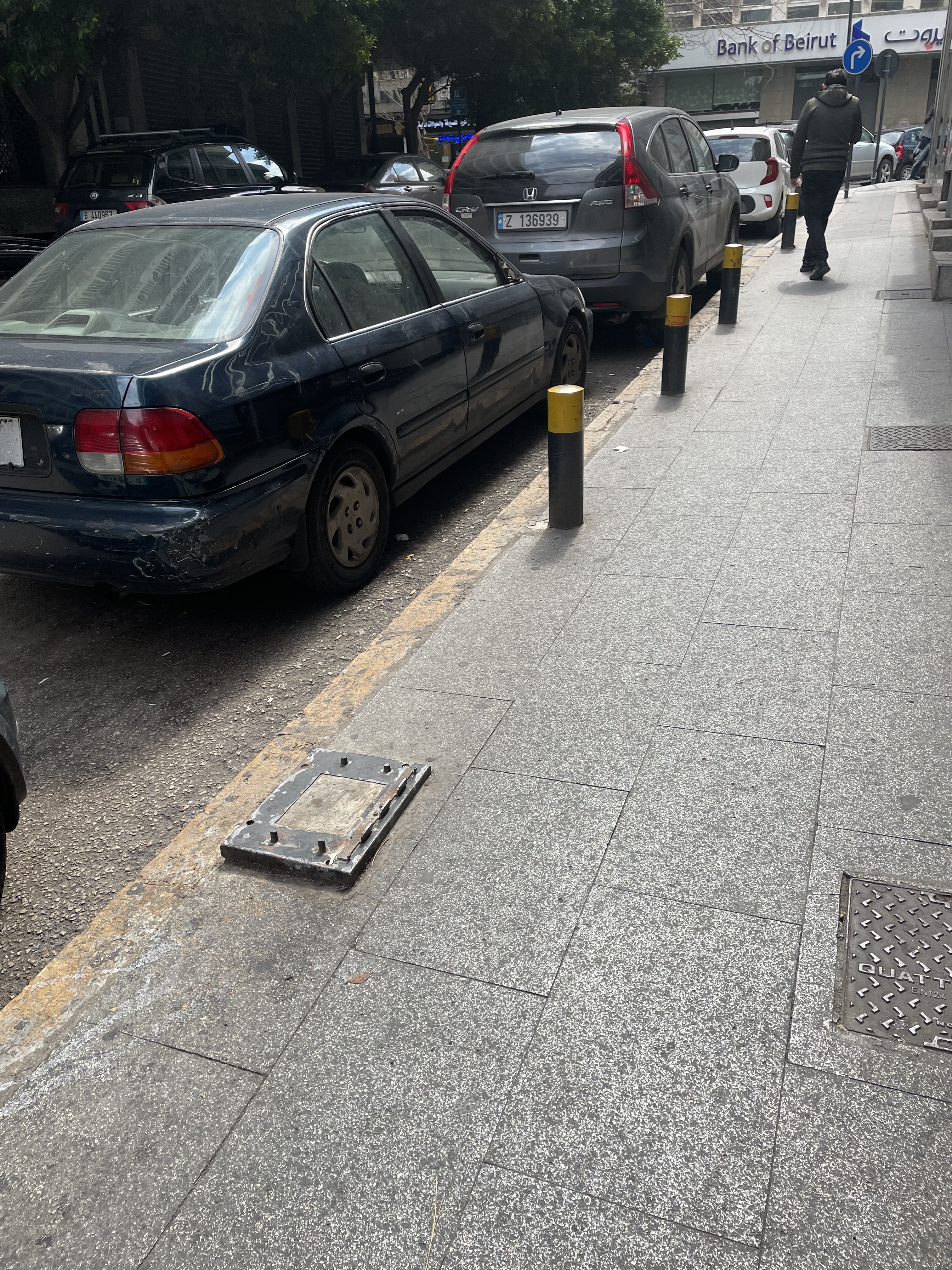
The street was dark, as all streets are dark now in Lebanon. What Imad tripped on was the base of a parking meter which had been stollen, presumably sold for scrap. As a doctor, Imad immediately knew he had broken his femur and feared he had also broken his hip. He was in excruciating pain. We called the Red Cross, trying desperately to tell them where we were, a difficult task as there is no address system in Beirut. We had to mention landmarks like country folk describing their location. By-standers on the street rushed to his aid, one man holding his head up off the sidewalk with the help of his hands and my knitting bag. They were immensely kind.
The Red Cross came quickly and worked with great professionalism in getting Imad onto a stretcher despite his pain and immobility. He asked to be taken to the American University Hospital. Their question? “Do you have insurance?” Yes, he does. He gets his medical insurance through the doctors’ syndicate here but had recently downgraded his policy to second class because of the costs. When he was mulling this decision a few weeks earlier, he explained to me that the difference between first and second class insurance was that first class patients get priority if the hospital is overcrowded plus they get better rooms. The healthcare is supposed to be the same.
At the hospital, Imad was placed on a stretcher pending the arrival of his wife and daughter with $1,000 cash in spite of the fact that he has health insurance. The insurance arm of the medical syndicate hasn’t been paying the hospital bills promptly so up front cash is demanded. That was two hours of neglect while he was in excruciating pain. Between the wife, daughter, and son the family managed to assemble most of the cash. The hospital also demanded the donation of 2 units of blood. But no one could donate blood, for health reasons, so they called a good friend who came down to donate on their behalf. A nurse told me subsequently that no hospital should take two units of blood from anyone as that represents 20% of the body’s blood and puts the donor at risk.
The next day Imad had an operation that lasted five hours. A stainless steel rod was implanted into Imad’s thigh bone extending all the way down to just above the knee. It is not at all clear that this was the appropriate length of rod as the actual break is near the hip. Imad fears the same thing happened to him as happened to his father whose surgery during the civil war left him with an uneven gait. Supplies were short then as indeed they are now.
Eventually Imad was moved to a bed on a hospital floor to begin his convalescence. As in all hospitals, this is a balancing act between monitoring and caring for a patient while preventing the risk of secondary infection. The family learned that next door was a Covid patient. Usually hospitals have separate floors for separate health issues, partly to prevent the spread of infections to patients recovering from surgery and childbirth. But we learned that AUH has lost so many doctors and nurses to emigration that it has closed floors. And maybe their patient base is shrinking, too: how many families are left in Lebanon who can cough up $1,000 in cash these days now that their savings are frozen?

Sharing an air circulation system with a Covid patient made getting Imad home a matter of urgency. It turns out there isn’t even an option to open the window at the hospital. No one has been able to open a window there for years. They are padlocked. This is reportedly to prevent suicides and smoking.
But to leave, the family needed a 25-day supply of anticoagulants. The chance of a dangerous post-operative blood clot is about 10%. Despite us running around a number of neighborhoods asking pharmacies for the required medication, none could be had. The pharmacists told us they hadn’t any for months.
What to do?
The doctors’ syndicate couldn’t help and Imad didn’t know anyone high up enough in the health ministry. It was time to resort to desperate measures. For the last several months Lebanese have been flying to Istanbul for the day to pick up medications. Or asking friends from the Gulf to bring them in on their next trip home. It is illegal but even the government knows better than to challenge these travelers. Of course, a trip to Istanbul would add $500 to the cost of Imad’s care.
Before implementing this plan, Imad called a fellow doctor whom he had known since medical school in Russia forty-odd years ago. Mohammed is a Shi’a. He took himself to Dahieh, the Shi’a neighborhood to the south of the city often described as a Hezbollah stronghold. There he located the medication at the first pharmacy he entered. Hezbollah makes a point of provisioning its people when the government can’t. So Imad was able to get his medications thanks to Hezbollah.
We have since learned that there is a service at the Beirut airport where one can order pharmaceuticals from Istanbul and pick them up a few hours later. No one at the hospital mentioned this, perhaps because it is illegal or the staff is too overworked to handle discharges properly.
Meanwhile, Imad had sent his Russian-born wife down to medical records for a CD of his leg, pre- and post-operation, and to get a refund for the cash deposit and the PCR and blood test he had had to pay for upon arrival at the emergency room.
She came back empty-handed. So Imad decided to put the frighteners on the AUH administration.
He sent me. “They’re afraid of Americans here”, he told me. I got the job done.
Now to get an ambulance to send Imad home. He needed a stretcher as he can’t put weight on his leg. It was five in the afternoon when Imad began calling the Red Cross, the only free option. Three hours later they still hadn’t arrived. They were having a busy evening. Time was running out as the electricity in the family’s apartment building would be cut at midnight and they would lose the use of the elevator. Staying at the hospital through another night wasn’t an option – the insurance wouldn’t pay for it and another patient needed the room.
So, Imad called the ambulance service that charges a fee. They quoted the equivalent of $75. I thought that sounded reasonable but still the family hesitated. Imad’s disability represents a significant loss of family income. I suggested they set a time at which they would resort to the ambulance company and not look back. They decided that would be 9:00.
A few minutes past the deadline, Imad picked up the phone to call the ambulance company when his wife shouted “No! Don’t call them!”. She was balking at the $75. This is the equivalent of her monthly pension as a part-time doctor at a clinic, such is the collapse of the currency. We talked her around and the company came within 20 minutes to take the family home.
Did we take the elevator directly down to where the ambulance was waiting? No, we did not. AUH has put up barriers to patients leaving for fear, as the ambulance workers told us, that patients would “escape” without paying. So, a nurse had to use his security pass to get us through a labyrinthian route down to the ground floor. This can’t be a good use of a nurse’s time.
The one issue I couldn’t help them navigate was the question of tipping the hospital staff. Imad felt it was his obligation and his wife felt vehemently otherwise. Only later did I learn that it is expected that orderlies get tipped and, increasingly, nurses. No one’s salary is sufficient these days.
Like all Lebanese, this family has seen its savings from decades of work disappear into the maw of the banking system, probably never to return. The wife said a friend of theirs, another doctor, had died of Covid, having been refused admission to the hospital for lack of $1,000 cash in hand.
I asked Imad how the family had even had $1,000 in cash on hand the night of the accident. “In case we need to flee”, he answered. He was thinking of a sudden attack like Israeli’s bombardment of 2006. There is no doubt that there is hostility at the border but more and more now, the Lebanese are forced to confront the devastation wrought by enemy within, its spectacularly corrupt political class whose depredations have caused the collapse of the country’s infrastructure.

 goingfortheguttural