
Food insecurity is becoming a visible problem here, even in middle class Hamra. Beggars no longer ask for money as food has become so expensive it is better to ask for it directly. A 50,000LL note used to be the equivalent of $37.50 and buy the groceries for the week. Now it is worth about $14 and buys very little as prices have risen disproportionately. In spite of its climate and varied ecological niches Lebanon is a net food importer and that requires dollars. Nowadays grocery lines are slowed by customers needing to have subtotals before they add another item to the counter. Many people with access to land, or even large balconies, are planting food for the first time, a movement that got a lift from director Nadine Labaki (Capernaum, Caramel, L’Wayn Halla’?) on Instagram. (See link at bottom.) Ramlet el-Bayda, a hotel area in Beirut overlooking the sea, is now filled with people fishing for dinner.
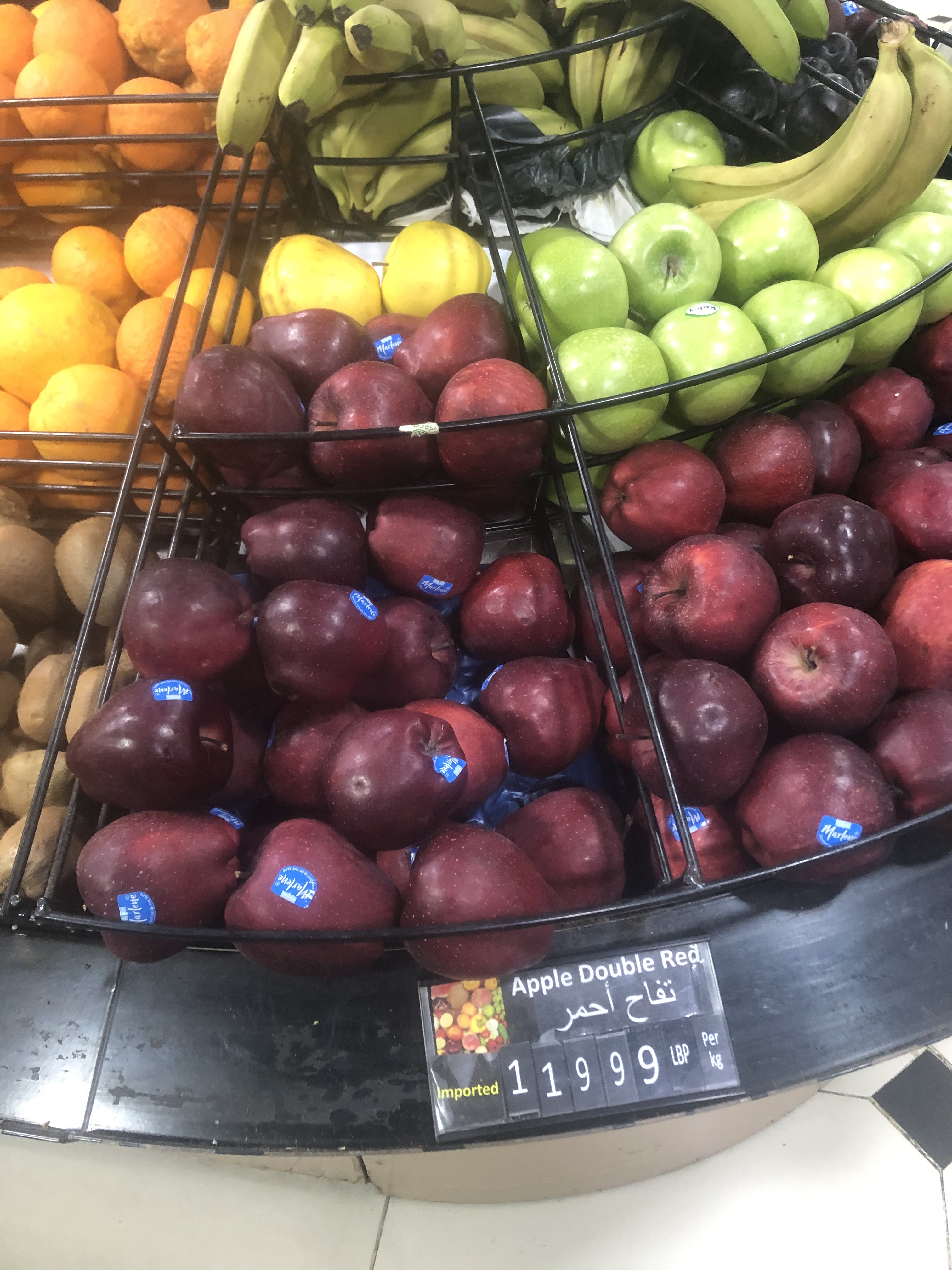
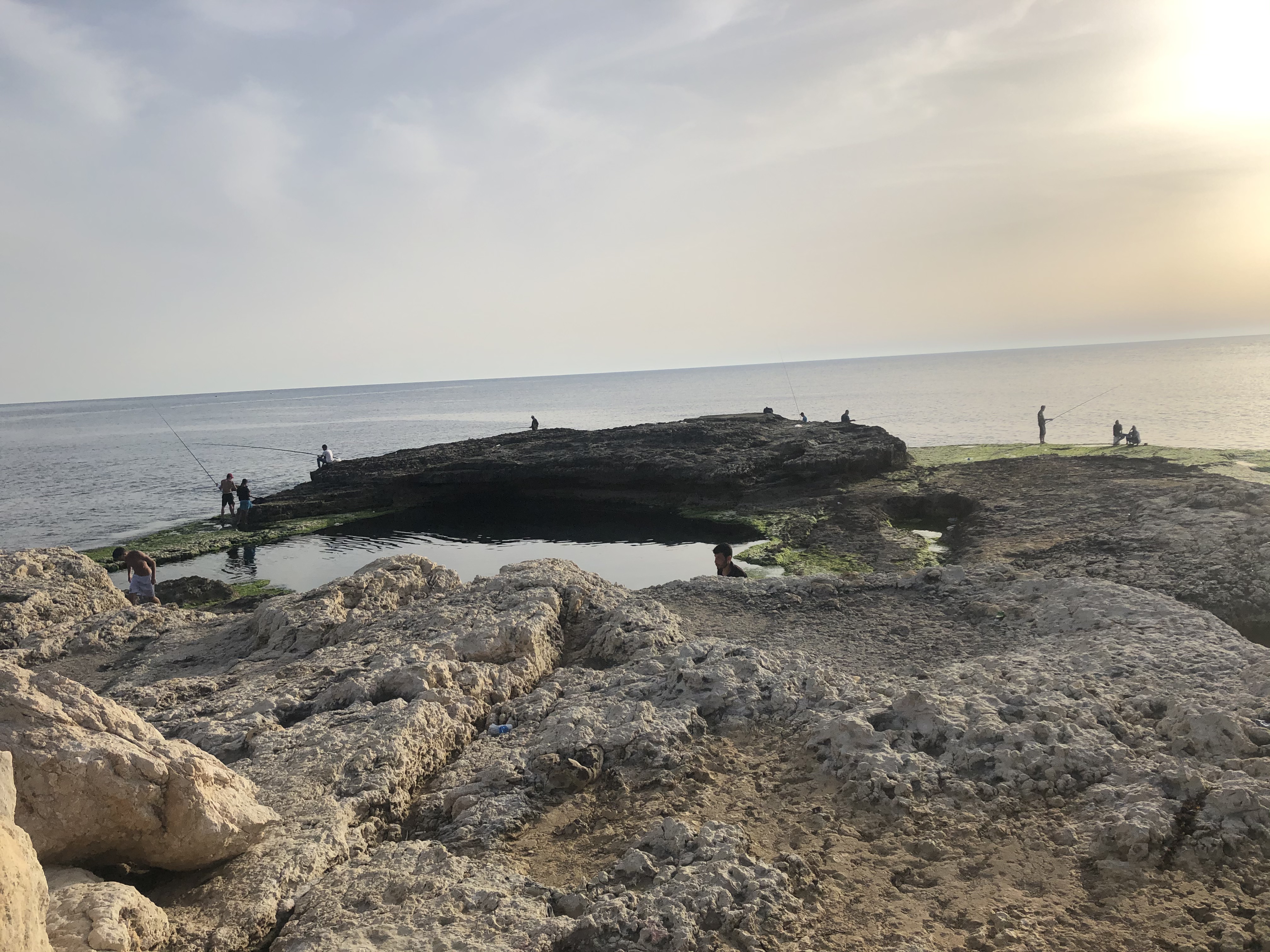
Imported apples at Spinney’s at $3/kilo if you have dollars or $8/kilo at the pegged rate; people fishing for their dinner at Ramlet el-Bayda.
There is no safety net here although PM Diab has acknowledged the need for one. Right now the estimate is that 60% of the population is unemployed. The percentage of functional unemployment is higher as a person is considered employed if he works as a waiter or taxi driver and receives no custom or if her job has been cut back to part-time.
It didn’t help that we had to go back into a strict lockdown for four days this week due to an uptick in cases, some of which were brought back into the country by returning nationals.
This is a highly volatile situation. In a recent interview conducted by syndicated columnist Rami Khouri with AUB economics professor Simon Neaime over the AUB Facebook page, the latter said that Lebanon was at the end of its options and that if it didn’t comply with what the IMF and Cedre Conference required in order to get outside funds, then it would collapse into another Somalia.
This is not hyperbole. As a friend keeps reminding me, the political parties have their own militias and gun ownership is widespread here. In fact, a man working at the reception desk of my building told me he had an AK-47. I asked why he had such a powerful weapon and he told me it was to defend the family home in the “village” – the place where the family comes from and which provides an identity even if no one of the family lives there anymore. Home invasions are reportedly a real problem now, especially since so many people withdrew their money from banks and are keeping a lot of cash at home. Turns out that this man’s home in the village was just robbed and the AK-47 was taken.
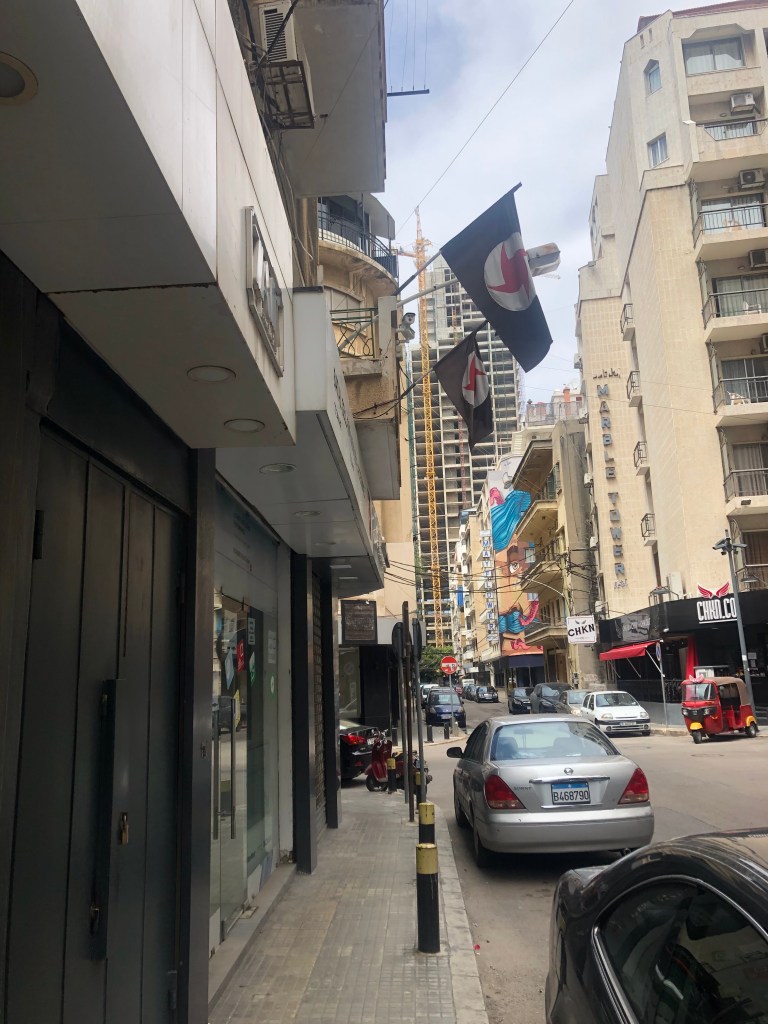
The closest militia presence to my apartment is the Syrian Socialist Nationalist Party, a small-time player at this point. It has a couple of militia men sitting in chairs at a spot on Makdisi Street which they have blockaded off for their use. Their support purportedly comes from the Assad government in Syria. A friend told me a friend of hers tried to park there after the militia men told him he couldn’t and they beat him to a pulp. Of course no one was arrested. I thought I would venture out today to see if I could take a photo of this militia post but the two militia men came running across the street and demanded my iPhone. As I was arguing with them a man came and told them they had no right to demand my iPhone as they were not military. But these militias demand the deference due to military operations. We argued a bit but then I relented because I know their reputation. The by-stander apologized to me and said, “what can we do?” and I answered “disarm them” and he answered “the day will come.” I already had a photo of the flags hanging from another building a few streets away and that will have to suffice (see above). Other neighborhoods have other flags – in South Beirut there are Amal and Hezbollah and in East Beirut one sees the Kataeb flag, the party of the Christian fascists.
An example of a confrontation with my friendly neighborhood militia can be read in this account from nine years when anti-Assad protestors squared off with the SSNP on Makdisi Street:
https://www.jadaliyya.com/Details/24281/One-Night-in-Hamra
This brings us to recent events in the name of the revolution. That spontaneous, angry, and hopeful efflorescence is at risk of being hijacked. Already in December, a friend from church told me, her car was being stopped outside of Tripoli and young men purporting to be from the revolution would demand a “contribution”. I went to visit her up north and when I came back we took a secondary road back to Beirut as this shakedown was happening that day on the main road. When I told friends in Beirut they shook their heads and said that it was like this leading up to the civil war, but in the south with the PLO stopping traffic and demanding contributions. This is what a weak state looks like. (Are you listening, Michigan?)
A more ominous hijacking of the revolution has been the recent demonstrations and vandalism in Tripoli and in Beirut by young men from Tripoli. Certainly, economic desperation is fueling their activity. However, I saw a demonstration by young men from Tripoli in February on the main street here, Hamra, and I found it curious that they all got on and off a very nice coach bus. One would expect rattletrap cars and vans as these are the usual transports of the working poor. Also, the poor do not have the money to put in banks in the first place so it makes little sense for them to come down to Beirut to trash bank buildings. Looting local grocery stores would make more sense. So, I’ve been asking people here if they think these demonstrators from Tripoli are being supported by anyone. Barely is my question out of my mouth when I get the answer: “Hariri”. This is the former prime minister who resigned in October once the revolution got underway and he and his proxies have been trashing the current government ever since.
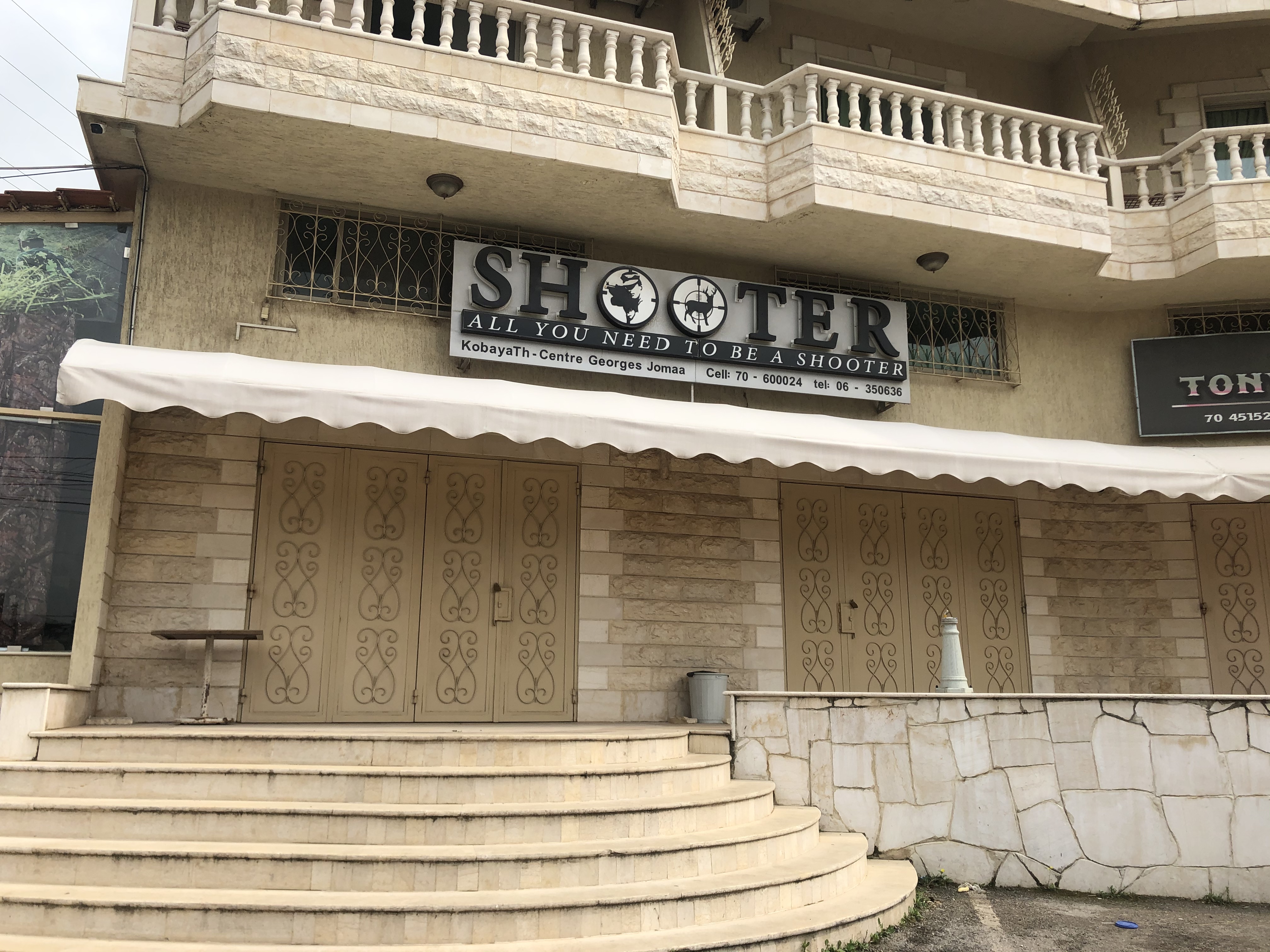
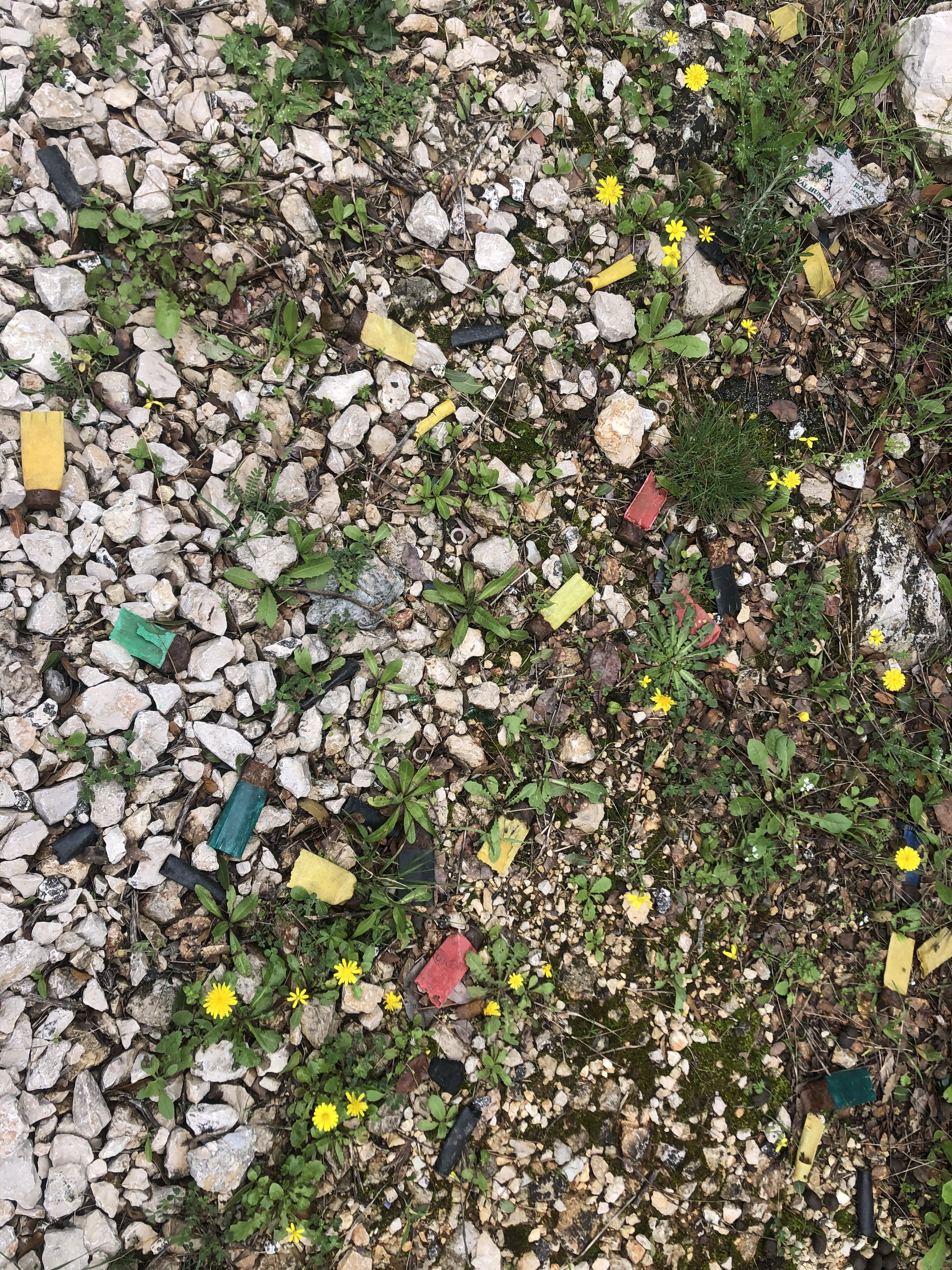
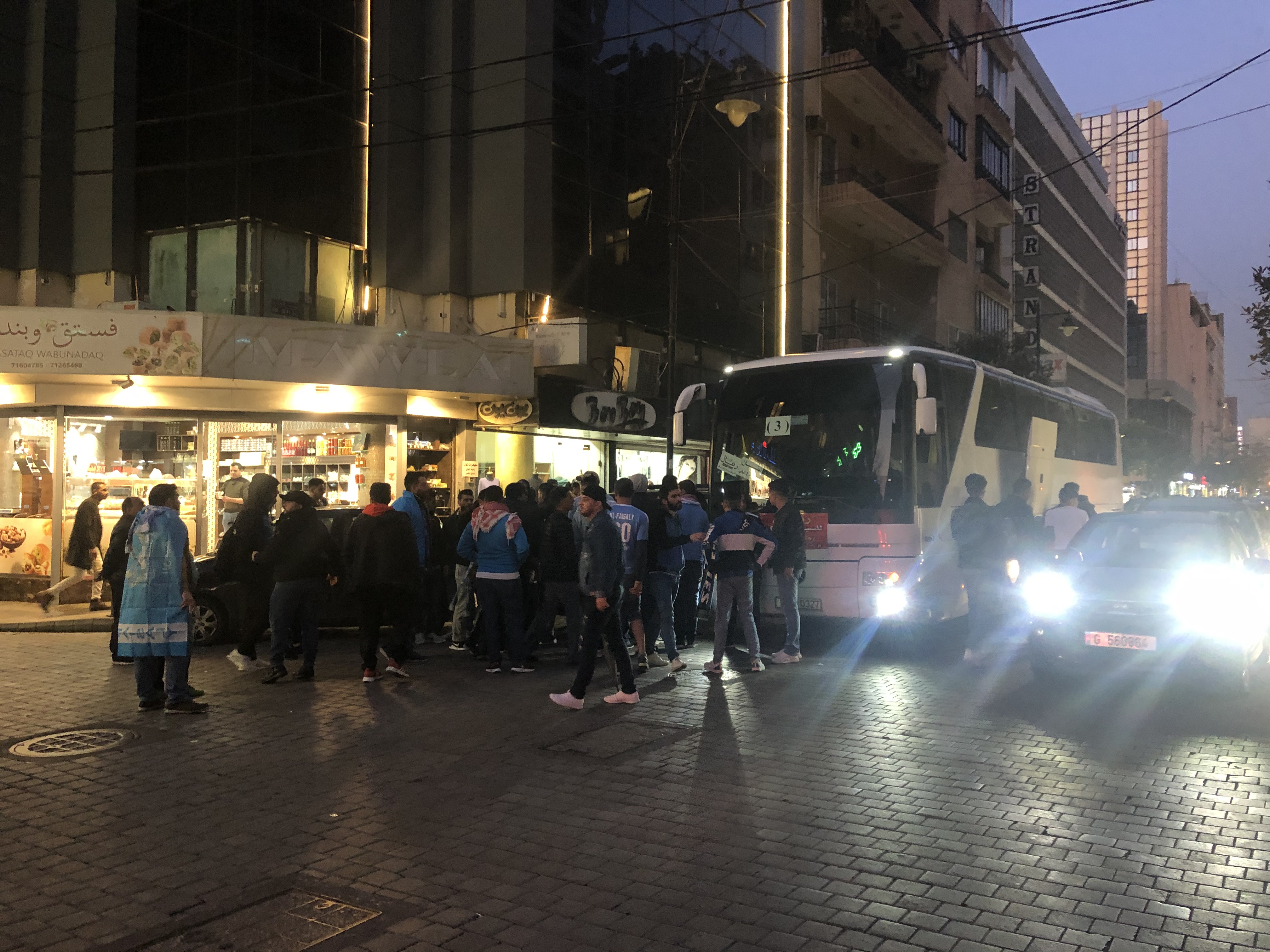

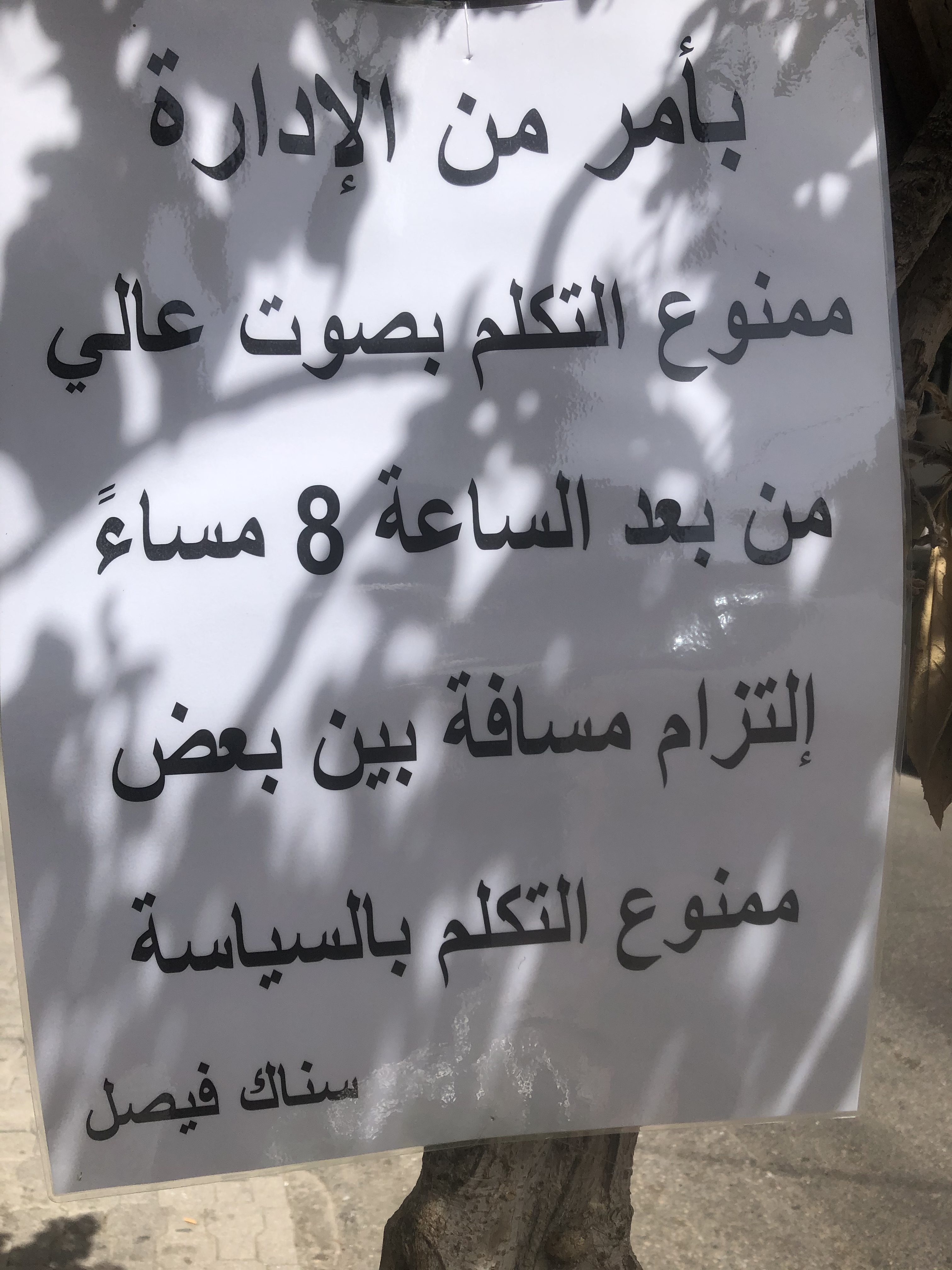
A gun store in northern Lebanon; shell cases on a country road in Qobayat, in northern Lebanon; protestors from Tripoli on Hamra Street getting ready to re-board their bus; a sign outside of a snack shop telling us to keep our voices down, maintain physical distance, and not to talk politics; a sign in the lobby American University Hospital.
Saad Hariri’s incentive to get back into government is as clear as a Forbes ranking: he has lost billions of dollars in his personal, ill-gotten fortune and is now worth less than a billion dollars. In a kleptocratic system, there is a vicious cycle between accessing the goods of the state, building a personal fortune, and buying loyalty to stay in power. A friend recently told me that Saad’s father, a real estate developer who became prime minister and was assassinated once out of office, would buy the poor for demonstrations and buy the middle class by paying for hospitalizations and foreign education fees for their children. His offer to pay for the hospitalization of a prominent literary figure here who had quit his newspaper job when Hariri bought the publication was declined, as I hear it from the family. But Saad cannot keep up with his late father. His real estate business in downtown Beirut, Solidere, was worth $40/share in 2008 and is now worth $10.30. His family’s real estate conglomerate, Saudi Ogero, ceased operations in 2017. His Future Party television channel operated for years arrears with its employees’ salaries and was shut down this fall. This leaves his political operation without a media outlet, a disadvantage when other political groups have their own. One can imagine Hariri’s desperation to get back into power and access the public purse.
When I come back to the States in about a month’s time (if I can get assurances about precautions on flights home and some sign that being back in the States might be safe) I will be leaving Lebanon with a great sense of apprehension. People are already asking if I am coming back and I tell them I will come back if there is fighting in Dahye (the poor Shi’a neighborhood where Amal and Hezbollah compete for support) but not if there is fighting in my neighborhood, Hamra. We can only hope that the Diab government can pull the country back from the brink so it doesn’t descend into Somalia. The militias are going to have to co-operate with him if only because they need a live state to feed off of. And the Lebanese people need to eat.
 goingfortheguttural