
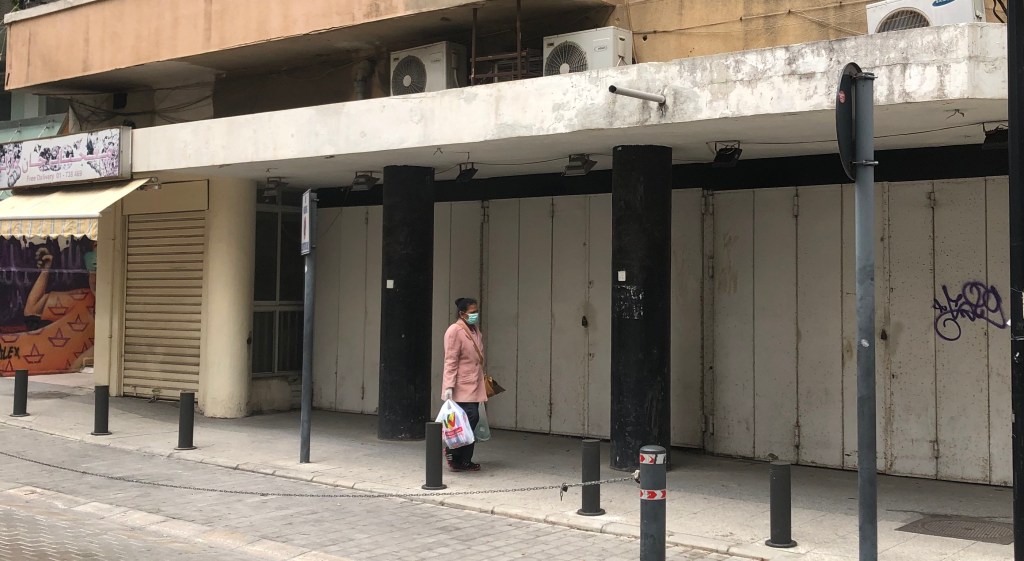
Two days ago a major worry went away when Mustafa, the man in my nearest Western Union franchise, called to tell me that he had dollars for me. I rushed across the street to get there before the store closed at 2:00. I asked Mustafa if his having dollars meant that the banks were dispensing them again but he said, no, he had dollars because it was the first of the month and the guest workers were wiring money home.
I felt a pang of guilt thinking about how many guest workers would have had to done business with Mustafa that day for him to have the dollars for me to pick up. Lebanon runs on the labor of guest workers and refugees. Guest workers fill the ranks of domestic service and are a common sight in middle class homes, even lower middleclass homes, where a Bangladeshi can be paid as little as $160/month. There are 300,000 migrant domestic workers (MDWs) here in a population of 4 million Lebanese, and about 2 million refugees. A 2016 study by the ILO found that only 16.4% of employers paid more than $300 a month. A number of my teachers and friends have a “Filipina”, a “Sri Lankan” or an “Ethiopian”, as a professional class salary of $2,000-$3,000 a month makes hiring a MDW feasible. In the hierarchy of prestige, the Filipinos are on top and the Bangladeshi on the bottom with the Africans and other Southeast Asians in between.
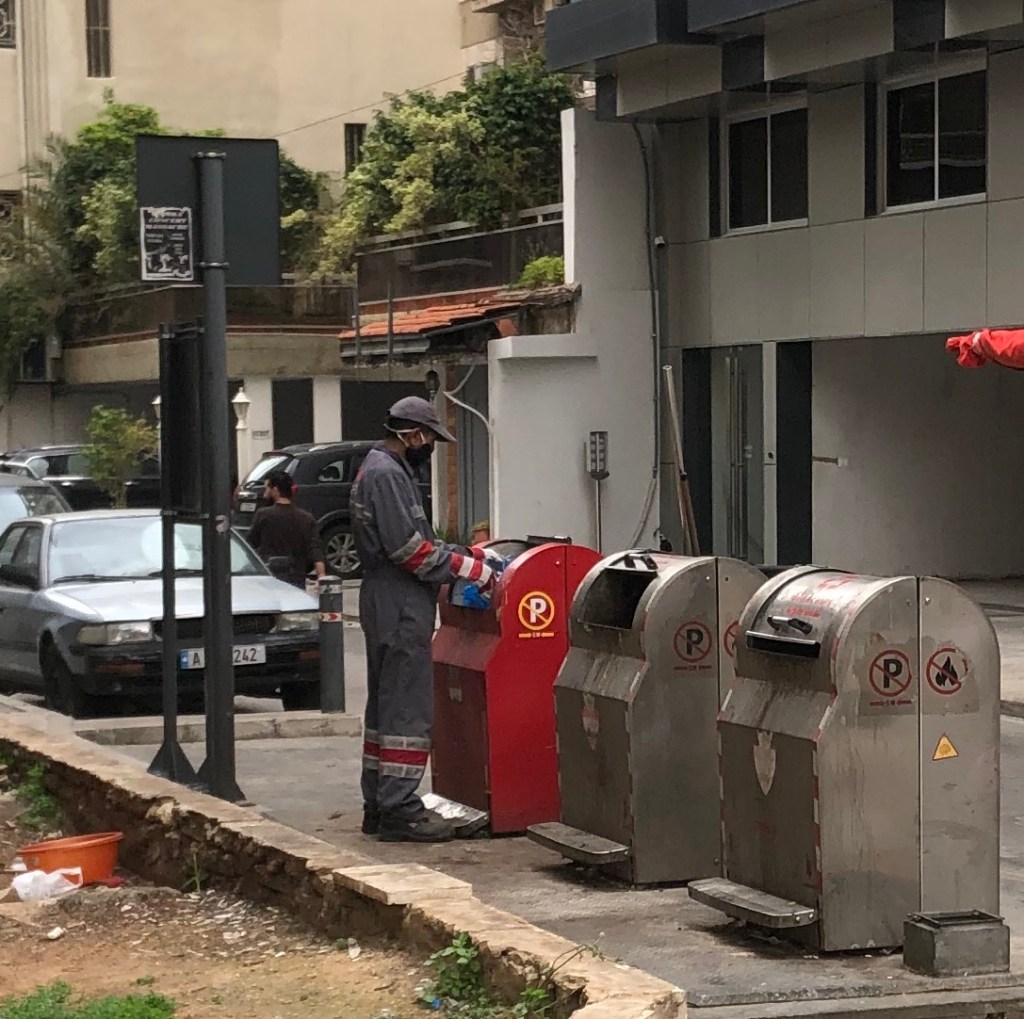
MDWs work outside of Lebanon’s labor laws. Most of them are female. Male guest workers are found in maintenance and sanitation jobs and live in dormitories. There are also female cleaners who work in universities and businesses. They are brought here under the notorious Kefala or sponsorship system, which ties their work permits here to their employment by a particular employer. The moment they quit, they lose their visa and must either hastily find another employer to sponsor them for a residency visa or melt into the large pool of underground labor. The Lebanese government has essentially abdicated to the recruitment agencies and employers its responsibilities to protect foreign workers. A few years ago it did pass legislation banning the confiscation of passports and specifying no more than ten hours of work a day and one day off per week. Without the backing of an NGO, there is little hope of enforcement beyond employer whim. Employers routinely confiscate their employees’ passports upon arrival and will refuse to return it until “fees” have been paid – like the $1,000-$3,000 fee to the agency, neither of which is legal and both of which are routine. The Kefala system has been rightly criticized as a contemporary form of slavery and its replacement by actual labor laws was one of the demands of the ‘revolution’.
There are a number of MDW at my church and indeed some of them are members of longest standing as that other category of foreign worker, NGO workers, tend to cycle in and out. The MDWs of my church are the lucky ones as they are actually given a day off and allowed some freedom of movement and association. The ILO found that about a fifth of MDWs are held as virtual prisoners in their employers’ home. When our congregation was worshipping in the same building an Arab congregation, sometimes “Madam” would deposit her MDW with us and scoop her up on the way out. Once, a “Madam” even yanked her maid from the middle of a communion service as the Arab church had finished earlier than ours. We hear that the Arab pastor spoke to her about that when we complained about this act of sacrilege.
Migrant workers are not allowed to marry in Lebanon. About half of them already are or have been and are sending money home to support their children. Some marry while holiday at home and don’t tell the Lebanese authorities. Our church has one such worker whose Muslim employer even made room for the child of this union and permits visits from the husband, himself a guest worker. We know of another domestic worker who appears to have fled the violence of her homeland and arrived in Lebanon via a smuggling route who is struggling to support a young child through occasional labor.
Lebanon has a sizable population of undocumented workers who can, if lucky, find employment on the black market that is more remunerative and gives them some autonomy. The 2018 movie Capernaum captures the extreme poverty of one such escaped worker. The movie has been praised for its realistic depictions of the living conditions of undocumented workers here along with its heart wrenching scenes of prison conditions. A member of my church here has an NGO which tries to support women guest workers and visits women guest workers in the prisons, some of whom are accused of theft. The threat of such an accusation is always hanging over the heads of foreign workers. Employers can act with near impunity towards their foreign guest workers, including wage theft, sexual assault, and even murder. Every week one or two foreign guest worker dies here either by suicide or murder. The Lebanese government, often in complicity with the sending government, prefers to classify these deaths as suicide. One such “suicide” occurred last week, a Ghanaian housemaid whose body was found in the carpark under the building where she worked. Lebanese authorities deemed her death a fall. She had been in contact with her family and a human rights activists about her fears for her life. Conditions for guest workers are so bad here that both the Philippines and Ethiopia refuse to allow companies recruiting for Lebanon to recruit their nationals. Of course, the recruiters end-run this by recruiting these highly desirable MDW in Gulf countries or simply smuggling them in.
This year has been especially difficult for guest workers. Many of the families employing them have been hard pressed to pay them and when they do get paid, the value of the lira has fallen by 40% with respect to the dollar and dollars are hard to come by. Soon after I arrived this year I was approached by a Bangladeshi cleaner at LAU to convert lira into dollars and of course did so at the old rate. One can imagine the economic and banking disasters of Lebanon rippling around the globe, wreaking havoc on families and economies across Africa and Asia. The situation has become so dire here that beginning in January governments began arranging flights to repatriate their workers, the Philippines taking the lead on this. Of course, this was before the Covid-19 lockdown.
I have come to appreciate the two churches here that I am best acquainted with as important supports for the guest workers. A few years ago I realized that Bible study at the English-speaking church was perhaps the one time during the week that the guest workers were treated as intelligent human beings with insights worth listening to. At the Arab church they participate in the choir alongside Lebanese and are recognized for their musical talents. Churches are the places where they don’t need to address anyone as “Madam” although sometimes they do out of force of habit. It turns out that because of the importance of church in their lives, many guest workers prefer to work for Muslim families so that they can celebrate the Christian holidays without having the extra work.
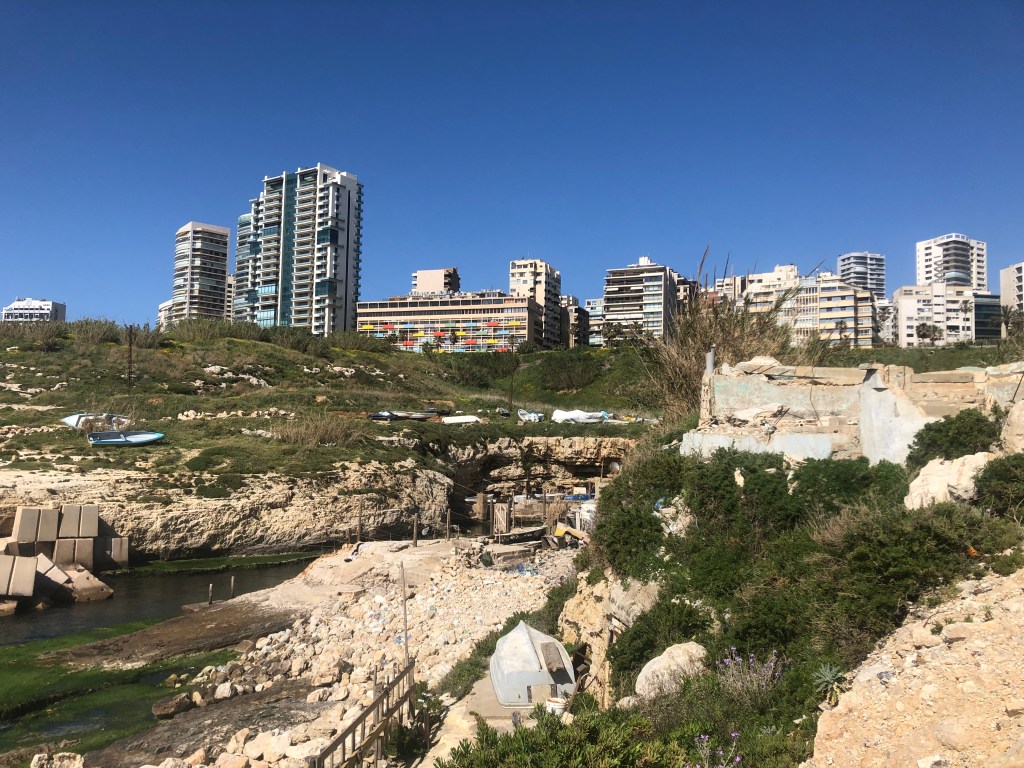
Of course none of us were celebrating Palm Sunday today in the usual way. After internet church, with internet communion, I went out for a short walk to stretch my legs. Yesterday I had a big treat when my friend Imad drove me to an area of undeveloped (and politically contested) coastline so I could enjoy the ocean air and pick wildflowers. We sat on rocks appropriately spaced apart and watched people fish and dive off from rocks right there in Raouche, an area of Beirut known for its hotels and sea-side restaurants. We saw flocks of birds on their annual migration to their summer nesting places and enjoyed the sound of the waves. There is so much natural beauty here and it is a solace for me and, I hope, the guest workers.



 goingfortheguttural