
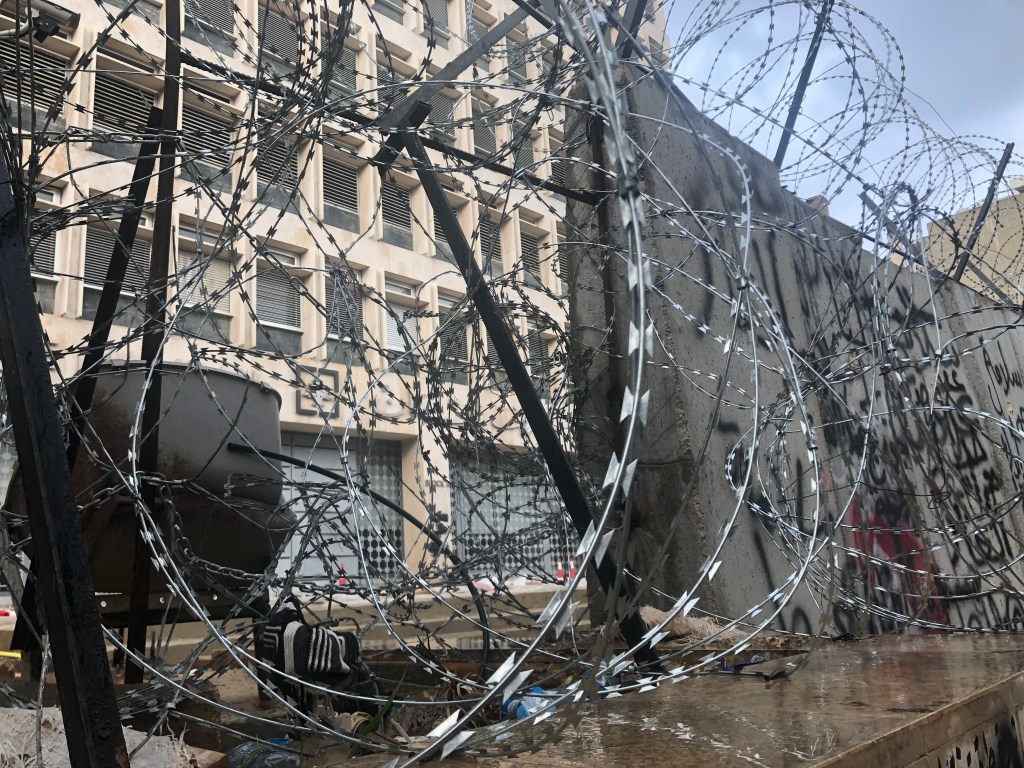
This year, my eighth winter in Lebanon, is so different from the previous ones that I feel compelled to resurrect this blog and recount what I am seeing. Lebanon is in crisis and it is difficult to to imagine what outcome even should be prayed for. The Lebanese have lost their usual ebullience and are sick with anguish over “The Situation”. It is the only thing they seem able to talk about, sometimes in despair over the future, other times enraged over the political class that has brought the country to the edge of ruin.
The Situation is a currency crisis, a banking crisis, and an economic crisis all rolled into one. The Lebanese pound is officially pegged to the US dollar at a rate of 1,500LL to $1 but the reality is that the pound has been softening for years. To finance the government’s spiraling debt, the banks have had to attract depositors by promising high interest rates but have been unable to provide ordinary citizens with home loans. Even last spring I found it increasingly difficult to withdraw dollars from the ATMs. Although the dollar is not an official currency it has been widely used in everyday transactions here and many Lebanese have dollar accounts in the banks. By the end of the summer gas stations were having difficulty obtaining dollars to buy gas. Lebanon relies on imports for almost everything but food so the price of the dollar is consequential to everyday transactions. Prices began to rise with the scarcity of dollars. Depositors began to move their money out of the banks and this turned into a full blown run after the protests began and the government collapsed with then Prime Minister Saad Hariri’s resignation. The economy, which has been in the doldrums for years, contracted further.
Right now unemployment and underemployment are probably combined at 50%. Many employers have put their employees on half-pay, including the building where I stay. At the same time, prices have risen 40% since August. The lira has been trading at around 2,500LL to $1 over the past few weeks. The banks have frozen the dollar accounts and are allowing depositors to withdraw only $50 a week in cash dollars. These measures feel ominous to the Lebanese. There are no depositor protections here so when banks fail, depositors are wiped out. They have seen it before. In 1966 Lebanon’s largest bank failed. The pound then traded at three to the dollar. During the mid-1980’s Lebanon experienced hyperinflation so that by 1992 the pound was trading at 2,500LL to a dollar. The generation now reaching the end of their working lives was wiped out early into their careers and now, at the end of it, is facing another wipe out.
Yesterday the government announced it would default on its Eurobond payment. It had little choice in the face of popular unrest over the corruption and mismanagement that the sectarian political system has engendered. There was real fear that paying the Eurobond debt would mean the banks confiscating personal deposits as happened in near-by Cyprus in 2013. It would be hard to overstate the anger people have for the government. They frequently refer to the political parties comprising the government as “gangs”, a conspiracy of thieves arguing over the spoils of the state — and running up its debt — while public institutions and infrastructure crumble into dust.
Lebanon’s debt is now 170% of its gross domestic crisis, one of the highest in the world. To the extent that these billions of dollars went to public expenditures at all it was spent on current expenses like increased teacher salaries rather than upgrading its infrastructure to the level expected in a reasonably developed country. By last year, half of the government’s expenditure was servicing its debt. Lebanon has not had 24/7 electricity since the beginning of its civil war 45 years ago and this has spawned a back-up generator sector that is politically entrenched. So much of the economy is connected to the dysfunction of the government and amounts to an enormous indirect tax on the people. It is no surprise that the proposal to tax the mercifully free internet phone and messaging service, WhatsApp, was the spark that ignited the current unrest. To add insult to injury, Lebanon has one of the slowest and least reliable internet services in the world. In January the state-run telecommunications business announced that Lebanon would be facing an internet black-out in March if it did not pay its foreign suppliers – in dollars, of course.
Could it get any worse?
Since February 21 there came a sudden distraction from all this economic gloom. The government confirmed that the corona virus had arrived via a passenger flying in from Iran. There are now 32 confirmed cases. That is, if you believe the government.
 goingfortheguttural